Simmons University Commencement Honors the Class of 2026 with Calls for Courageous Leadership
A Milestone Event for the Simmons University Class of 2026
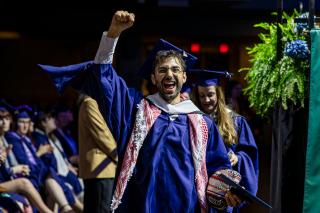
On Friday, May 15, 2026, Simmons University marked a significant moment in its history by hosting the 121st Commencement ceremonies at the MGM Music Hall at Fenway. This highly anticipated USA news event celebrated the academic achievements of the Simmons University Class of 2026, awarding over 500 baccalaureate degrees and nearly 1,200 graduate degrees. The atmosphere was filled with celebration as graduates processed into the venue, displaying decorated mortar boards adorned with spring flowers, flags, and colorful handprints, setting a vibrant tone for the day’s proceedings.
Commencement represents more than a ceremonial walk across a stage; it serves as a critical transition point where academic rigor meets professional application. For the Class of 2026, this transition occurs during a period of complex social and economic shifts, making the guidance offered by university leadership and distinguished speakers especially relevant. Schedule a free consultation to learn more about Simmons University programs.
Presidential Address: Carrying Forward a Legacy of Equity
Simmons University President Lynn Perry Wooten addressed the assembled graduates, faculty, and families by grounding the day’s celebration in the institution’s foundational principles. Established over 125 years ago on the belief that education advances social and economic equity, Simmons has consistently provided a space for students to develop the skills necessary to challenge the status quo. President Wooten reminded the Class of 2026 that they now bear the responsibility of carrying this legacy forward.
Wooten emphasized that a Simmons education equips students with more than just subject-matter expertise. Graduates learn to question difficult assumptions, challenge established norms, and apply their knowledge to create measurable, meaningful change within their communities and professions. In a world that frequently demands immediate answers, Wooten’s charge to “imagine what [the world] could become” serves as a vital reminder of the long-term value of critical thinking and visionary leadership.
Honorary Degrees Recognize Public Service and Creative Achievement
A central component of the Simmons University Commencement is the conferral of honorary degrees upon individuals who exemplify the university’s values. The Class of 2026 ceremony featured three distinguished recipients whose careers span public service, literature, and social justice advocacy.
Massachusetts Lieutenant Governor Kim Driscoll on Civic Engagement
Massachusetts Lieutenant Governor Kim Driscoll received an honorary Doctor of Humane Letters. In her address to the Class of 2026, Driscoll highlighted the critical role of public service in maintaining a functioning, equitable society. She pointed to the Commonwealth of Massachusetts as a prime example of how investments in education, research, and civic engagement attract global talent and foster innovation.
Driscoll’s advice to the graduates was highly actionable: consider integrating public service into your career path, whether by working in local government, volunteering in your community, or advocating for vulnerable neighbors. She reassured the Class of 2026 that they are far more prepared to lead than they often receive credit for, framing them as a generation capable of navigating modern uncertainties with resilience.
Gregory Maguire ’78MA on Embracing the Unknown
Simmons alumnus Gregory Maguire ’78MA, the internationally acclaimed author of Wicked: The Life and Times of the Wicked Witch of the West, received an honorary Doctor of Arts degree. Reflecting on his own Commencement 48 years prior, Maguire offered a candid perspective on career trajectories. He noted that after earning his Master of Arts in children’s literature from Simmons, his writing career floundered for nearly 17 years before Wicked fundamentally altered his professional path.
Maguire’s message to the Class of 2026 centered on the necessity of embracing uncertainty. He argued that the inability to anticipate both successes and setbacks is precisely what gives life its savor and provides the thrill of possibility. He urged graduates to remain present in their daily lives and to openly cherish the people they love, noting that doing so fosters mutual bravery in the face of life’s challenges. Explore our related articles for further reading on higher education news in the USA.
Dr. Anthony Estreet on Leading from Where You Stand
Dr. Anthony Estreet, Chief Executive Officer of the National Association of Social Workers (NASW), was awarded an honorary Doctor of Laws degree. President Wooten praised Dr. Estreet for his deep commitment to ethical practices and his advocacy for underserved populations. In his remarks, Dr. Estreet addressed the current complexities of the national landscape, arguing that expertise alone is insufficient to drive progress.
“This world does not simply need more educated people; it needs more courageous people,” Estreet stated. He urged the Class of 2026 to “lead from where you stand,” emphasizing that true leadership is defined by daily actions, interpersonal treatment, and the willingness to accept responsibility. He praised the graduates for choosing courage over cynicism and community building over division.
Student Voices Define the Class of 2026 Experience
While distinguished guests provided broad societal context, the student speakers grounded the Commencement in personal, relatable experiences. Their narratives highlighted the diverse paths that lead to a Simmons degree and the varied forms of strength required to complete the journey.
Finding Purpose Through Pivot and Resilience
Rachel “Rae” Ilyce Otero ’26MS, who earned her Master of Science in Library and Information Science, spoke candidly about experiencing an “early-life crisis” after completing her undergraduate degree. Initially planning to teach middle school English, Otero realized that path was not right for her and made the difficult decision to pivot. Her transition to library science at Simmons proved to be the correct fit, exposing her to brilliant, supportive faculty and a creative-minded community.
Otero’s address offered vital reassurance to anyone facing post-graduation uncertainty. She reminded her peers that there is always time to grow, learn, fail, and start over. Her message serves as practical advice for professionals at any stage: if you find yourself questioning your next steps, recognize that you are ready, and the world is waiting for your contributions.
Strength in Staying and Trying Again
Undergraduate speaker Daniella Oyindamola Adeshina ’26, who earned a Bachelor of Science in Computer Science with minors in Data Science and Analytics and Business, focused on the concept of quiet strength. Adeshina asked her peers to reflect on who they were when they first arrived at Simmons, acknowledging the quiet, heavy pressures that often accompany rigorous academic programs.
“Strength does not always look loud,” Adeshina noted. “Sometimes strength looks like staying. Sometimes strength looks like trying again.” As graduates prepare to step back into the unknown, she urged them to move forward with gratitude, faith, and the understanding that uncertainty often holds purpose. Submit your application today to join future graduating classes at Simmons University.
Collective Achievement and Interconnectedness
During the afternoon ceremony, Angelica Barron Maulucci ’17, ’18MSW, ’26DSW—a “triple Shark” who earned her Doctorate of Social Work—framed the day’s achievements as a collective triumph. Maulucci emphasized that success is not an isolated event but the culmination of support from ancestors, younger selves, and current peers. She reminded the audience that Simmons teaches its students that “we do not become alone,” leaving the attendees with a powerful meditation on carrying love and interconnectedness into the future.
The Broader Impact of the Simmons University Commencement
The themes explored during the 121st Commencement reflect broader trends in higher education across the USA. Modern universities are increasingly tasked with producing graduates who are not only technically proficient but also ethically grounded and civically engaged. The invocation delivered by Professor of Practice Gary Bailey captured this perfectly, stating, “Stumbling is not failure; it is formation.” This perspective reframes common anxieties about career missteps as necessary components of professional development.
Board of Trustees Chair Regina Pisa opened the event by highlighting the duality of Commencement—a celebration of both tradition and transformation. While the academic regalia dates back to the Middle Ages, the graduates wearing those robes are preparing to enter a rapidly evolving modern workforce. The Class of 2026 is stepping into roles that demand adaptability, cross-disciplinary thinking, and a commitment to continuous learning.
What Aspiring Students Can Learn from the Class of 2026
For prospective students evaluating their educational options, the narratives emerging from the Simmons University Commencement offer valuable benchmarks for selecting an institution. First, look for a university that fosters a strong, supportive community, as highlighted by Otero’s experience of finding her place after a major career pivot. A supportive faculty and peer network are critical resources when navigating academic and professional uncertainties.
Second, prioritize institutions that challenge you to think beyond immediate technical skills. President Wooten’s emphasis on questioning assumptions and imagining new possibilities indicates a curriculum designed to produce long-term leaders rather than mere task-executors. Finally, consider how a university integrates social justice and civic responsibility into its core mission, a theme echoed by Dr. Estreet, Lieutenant Governor Driscoll, and Maulucci alike. Have questions? Write to us! We can help you navigate your academic options.
Looking Ahead at Simmons University
As the Class of 2026 disperses to launch careers, pursue further education, and engage in public service, they carry with them the distinct hallmarks of a Simmons education. The nearly 1,700 degrees conferred during the May 15 ceremonies represent a significant infusion of thoughtful, courageous leadership into the workforce. The messages delivered by university leadership, honorary degree recipients, and student speakers consistently pointed toward a future that values presence, community, and the bravery to lead from any position. Simmons University continues to demonstrate its commitment to developing professionals who are equipped to shape their industries and improve their communities across the USA and beyond.