University of New England Commencement 2026 Celebrates Nearly 1,400 Graduates and Student Achievements
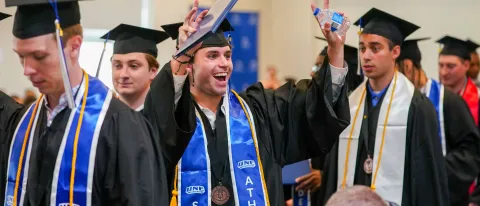
The University of New England marked a significant milestone this spring, hosting its 191st Commencement ceremony and awarding degrees to nearly 1,400 graduates. Held at the Cross Insurance Arena in Portland, Maine, on May 16, 2026, the event highlighted the remarkable student achievements that have become synonymous with UNE graduation ceremonies. As one of the most notable USA news stories in higher education this season, Commencement 2026 showcased the university’s growing impact on health care, business, and sciences across Maine and beyond.
A Diverse Class Representing Broad Geographic Reach
The graduating class demonstrated impressive geographic diversity, with students hailing from all 16 Maine counties, 49 U.S. states and territories, and six countries. This distribution underscores UNE’s reputation as a destination institution that attracts talented individuals from varied backgrounds and locations. For prospective students considering where to pursue their education, such diversity signals a vibrant campus community enriched by multiple perspectives.
Nearly one-third of the undergraduate graduates identified as first-generation college students—a statistic that speaks volumes about UNE’s commitment to educational access and student support. First-generation graduates often overcome unique challenges on their path to earning a degree, making their accomplishments particularly noteworthy in the landscape of student achievements at the university level.
Submit your application today to join a community that celebrates diverse backgrounds and supports students from every walk of life.
Health Professions Continue to Drive Graduate Numbers
As Maine’s top provider of health professionals, the University of New England once again delivered a substantial cohort of graduates prepared to enter critical health care roles. The 191st Commencement saw 166 newly matched doctors from the College of Osteopathic Medicine receive their doctoral hoods, including 13 who will remain in Maine for their residency programs. These in-state matches represent a direct investment in Maine’s health care workforce, addressing physician shortages in local communities.
Beyond osteopathic medicine, the ceremony celebrated graduates across multiple health disciplines: 65 dentists, 30 pharmacists, 43 physician assistants, and 63 nurses completed their programs and earned their degrees. Each of these professionals will enter a job market that urgently needs their expertise. The health care sector continues to face workforce challenges nationwide, and UNE graduates are positioned to make immediate contributions in clinical settings, hospitals, and community health organizations.
Impact on Maine’s Health Care Landscape
The concentration of health profession graduates from a single institution creates a significant multiplier effect. When doctors, dentists, nurses, and pharmacists train together through interprofessional education—UNE’s established model—they develop collaborative skills that translate directly to better patient care. The university’s emphasis on team-based care preparation means these graduates understand how to work effectively across disciplines from their first day of practice.
For those exploring health care careers, examining graduate outcomes from programs like those at UNE provides valuable insight into how different institutions prepare students for licensure, residency placement, and clinical practice.
College of Business Celebrates Its First Graduating Class
Commencement 2026 held special significance for the University of New England as it marked the first graduates from the College of Business, established in 2023. This milestone represents the rapid growth and development of UNE’s business programs, which were designed to complement the university’s existing strengths in health sciences and professional education.
The inaugural business graduates enter a workforce where the intersection of business acumen and health care knowledge creates distinctive career opportunities. Health care administration, pharmaceutical industry management, and health technology entrepreneurship represent just a few pathways where UNE business graduates can leverage their proximity to and integration with the university’s health programs.
Schedule a free consultation to learn more about how UNE’s integrated approach to business education can prepare you for emerging career pathways.
Commencement Speaker Emphasizes Relationship-Building Over Transactional Networking
Dan McCormack, MBA, CEO of Spectrum Healthcare Partners and longtime UNE trustee, delivered the Commencement address and received an honorary Doctor of Humane Letters. His remarks centered on a theme that resonated with graduates preparing to navigate an evolving job market: the enduring value of authentic professional relationships.
McCormack challenged graduates to view networking not as a transactional exercise—collecting business cards or LinkedIn connections for immediate gain—but as an extension of the meaningful connections they have already built throughout their lives. He emphasized that networks grounded in shared purpose, trust, and community create lasting value that transcends any single job opportunity.
“You have been networking your whole life,” McCormack told the graduates. “Your life is apt to intersect with your contacts in ways that you can hardly imagine as you sit here today. And that is the beauty of having interesting people in your network.”
For new graduates entering the workforce, this advice carries practical implications. Building genuine professional relationships requires investment—following up with colleagues, offering help without immediate expectation of return, and maintaining connections even when no immediate need exists. The professionals who thrive long-term often do so because they have cultivated networks that provide support, collaboration opportunities, and unexpected pathways throughout their careers.
President Herbert Addresses AI, Technology, and Human Skills
UNE President James Herbert used his Commencement remarks to address a question on many graduates’ minds: how to position themselves for success in a workforce increasingly shaped by artificial intelligence and automation. His answer emphasized the complementary relationship between technological fluency and distinctly human capabilities.
Herbert noted that UNE’s educational model intentionally prepares students to work alongside emerging technologies while cultivating the human qualities that remain essential to meaningful work. Critical thinking, ethical reasoning, empathy, and the ability to collaborate across differences represent skills that technology cannot replicate. Graduates who combine AI proficiency with these enhanced human capabilities will distinguish themselves in the job market.
This framing offers valuable guidance for current and prospective students. Rather than viewing technology as a threat to employment, students benefit from understanding how to leverage technological tools while developing the interpersonal and analytical skills that create sustained professional value. Employers increasingly seek candidates who can navigate both dimensions effectively.
Have questions? Write to us! We can help you understand how UNE’s curriculum prepares students for the evolving demands of the modern workforce.
Academic Breadth Reflected in Degree Programs
The 191st Commencement awarded bachelor’s, master’s, and doctoral degrees across an impressive range of disciplines. Beyond the health professions and business, graduates earned degrees in marine and environmental sciences, education, public health, human services, and the humanities. This academic breadth reflects UNE’s evolution from a health-focused institution to a comprehensive university offering diverse pathways to meaningful careers.
Marine and environmental science graduates enter fields where climate change, coastal management, and sustainability challenges demand skilled professionals. Education graduates will shape the next generation of learners, with 11 new teachers among the Class of 2026. Public health graduates will work on population-level health challenges that require both analytical rigor and community engagement. Humanities graduates bring critical perspectives that remain essential in any organization that values clear communication, ethical reasoning, and cultural understanding.
Interprofessional Education as a Competitive Advantage
UNE’s commitment to interprofessional education means that students from different disciplines regularly collaborate during their studies. A nursing student might work alongside pharmacy and physician assistant students on case studies; a business student might partner with health sciences students on health care administration projects. This cross-pollination of knowledge and perspectives prepares graduates to work effectively in the team-based environments that characterize modern workplaces.
For prospective students evaluating programs, asking about interprofessional opportunities provides insight into how well a university prepares graduates for real-world collaboration. The ability to communicate across professional boundaries and understand colleagues’ expertise represents a genuine competitive advantage in job searches and career advancement.
Looking Ahead: What Commencement 2026 Signals for UNE
The scale and diversity of the 191st Commencement reflect the University of New England’s continued growth and its expanding role in Maine’s educational and economic landscape. With nearly 1,400 graduates entering the workforce, the ripple effects will be felt across health care organizations, businesses, schools, and communities throughout the state and nation.
The successful launch of the College of Business, combined with sustained strength in health professions, positions UNE to address workforce needs in complementary ways. As health care becomes increasingly complex—involving not just clinical care but also administration, technology, policy, and business strategy—institutions that can prepare professionals across this full spectrum will provide exceptional value to students and employers alike.
For those following USA news in higher education, UNE’s Commencement 2026 offers a case study in how regional universities can achieve national significance through focused program development, commitment to student success, and responsiveness to workforce needs. The university’s ability to produce substantial numbers of health professionals while expanding into business and other fields demonstrates strategic growth that serves multiple stakeholder groups.
Share your experiences in the comments below if you attended UNE’s Commencement 2026 or have thoughts on what these student achievements mean for Maine’s future.
Resources for Prospective Students and Families
Commencement ceremonies represent the culmination of educational journeys, but they also serve as inspiration for those beginning to consider their own paths. The University of New England offers multiple entry points for prospective students, including undergraduate programs, graduate and professional programs, and flexible online offerings for working adults.
Understanding graduate outcomes—like those celebrated at Commencement 2026—provides valuable context for college decision-making. Prospective students should examine not just program curricula but also graduation rates, licensure pass rates for professional programs, residency match results for medical students, and employment outcomes across disciplines. These metrics reveal how effectively an institution translates educational investment into career readiness.
The diversity of the graduating class, including the high proportion of first-generation students, also signals institutional commitment to supporting students who may need additional resources as they navigate higher education. For families evaluating college options, understanding the support systems available—from academic advising to career services to financial aid—can make a meaningful difference in student success.
Explore our related articles for further reading on UNE’s programs, campus life, and how the university prepares students for successful careers in health care, business, and beyond.