
Examine University of the Pacific Medical School Plans Driven by Donor Support
Understand the Central Valley’s Critical Need for Physicians
California faces a projected 20% physician shortage by 2030, a crisis that disproportionately impacts the Central Valley. In this expansive region, physician-to-population ratios currently fall well below the minimum threshold required for adequate access to care. Current statistics indicate that one in three Central Valley residents report significant difficulty accessing basic medical services. Furthermore, nearly two-thirds of the local population delay or skip necessary care entirely due to a lack of available providers. Faced with these barriers, many residents are forced to travel long distances to seek medical attention, while others resort to using emergency departments for routine health needs. This reliance on emergency care strains the medical system and results in poorer long-term health outcomes for the community. Establishing a dedicated medical school in this specific geographic area directly targets the root cause of this disparity by creating a localized training ground for future physicians.
The planned University of the Pacific School of Medicine represents a direct response to these alarming trends. As the region’s first MD-granting medical school, the institution is designed to expand opportunities for qualified students who are invested in the region. By keeping training local, the university aims to reverse the trend of provider shortages. Schedule a free consultation to learn more about future medical programs and how they address regional shortages.
Evaluate the Impact of Early Donor Support on USA Education
Funding a new medical school requires substantial capital, and early financial backing often dictates the speed and success of such massive undertakings. University of the Pacific recently launched a $150 million campaign to establish its School of Medicine. Before the public announcement was even made, the university had already secured more than $25 million from several major donors. This early donor support serves as a critical catalyst, providing the necessary momentum to move from the planning phase to active development.
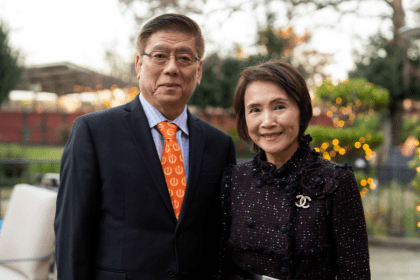
Among the foundational donors are the Stockton-based Cortopassi Family Foundation and Pacific Regent Tony Chan ’77, along with his wife, former Regent Virginia Chan ’77. In the landscape of USA education, private philanthropy plays an essential role in expanding institutional capacity, particularly in high-cost fields like medicine. Early gifts de-risk large projects, demonstrating to other potential donors and stakeholders that the initiative has both credibility and strong backing. The rapid acquisition of $25 million signals to the broader community that this project is a priority with tangible forward movement. Explore our related articles for further reading on how philanthropy shapes USA education initiatives.
Analyze the Chan Family’s Commitment to Health Equity
Tony and Virginia Chan have dedicated their careers and philanthropic efforts to promoting health equity and advancing high-quality health care. Both are graduates of Pacific’s Thomas J. Long School of Pharmacy, as are their children, Jonathan Chan ’09 and Megan Chan ’13. The family owns and operates several independent pharmacies in Southern California, serving thousands of patients annually. Their hands-on experience in community pharmacy provides them with a clear understanding of the barriers patients face when accessing care, particularly in underserved areas.
Their financial contributions to the new medical school continue a long history of championing community health. Over the decades, the Chan family has directed time and resources toward advancing health education, helping to build and renovate state-of-the-art teaching facilities at both the pharmacy school and the School of Health Sciences. They have also created multiple program endowments and established four scholarships for Pacific students entering various health fields. By focusing their resources on training future providers, the Chans are actively working to ensure that marginalized communities receive the care they need. Their involvement in the medical school project underscores the critical link between targeted donor support and long-term systemic improvements in health equity.
Review the Interdisciplinary Medical Education Model
University of the Pacific is not building its new medical school in a vacuum. The institution possesses a long history of educating successful health care providers, and the new school will leverage the existing strengths of the pharmacy and health sciences schools, alongside the Arthur A. Dugoni School of Dentistry. This interdisciplinary approach ensures that medical students are trained collaboratively, mirroring the team-based care models that are increasingly vital in modern healthcare settings.
A strong example of this model’s success is Pacific’s Physician Assistant (PA) Studies program. Tony Chan helped drive the creation of this graduate degree program, which launched in 2016. Because physician assistants can be trained more quickly than physicians and provide many of the same primary care services, they play a growing role in mitigating provider shortages. To date, Pacific’s PA program has graduated more than 300 alumni who are actively contributing to the healthcare workforce. The new medical school will build upon this established infrastructure, creating a comprehensive ecosystem of health education that benefits students and patients alike. Submit your application today to join the next generation of health care leaders.
Assess the Strategy for Retaining Physicians in California
A common challenge in addressing physician shortages is ensuring that doctors remain in the areas where they are needed most. Studies consistently show that a majority of California medical students remain to practice in the regions where they completed their training. By establishing an MD-granting program directly in Stockton, Pacific is utilizing a proven strategy to anchor future physicians in the Central Valley.
Medical students who complete their clinical rotations and residency training in the Central Valley develop professional networks, familiarity with local health systems, and personal ties to the community. These factors make them significantly more likely to establish their permanent practices in the area. This retention effect is the cornerstone of Pacific’s plan. Rather than recruiting doctors from outside the region and hoping they stay, the university is focusing on cultivating local talent and attracting students who have a pre-existing connection to or interest in Central Valley communities. This creates a durable, self-sustaining pipeline of providers equipped to handle the specific health challenges prevalent in the region. This localized approach has become a major focal point in recent California news regarding healthcare policy and regional development.
Identify Opportunities for Community Involvement
While the initial $25 million in donor support provides a robust foundation, fully realizing the vision for the University of the Pacific School of Medicine requires a collective effort. University leadership has emphasized that this milestone is only possible because of partners like the Chan family and the Cortopassi Family Foundation, but the $150 million goal necessitates broader community participation.
For those looking to contribute to the advancement of health equity and the improvement of regional healthcare, various avenues of involvement exist. The campaign offers naming opportunities for facilities, classrooms, and programs, allowing donors to leave a lasting legacy tied to the betterment of community health. Beyond financial contributions, local healthcare providers and organizations can partner with the university to offer clinical rotation sites and mentorship opportunities for future medical students. Building a successful medical school requires an ecosystem of support that extends far beyond the university campus. Have questions? Write to us to learn how you can support regional medical education.
Measure the Long-Term Benefits for the Central Valley
The establishment of a medical school in Stockton carries implications that extend far beyond the university’s campus. Economically, the project will create construction jobs, permanent faculty and staff positions, and increased local spending. More importantly, the long-term economic and social benefits of a healthier population are profound. When residents have reliable access to primary and preventive care, chronic diseases are managed more effectively, and the overall burden on emergency medical services is reduced.
Furthermore, the presence of a medical school elevates the academic profile of the region, attracting high-achieving students and professionals to the Central Valley. This influx of talent can spur further innovation in healthcare delivery and related industries. As the University of the Pacific moves forward with this campaign, the focus remains squarely on the end goal: improving the health and well-being of Central Valley residents. The early donor support has set a strong trajectory, but sustained commitment will be required to fully address the physician shortage and build a healthier future for the region. Share your experiences in the comments below regarding healthcare access in the Central Valley.