
Review President Wooten’s Simmons University Summer Reading List for USA Leadership News
Connect Professional Development with the Simmons University Summer Reading List
Building a consistent reading habit remains one of the most effective methods for professionals and students to stay informed about broader societal trends and refine their leadership capabilities. In recent higher education news, Simmons University President Lynn Perry Wooten curated a selection of books that serves as much more than a casual vacation checklist. This specific summer reading list functions as a focused study in contemporary leadership, highlighting the works of university alumnae/i, faculty, and trusted authors who demonstrate resilience, moral courage, and community engagement in the USA.
For aspiring leaders, examining the reading choices of established university presidents provides a practical blueprint for personal and professional development. Rather than focusing solely on standard business management texts, President Wooten’s selections span financial memoirs, revisionist fiction, historical accounts, and youth literature. This interdisciplinary approach reflects the complex realities modern leaders face, requiring them to draw insights from diverse fields to solve multifaceted problems. By engaging with these texts, readers can gain a clearer understanding of how to navigate crises, challenge established narratives, and foster inclusive environments.
Explore our related articles for further reading.
Analyze High-Stakes Leadership Through Eight Septembers
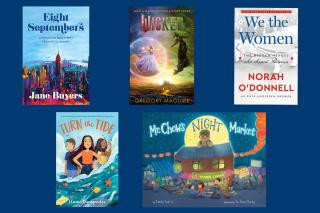
The first recommendation on this summer reading list is Eight Septembers: A Woman on Wall Street From 9/11 to Lehman by Jane Buyers, a 1981 Simmons alumna and Honorary Trustee. This memoir provides an unfiltered look at the USA financial sector during one of its most volatile periods. Buyers documents her experiences navigating the immediate aftermath of the September 11 attacks and the cascading failures of the 2008 financial crisis.
For professionals, this book offers critical lessons in crisis management and high-stakes decision-making. Financial news from the late 2000s often focused strictly on macroeconomic indicators and institutional collapse, but Buyers brings the narrative down to the individual level. She examines the psychological toll of leading teams through unprecedented uncertainty while managing personal well-being. Modern leaders can apply these insights by recognizing that sustainable leadership requires balancing aggressive professional demands with necessary mental health protocols. Buyers’ candid reflection on the rewards and pressures of executive roles serves as a case study in maintaining ethical standards when industry norms begin to fray.
Reframe Perspectives Using Wicked by Gregory Maguire
Gregory Maguire, a 1978 graduate of the Simmons University master’s program in children’s literature and a former faculty member, is best known for his novel Wicked. While many recognize the story through its massive success as a Broadway musical and film adaptation, the original text provides a much deeper exploration of propaganda, power dynamics, and the construction of history.
President Wooten highlighted a specific line from Maguire’s Commencement address that directly applies to leadership philosophy: “Remember this: Nothing is written in the stars. Not these stars, nor any others. No one controls your destiny.” In a business or civic environment, leaders frequently encounter entrenched narratives that dictate what is possible or impossible. Maguire’s retelling of the Oz mythos encourages leaders to question the origin stories of their organizations and industries. By understanding how fear and misunderstanding shape institutional policies, leaders can actively dismantle counterproductive cultures and reframe challenges as opportunities for innovation rather than insurmountable barriers.
Study Historical Advocacy in We the Women
As the USA approaches its 250th anniversary, understanding the historical context of leadership is vital. We the Women: The Hidden Heroes Who Shaped America by Norah O’Donnell and Kate Andersen Brower corrects the historical record by spotlighting the women who drove major social, political, and journalistic advancements without receiving commensurate recognition.
This selection aligns closely with the Simmons University mission of women-centered education and empowering leaders to drive meaningful change. For contemporary professionals, the book acts as a reminder that impactful leadership does not always occur in the spotlight. Many of the most significant shifts in USA policy and culture originated from persistent, behind-the-scenes advocacy. Leaders reading this text can learn to identify and elevate the quiet contributors within their own organizations. Furthermore, understanding the historical struggles for equity helps modern leaders design more inclusive strategies that acknowledge systemic barriers rather than attributing disparities solely to individual performance.
Support Youth Environmentalism with Turn the Tide
Leadership development is not exclusively for adults; it is a continuous pipeline that must be nurtured at every educational level. Turn the Tide by Elaine Dimopoulos, a 2008 graduate of the Simmons MFA program in Writing for Children, addresses this by presenting a novel-in-verse about youth environmental activism. The story follows a young protagonist who organizes her community to combat plastic pollution.
In the context of current USA news, where climate policy and corporate environmental responsibility are daily topics of debate, this book highlights the agency of younger generations. Organizational leaders and educators can use this narrative to understand the motivational drivers of Gen Z employees and activists. Rather than viewing youth advocacy as naive, effective leaders recognize it as a highly organized, values-driven movement. Dimopoulos’s work underscores that meaningful change often begins with small, localized actions—a concept that scales effectively from community organizing to corporate sustainability initiatives.
Schedule a free consultation to learn more.
Discover Innovative Community Building in Mr. Chow’s Night Market
Rounding out the summer reading list is Mr. Chow’s Night Market by Emily Sun Li, a 2024 graduate of the Simmons MA/MFA program. What began as a simple writing assignment evolved into a published picture book that explores adaptability and community building. The story centers on a grumpy supermarket owner who learns to pivot his business model, transforming a failing daytime grocery store into a vibrant, culturally rich night market.
While targeted at younger readers, the underlying business and leadership lessons are profound. In a rapidly changing USA economy, the ability to pivot—whether through digital transformation, shifting supply chains, or entirely reimagining a service model—determines long-term viability. Sun Li’s narrative demonstrates that innovation does not always require adopting complex new technologies; sometimes, it requires stepping back, observing community needs, and embracing existing cultural rhythms to create value. Leaders can apply this lesson by evaluating whether their current operational models truly serve their communities or if a fundamental, creative restructuring is necessary to thrive.
Integrate These Reading Insights into Your Leadership Strategy
Curating a summer reading list based on institutional values is a deliberate practice that professionals at any stage of their career can replicate. The selections from Simmons University demonstrate that effective leadership requires a blend of historical awareness, emotional intelligence, moral courage, and creative problem-solving. By studying the resilience of a Wall Street executive during a financial crash, the narrative reframing of a literary classic, the unrecognized labor of historical figures, the passion of youth activists, and the business acumen of a fictional shop owner, readers gain a holistic view of what it takes to lead in the modern USA.
Take the time to assess your own reading habits. Are you exclusively consuming content related to your immediate industry, or are you branching out into history, fiction, and cultural studies to build a more robust cognitive toolkit? Use this summer reading list as a framework to diversify your intake and challenge your existing assumptions about power, community, and success.