
Evaluate University of the Pacific News: Student Innovation at the Annual Research Showcase
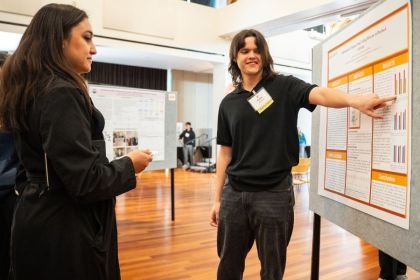
Examine the Role of Creativity in Education at University of the Pacific
Assess how modern universities bridge the gap between theoretical classroom learning and practical, real-world application. At University of the Pacific, creativity in education takes center stage through events like the annual Research and Creativity Showcase. Held on April 27 at the DeRosa University Center, this event provided a platform for students to present over 100 distinct research topics spanning multiple academic disciplines. Rather than simply memorizing existing data, students actively generated new perspectives on complex issues.
Zachary Stahlschmidt, professor of biological sciences and director of undergraduate research at Pacific, emphasized the foundational philosophy of the event. He noted that the most compelling projects originate directly from student curiosity. Faculty members act as facilitators, helping students investigate their own original questions and leveraging natural human curiosity to solve new problems. This approach represents a significant shift from traditional lectures to active, inquiry-based learning.
For prospective students and parents evaluating institutions, the presence of a robust undergraduate research program serves as a strong indicator of academic quality. Universities that prioritize these opportunities consistently produce graduates who are better prepared for the rigors of graduate school and competitive job markets. Schedule a free consultation to learn more about how to identify universities with strong undergraduate research frameworks.
Analyze Cross-Disciplinary Projects at the Research Showcase
Review the specific projects presented during this year’s showcase to understand the breadth of student innovation on display. The event demonstrated that meaningful research extends far beyond the confines of a single academic department, intersecting arts, humanities, and the hard sciences.
Connect Music Performance and Biology Through the Swiss Alphorn
Consider the project presented by Lillian Walter ’29, a double major in music performance and biology, and Ciera Alkhoury ’29, a music performance major. Their research, titled “Swiss Alphorn Traditions: Informing Modern Horn Playing and Pedagogy,” investigated the historical and practical applications of a 12-foot wooden instrument. Because the alphorn lacks valves, players must rely entirely on their embouchure—the precise manipulation of facial muscles—to navigate the harmonic series.
This simplicity offers distinct pedagogical benefits for modern brass students. By experimenting with an alphorn, students can isolate and master the harmonic series without the mechanical complexity of a modern French horn. During the showcase, Walter and Alkhoury did not simply deliver a standard presentation; they provided historical context, demonstrated the instrument, and invited audience members to attempt playing it. This level of public engagement requires a deep mastery of the subject matter and the ability to communicate complex musical physics to a lay audience.
Furthermore, undergraduate mentorship played a critical role in this project. The students worked closely with Professor Sadie Glass, an expert in this niche area of pedagogy. The tangible outcome of this research includes Walter traveling to Switzerland at the end of the summer to participate in the International Alphorn Festival, proving that undergraduate research can directly facilitate international academic opportunities.
Monitor Environmental Changes Through Seabird Physiology
Shift focus to the natural sciences to evaluate the work of Lauren Hahn ’26 and Gagik Mkrtchian ’26. Their project, “Bridging Physiology and Population Dynamics in Cassin’s Auklets Through Biomarker Analysis,” addressed pressing ecological concerns relevant to current USA news regarding climate change and environmental degradation. The duo monitored seabirds residing on the southeast Farallon Island, located west of San Francisco.
Establishing a physiological baseline through biomarker analysis—specifically by measuring the contents of the birds’ blood—allows researchers to track population health over time. Cassin’s Auklets serve as primary indicators of environmental changes. When ecological events place significant stress on these birds, the physiological data provides early warning signs of broader environmental shifts, including the impacts of global warming. By conducting this research as undergraduates, Hahn and Mkrtchian gained hands-on experience in field ecology, laboratory analysis, and data interpretation, contributing valuable data to the broader scientific community. Explore our related articles for further reading on how undergraduate research impacts local and global ecological studies.
Investigate Local History: Prohibition in San Joaquin County
Apply critical thinking to the humanities through the research of Elisa Villalpando ’26, a history major. Her project, “The Curse of the Liquor Sale: An Examination of the Prohibition Movement in San Joaquin County from 1905-1933,” explored a unique regional phenomenon. While surrounding counties exhibited strong, unified stances on prohibition, San Joaquin County maintained a nearly even 50/50 split on the issue.
Villalpando’s work required extensive archival research, tracking down historical documents, and synthesizing conflicting primary sources to understand the cultural and economic factors driving this local indecision. For students, this type of project builds highly transferable skills in critical analysis, persuasive writing, and evidence-based argumentation. As a Stockton native, Villalpando also demonstrated how local history projects can give students a deeper personal connection to their community, transforming abstract historical concepts into tangible local narratives.
Assess the Benefits of Undergraduate Research for Career Readiness
Understand why participating in a research showcase directly correlates with improved career readiness. The process of taking a project from an initial concept to a public presentation mimics the standard workflow in many professional environments. Students must learn to manage timelines, overcome unexpected obstacles, and collaborate with peers and faculty mentors.
During the event, students fielded questions from university leadership, including Provost and Executive Vice President for Academic Affairs Gretchen Edwalds-Gilbert, and Vice President for Diversity, Equity and Inclusion Mary Lomax-Ghirarduzzi. Defending one’s research to high-level administrators builds professional confidence and refines a student’s ability to articulate complex ideas under pressure.
Other notable projects highlighted during the showcase further illustrate this diversity of thought. Third-year student Ryker Saltonstall ’27 presented findings on the calling behavior of the male túngara frog, a classic study in evolutionary biology and animal communication. Another group presented research on whole body regeneration in sea star larva, touching on advanced biological concepts with implications for regenerative medicine. These varied topics prove that student innovation is not confined to a single field; it is a campus-wide culture. Submit your application today to universities that prioritize these high-impact learning experiences.
Apply These Lessons to Your Own Academic Journey
Use the model established by the University of the Pacific news to evaluate your own academic priorities. When researching prospective colleges, look beyond standard marketing brochures. Investigate whether the institution hosts annual symposiums, provides dedicated funding for undergraduate projects, and requires faculty to actively mentor students outside the classroom.
Ask specific questions during campus visits: How many students present at national conferences? Are there dedicated office spaces or labs for undergraduate researchers? Do faculty members actively recruit undergraduates for their grant-funded projects? Institutions that answer these questions affirmatively are investing heavily in the long-term success of their students.
For current high school students, developing a research mindset does not require waiting for college admission. Start by identifying questions in your own community. Whether you are analyzing local water quality, documenting regional folklore, or building engineering prototypes, the goal is to practice the methodology of inquiry. Learn to formulate a hypothesis, gather data, and draw logical conclusions. Have questions? Write to us! for advice on how to build a strong foundation in research skills before entering university.
Review the Future of Student Innovation in Higher Education
Recognize that the landscape of higher education continues to evolve, placing greater emphasis on practical, demonstrable skills. The traditional model of passive learning is increasingly insufficient in a competitive global economy. Events like the Research and Creativity Showcase represent the future of academia—a future where creativity in education is not just an elective extracurricular activity, but a core component of the undergraduate experience.
By supporting over 100 diverse projects in a single day, University of the Pacific demonstrates that student innovation thrives when institutions provide the necessary resources, mentorship, and platforms for public expression. Whether a student is analyzing the physiological stress markers of seabirds or reconstructing the historical nuances of local prohibition laws, the underlying process remains the same. Students learn to think critically, communicate effectively, and solve complex problems. These are the competencies that employers, graduate programs, and society at large demand. Share your experiences in the comments below regarding the role of hands-on research in shaping academic and professional success.