
University of the Pacific Announces 2026 Order of Pacific Awardees for Commencement
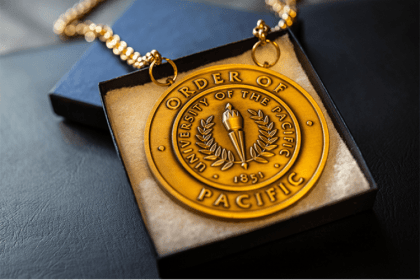
Understanding the Order of Pacific Award
Commencement ceremonies across the USA represent a significant milestone, marking the transition of students from academic life into professional careers. At the University of the Pacific, the upcoming commencement exercises hold additional significance as the institution prepares to recognize individuals who have fundamentally shaped the academic environment. The highlight of this year’s ceremony is the conferral of the Order of Pacific, the university’s highest honor.
Established more than 70 years ago, the Order of Pacific is not a standard retirement plaque or a basic thank-you gesture. It is a rigorous distinction reserved exclusively for faculty, staff, and regents whose contributions have left a permanent, positive mark on the university. The award evaluates a candidate’s history of exceptional leadership, innovative teaching, and meaningful, measurable impact on the institution’s growth. In the landscape of higher education news, internal faculty and leadership awards often go unnoticed by the broader public. However, understanding who a university chooses to elevate to its highest honor reveals the institution’s true priorities—whether it values financial stability, student-centric teaching, community health outreach, or legal education reform.
Schedule a free consultation to learn more about University of the Pacific programs and values.
Paul Dassenko: Strengthening Institutional Finances and Governance
The first of the 2026 Order of Pacific honorees is Paul Dassenko ’82, whose 20 years of service to the University of the Pacific have been defined by strategic financial leadership. Dassenko brings a unique professional background to the Board of Regents, combining decades of senior executive experience in financial services with a highly active career as an arbitrator and mediator. Since joining the Board of Regents in 2017, Dassenko’s influence on the university’s economic health has been substantial.
Higher education in the USA has faced severe financial headwinds in recent years, from declining demographic pools of traditional students to inflationary pressures on campus operations. Under Dassenko’s leadership—particularly during his time chairing the investment committee—the University of the Pacific’s endowment grew by more than $300 million. This level of fiscal growth provides a critical buffer against economic volatility and directly funds student scholarships, faculty research, and campus infrastructure. Beyond the balance sheet, Dassenko’s tenure on the board coincided with the university achieving its highest enrollment figures and best national rankings in its history. His governance contributions include approving 30 new degree programs, overseeing the opening of the School of Health Sciences in Sacramento, and successfully steering the institution through the complex operational challenges of the COVID-19 pandemic.
As a McGeorge School of Law alumnus, Dassenko has also maintained a focused commitment to legal education. He established the Paul Dassenko Endowed Scholarship, utilizing the Powell Match to double its financial impact. This scholarship specifically supports McGeorge students pursuing international law or alternative dispute resolution, ensuring that the next generation of legal professionals has the resources necessary to enter complex, globalized legal fields.
Explore our related articles for further reading on Pacific’s strategic growth and financial governance.
Nader A. Nadershahi: Leading the Dugoni School of Dentistry Through Crisis
The second honoree, Nader A. Nadershahi ’94, ’99, ’11, is an alumnus and professor emeritus of the Arthur A. Dugoni School of Dentistry. With 30 years of service to the university, Nadershahi’s decade-long tenure as dean of the dental school represents one of the most challenging and transformative periods in the institution’s history. Leading a health sciences school requires balancing rigorous academic standards with the practical demands of running a clinical training facility. Nadershahi excelled in this environment, but his defining leadership moment came during the onset of the COVID-19 pandemic.
Dental education was uniquely vulnerable to the pandemic. Training future dentists requires close physical contact with patients in an environment where aerosol-generating procedures are standard. Amid widespread uncertainty and institutional shutdowns across the USA, Nadershahi’s leadership provided vital continuity. He safeguarded faculty and staff employment, ensured that students met clinical requirements to graduate on time, and pivoted the school’s resources to deliver thousands of vaccinations to the surrounding community. This shift from educational institution to critical public health asset demonstrated the practical value of university-community partnerships during a crisis.
Prior to the pandemic, Nadershahi was already recognized as a catalyst for change within dental education. He championed transformative curriculum reforms that moved away from outdated, siloed teaching methods toward integrated, patient-centered models. These innovations in dental education and new models for patient care delivery became nationally recognized templates for other dental schools to follow. Furthermore, his work enhancing accreditation processes and establishing clear faculty development pathways has ensured that the Dugoni School remains well-positioned for future academic review cycles.
Cindy Ostberg: Innovating Pre-Law Education and Student Advocacy
Cindy Ostberg, a professor of political science with 31 years of service, represents the vital role of undergraduate education in a comprehensive university. Described by her peers as a “game changer” in leadership and innovation, Ostberg’s impact is most visibly realized through the creation of the Pacific Legal Scholars Program in 2007, now known as the Pacific Legal Advantage. Law school admissions in the USA are highly competitive, and undergraduate institutions often struggle to differentiate their pre-law advising. Ostberg solved this by designing an honors pre-law program that goes far beyond basic LSAT preparation.
The Pacific Legal Advantage offers an accelerated degree option and, crucially, integrates hands-on learning opportunities that allow undergraduate students to engage directly with legal concepts and professionals. By structuring the program this way, Ostberg fundamentally changed how the University of the Pacific prepares students for legal careers, giving them a demonstrable edge in law school admissions and early legal practice.
Beyond program development, Ostberg is recognized for her dedication to student success inside the classroom. Her pedagogical focus on writing and oral presentation assignments requires students to express their thoughts articulately, critically, and persuasively—skills that are absolutely fundamental to success in law school and beyond. This commitment to practical, skills-based learning has earned her multiple teaching honors, including the 2012 Spanos Distinguished Teaching Award from the College of the Pacific and an excellence in teaching award from Phi Beta Kappa. Her work illustrates how dedicated faculty can directly influence the career trajectories of their students through intentional curriculum design.
Have questions? Write to us to learn more about undergraduate pre-law pathways at Pacific.
Craig Yarborough: Building Community Partnerships and Philanthropic Success
The final 2026 Order of Pacific honoree is Craig Yarborough ’77, ’80, ’99, who has dedicated 33 years of service to the University of the Pacific. Yarborough’s career path offers a compelling case study in the value of practitioner-to-educator pipelines. After spending 13 years in private dental practice in Lodi, California, he returned to the Dugoni School in 1993 as a full-time faculty member and administrator. His peers note that his time on campus has been defined by distinction, integrity, and an unwavering commitment to the university’s mission.
Yarborough’s most significant administrative achievement was his key role in the “Commitment to Excellence” campaign, which raised more than $65 million. To put this in context, this was the largest philanthropic campaign in dental education history at the time. Securing funding of this magnitude requires more than just asking for donations; it requires building a compelling case for support, maintaining deep relationships with alumni, and demonstrating a clear vision for how the funds will elevate the institution. The capital generated by this campaign directly elevated the Dugoni School’s facilities, expanded scholarship offerings, improved faculty resources, and bolstered the school’s national reputation.
Throughout his career, Yarborough has functioned as a critical bridge between the university and the broader professional community. He has effectively connected students, alumni, donors, professional organizations, and civic partners in service of shared educational goals. Furthermore, his dedication to mentoring young professionals and students has fostered a culture of leadership and generosity that extends far beyond his individual administrative accomplishments.
The Significance of the 2026 University of the Pacific Commencement
Analyzing the combined achievements of these four Order of Pacific awardees provides a clear picture of the University of the Pacific’s strategic direction. The recognition of Paul Dassenko highlights a commitment to financial stability and proactive board governance. Nader Nadershahi’s award underscores the importance of resilient, innovative leadership in health sciences education. Cindy Ostberg’s honor points to a strong foundation in undergraduate, pre-professional teaching. Finally, Craig Yarborough’s recognition emphasizes the power of philanthropy and community engagement.
For prospective students and families evaluating universities in the USA, the quality of a commencement ceremony is often measured by the success of the graduating class. However, the internal honors bestowed at these ceremonies—like the Order of Pacific—serve as a critical barometer for institutional health. A university that takes the time to rigorously evaluate and celebrate the behind-the-scenes work of its regents, deans, and professors is one that maintains a strong internal culture. This culture of recognition directly benefits students, as it attracts and retains high-caliber faculty and administrators who are invested in the long-term success of the institution.
The 2026 All-University Commencement at the University of the Pacific will not only celebrate the academic achievements of the graduating class but will also serve as a public affirmation of the leadership that makes those achievements possible. The Order of Pacific stands as a testament to the enduring value of dedicated service in higher education.
Submit your application today to join a community shaped by dedicated leaders and innovators.
Share your experiences in the comments below regarding the impact of dedicated faculty and leadership in your own academic journey.