Assess the Role of Loyalty in NCAA Recruitment at University of the Pacific
Why Character and Commitment Matter in College Sports
Recruiting in collegiate athletics requires a massive investment of time, resources, and energy from both universities and high school prospects. In modern NCAA news across the USA, the conversation around recruitment often centers on athletic metrics, playing time, and facility upgrades. However, an equally critical, though sometimes less visible, factor dictates where student-athletes ultimately choose to continue their careers: character and commitment. For many recruits, understanding the underlying culture of a program is just as important as the X’s and O’s written on a coaching whiteboard.
When evaluating potential colleges, high school athletes are increasingly looking for environments that mirror their personal values. They want to know how a coaching staff handles adversity, how they treat players who are not scoring the most points, and how they respond when a player faces a severe setback. This shift in priorities places a premium on loyalty—a trait that is difficult to quantify but immediately felt by recruits and their families. Programs that demonstrate unwavering support for their athletes tend to build stronger, more cohesive teams that can withstand the grueling demands of a competitive season.
Schedule a free consultation to learn more about navigating the college recruitment process.
The Recruiting Process Through the Eyes of a Coach’s Child
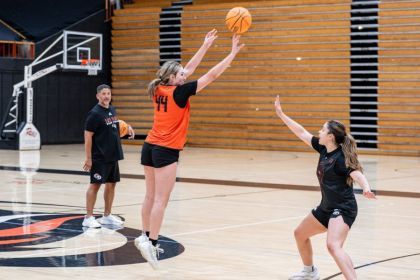
Gaining an insider’s perspective on college athletics is a rare advantage that few high school recruits possess. Bella Burcar ’29, a recent addition to the University of the Pacific’s women’s basketball program, brings exactly this kind of informed viewpoint. Growing up around college basketball, she watched her father, Shane Burcar, operate as the head coach of Northern Arizona’s men’s basketball team. This unique upbringing allowed her to observe the intricacies of the recruiting process from the sidelines long before she became a prospect herself.
For Burcar, watching her father manage a Division I program provided a clear-eyed view of what coaches actually need from their players. She learned early on that talent alone is rarely enough to sustain a successful collegiate career. Instead, she noted that coaches prioritize recruits who exhibit humility, a strong family orientation, mental and physical toughness, and a relentless competitive drive. By understanding these underlying priorities, she was able to approach her own recruitment with a mature, grounded mindset, focusing on finding a program that valued the same characteristics she had been taught to embody.
Seeing the administrative and emotional side of coaching also helped her recognize the importance of a harmonious locker room. When student-athletes take responsibility for their own academic and athletic obligations, it allows the coaching staff to focus on strategy and development rather than discipline. This behind-the-scenes knowledge made her highly intentional when evaluating her own collegiate options.
Navigating the Uncertainty of Sports Injuries
The Mental Toll of ACL Injuries on Student-Athletes
One of the most daunting challenges a high school athlete can face is suffering a severe injury just before or during the recruiting process. Anterior Cruciate Ligament (ACL) tears are notoriously common in sports like basketball, and the rehabilitation process is physically grueling and emotionally exhausting. For a recruit, an ACL injury introduces immense uncertainty. There is often a lingering fear that college coaches will rescind their scholarship offers, pull back their interest, or move on to other healthy prospects.
The mental toll of an ACL reconstruction extends far beyond the physical pain of the surgery. Student-athletes must confront the possibility that the identity they have built around their sport is temporarily stripped away. They face months of solitary rehabilitation, missing out on prime showcasing opportunities like AAU tournaments and high school senior seasons. During this vulnerable period, the communication— or lack thereof— from college recruiters can either provide crucial emotional support or compound the athlete’s anxiety.
How Coaching Staffs Can Prove Their Dedication
It is within this high-stress environment that the true measure of a coaching staff’s loyalty is revealed. When Burcar suffered her ACL injury in 2024, the response from University of the Pacific Head Coach Bradley Davis and his staff spoke volumes. Instead of distancing themselves or reducing their level of contact, the Pacific coaching staff maintained their commitment to her. They stayed by her side throughout the year-long rehabilitation process, proving that their interest was in her as a person first and a player second.
This kind of steadfast support is exactly what recruits and their families hope to find but rarely guarantee. For Burcar, the staff’s actions during her injury removed any lingering doubts about where she wanted to play. Knowing that a program will stand by you when you cannot contribute on the court fosters a deep, reciprocal sense of loyalty. It builds a foundation of trust that translates into hard work and dedication once the athlete is finally cleared to return to play.
Share your experiences with the recruiting process in the comments below.
Building a Winning Culture at University of the Pacific
The women’s basketball program at University of the Pacific is actively working to cultivate a culture built on mutual respect, resilience, and loyalty. The addition of Burcar is just one piece of a broader effort by the coaching staff to bring in high-character individuals who fit this specific mold. During the 2025 signing day, the Tigers secured three first-year students, including Burcar, Jordyn Dyer ’30, and Payton Montgomery ’30. Furthermore, the roster has been bolstered by graduate students Jojo Nworie ’28 and Victoria Rivera ’28, along with junior Yana Karamfilova ’27.
Integrating six newcomers into a collegiate basketball program requires a deliberate approach to team chemistry. When new players arrive with a shared understanding of what loyalty and hard work look like, the transition from the off-season to regular-season play becomes significantly smoother. The coaching staff’s ability to attract transfers and freshmen who buy into this culture suggests a clear, consistent messaging strategy on the recruiting trail. As the season approaches, these newcomers will be tasked with translating the values discussed in recruiting visits into tangible effort during summer practices and early-season games.
With the season tipping off in early November against Simpson, the Tigers are aiming to demonstrate that a team bound together by genuine commitment can outperform groups relying solely on individual talent. Fans and analysts tracking NCAA news in the USA will be watching to see how this newly assembled roster gels under pressure.
Submit your application today to become part of a supportive academic and athletic community.
Essential Communication Skills for Aspiring Student-Athletes
Beyond identifying a loyal program, recruits must also possess the skills necessary to thrive within one. As Burcar transitions into her collegiate career, she highlights communication as the most critical skill she has leaned on. Growing up in a coaching household, she learned that clear, proactive communication is the glue that holds a team together. This means informing coaches well in advance about treatment schedules, expressing physical limitations during workouts, and simply keeping the lines of dialogue open.
Equally important is the practice of expressing gratitude. A simple thank you to a coach, athletic trainer, or academic advisor goes a long way in building professional relationships. For high school athletes preparing to enter the collegiate ranks, developing these soft skills should be a top priority. Coaches appreciate players who take ownership of their experience rather than waiting to be micromanaged. When an athlete communicates effectively, it minimizes misunderstandings and ensures that the coaching staff can accurately assess their readiness to participate.
Aspiring student-athletes should practice these habits long before they arrive on a college campus. They can start by taking the initiative to email their high school or club coaches about their progress, asking for constructive feedback, and handling scheduling conflicts with maturity. These small, consistent actions signal to college recruiters that a prospect is prepared for the responsibilities of Division I athletics.
Explore our related articles for further reading on preparing for college athletics.
What Parents and Recruits Should Look For in a Program
The story of loyalty at Pacific serves as a valuable case study for families currently navigating the recruiting process. When evaluating a school, recruits should look beyond the glossy brochures and flashy facility tours. They need to ask hard questions about how the program handles adversity. How does the staff treat players who are injured? What is the turnover rate among assistant coaches? How do current players describe the culture when coaches are not in the room?
Parents play a crucial role in this evaluation process. While they should allow their child to take the lead in communicating with coaches, parents can help by asking objective questions during official visits. They can observe the body language of the coaching staff during games and pay attention to how the academic support staff interacts with the athletes. A program that genuinely values its student-athletes will exhibit consistency across all these touchpoints.
Choosing a college is a monumental decision that impacts an athlete’s trajectory long after their playing days are over. By prioritizing loyalty, communication, and character over superficial perks, recruits can find programs that will support them through both the triumphs and the inevitable challenges of collegiate sports.
Have questions? Write to us for guidance on evaluating college athletic programs.