
University of the Pacific Marks 175 Years With Record Enrollment, Top Rankings, and a New School of Medicine
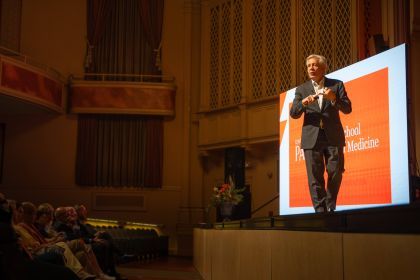
University of the Pacific has entered its 175th year with what President Christopher Callahan called “tremendous progress” on nearly every measure that matters in modern higher education: enrollment, fundraising, national rankings, and academic reach. Speaking at his fifth annual State of the University address on September 3, Callahan outlined a university gaining measurable momentum at a moment when many American institutions are cutting programs, freezing hiring, or closing entirely. For students, families, educators, and policy watchers following education news, the address offered both a detailed institutional report and a broader signal about where California education is headed.
Record Rankings and Enrollment Point to Stability in California Higher Education
The clearest evidence of Pacific’s momentum comes from external validation. The Wall Street Journal ranked the university No. 85 among all schools and colleges nationwide in its most recent report—the highest national ranking in Pacific’s history. Just as telling, the Journal placed Pacific at No. 36 in the country for social mobility, a measure of how effectively a university serves students from lower-income backgrounds and moves them toward economic success after graduation.
Callahan highlighted that social mobility ranking as a point of institutional pride. “The ability to take our students, first-generation students and students from lower socioeconomic backgrounds, and give them the opportunity to receive a Pacific education—it changes the trajectory of their lives,” he said.
The enrollment growth behind these rankings reflects strategy rather than chance. Pacific has recorded its highest enrollment numbers over each of the past four years, a notable accomplishment at a time when roughly 150 colleges and universities across the United States have closed within the past decade. As families weigh cost against outcomes more carefully than ever, institutions that can demonstrate both prestige and access are positioned to attract applicants. Pacific’s expansion of academic offerings, its investment in student resources, and its improving national profile all feed that cycle.
Considering a university that pairs national recognition with personal attention? Schedule a campus visit in Stockton, Sacramento, or San Francisco to meet faculty and current students firsthand.
A New School of Medicine Targets a 19-County Physician Shortage
The most consequential initiative announced this year is the planned University of the Pacific School of Medicine, unveiled in May. The school is designed to address a severe and growing shortage of physicians across a 19-county region of central California—a persistent gap with direct consequences for patient access and health equity.
Early support has been substantial. The university has already secured more than $30 million for the new school, including a $2 million seed grant awarded by the state of California. A national search for the inaugural dean is underway, a decision that will shape the school’s academic culture, clinical partnerships, and research agenda for years to come.
At the address, Callahan framed the stakes plainly. “We use the word transformational too loosely in higher education,” he said. “This is transformational for our university. This is transformational for our region to try to close the health care disparities that exist across central California.”
For observers of California education policy, the medical school carries significance well beyond one campus. Research consistently shows that physicians tend to practice where they train. A medical school anchored in an underserved region, with a mission focused on local health needs, could influence care delivery across the Central Valley and adjacent counties for decades—precisely the kind of long-horizon investment that state policymakers have been urging universities to make.
Want to follow the School of Medicine as it develops? Request more information or subscribe to the university’s newsroom updates for announcements about the dean search and program launch.
New Academic Programs Respond to Workforce and Cultural Demand
Beyond the medical school, Pacific launched six new academic programs during the past year, each tied to demonstrated need:
- Master’s degree in midwifery: created to address statewide maternity care shortages, particularly in rural and underserved communities where obstetric services have disappeared.
- Expanded Conservatory of Music degrees: new pathways through one of the West’s oldest and most respected music programs, giving students additional professional routes in performance, composition, and the music industry.
- Two new varsity sports: the addition of STUNT and men’s volleyball broadens opportunities for student-athletes and widens the university’s recruiting reach.
The pattern here is deliberate. Rather than adding programs for their own sake, Pacific has aligned its expansion with documented gaps—maternity care, music education, health services—where graduates step into clear professional demand.
The San Francisco 49ers Partnership Creates Career Pathways
A multi-year partnership with the San Francisco 49ers, launched last fall, has quickly become one of the university’s most visible assets. As the organization’s official higher education partner, Pacific students gain access to career development programming, internships, and hands-on learning experiences, including a guest lecture series featuring key members of the 49ers organization.
For students pursuing sports management, media, business operations, or health sciences, the partnership converts classroom study into professional exposure few universities can offer. It also reflects a broader strategic insight relevant across higher education news: institutions that connect academic programs directly to industry partners with real hiring needs give their graduates a tangible advantage in the job market.
National Recognition for Community Engagement and Opportunity
Two national classifications earned over the past two years reinforce Pacific’s positioning around access and community impact. In 2026, the university received the Carnegie Elective Classification for Community Engagement, a voluntary national designation held by a relatively small share of American institutions. The year before, Pacific was designated an “Opportunity College and University” under a new Carnegie framework that measures graduate earnings and access to a college education regardless of socioeconomic background.
Together, these designations indicate that Pacific’s social mobility outcomes are structural rather than incidental. They reflect sustained investment in access programs such as the Community Involvement Program, and in partnerships across three campuses—Stockton, Sacramento, and San Francisco—each tied to distinct regional economies and community needs.
Fundraising Fuels a New Wave of Campus Facilities
Philanthropic momentum is translating into physical growth. Pacific’s second-highest fundraising year produced $63 million in support of major initiatives and student resources. Several significant facilities are scheduled to open within the coming year:
- A student-athlete and sports medicine center on the Stockton campus, supporting the university’s growing athletics programs.
- An ambulatory surgical center in San Francisco, expanding oral health care capacity through the Arthur A. Dugoni School of Dentistry.
- The Jie Du Inn, a hospitality facility supporting campus visitors, events, and academic programs.
These projects matter for reasons beyond construction. Modern clinical facilities expand patient care capacity in San Francisco; athletic and wellness infrastructure strengthens recruitment and retention; and hospitality assets support conferences and community engagement. Each connects back to the university’s core functions of education, care, and service.
What Pacific’s Trajectory Signals for Higher Education Across the USA
Pacific’s current run is best understood against the backdrop of a sector under strain. Rising costs, skeptical families, and projected enrollment declines have pushed many institutions toward mergers, deep program cuts, or closure. In that environment, a 175-year-old university posting record rankings, four straight years of enrollment growth, and a new medical school is a data point worth attention from anyone tracking USA news in education.
The transferable lesson is not that every institution should launch a medical school. It is that universities which identify regional needs, build employer partnerships, and demonstrate measurable outcomes for students from all income levels have a durable and credible story to tell. Pacific’s No. 36 national ranking for social mobility may ultimately prove more consequential to its future than any single building, because it answers the question families now ask first: what actually happens to graduates?
To stay current on the School of Medicine and other California education developments, subscribe to a trusted education news source and follow institutional newsrooms directly.
Key Takeaways From the 2026 State of the University Address
- Highest national ranking in school history: No. 85 overall and No. 36 for social mobility, per the Wall Street Journal.
- Four consecutive years of record-high enrollment amid sector-wide contraction.
- $63 million raised—the second-highest fundraising year in university history.
- Announced School of Medicine with more than $30 million already committed, including $2 million in state seed funding.
- Carnegie Elective Classification for Community Engagement, adding to the earlier “Opportunity College and University” designation.
- Six new academic programs, including a midwifery master’s degree and expanded Conservatory of Music degrees.
- Multi-year San Francisco 49ers partnership delivering internships, guest lectures, and career development.
- New facilities opening soon: a sports medicine center, a San Francisco surgical center, and the Jie Du Inn.
Final Thoughts
For students weighing options within California education, for educators tracking institutional strategy, and for general readers following higher education news, the 2026 State of the University address made one point clear: University of the Pacific is entering its 176th year with confidence backed by numbers. The combination of a new medical school aimed at a documented regional crisis, national recognition for social mobility, and record enrollment suggests a university executing a coherent plan rather than reacting to sector pressures.
Have experience with University of the Pacific or thoughts on how universities should balance growth with access? Share your perspective in the comments below. If you found this overview useful, explore our related articles on higher education news and USA news for further reading.