UNE Twins Complete Medical School Journey Together, Matching Into Residency Programs Across the Northeast
From Pakistan to Maine: A Family’s Medical School Milestone
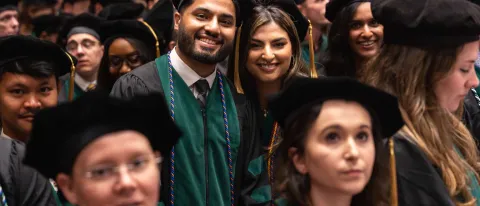
>When Hafsa and Hammad Sadiq received their Doctor of Osteopathic Medicine degrees from the University of New England College of Osteopathic Medicine, the ceremony represented more than academic achievement. It marked the culmination of a family’s multi-continent journey and the realization of a dream held by two first-generation students who navigated the rigors of medical education side by side.
The fraternal twins, born in Pakistan and raised partly in Saudi Arabia, immigrated to the United States with their family in 2010. After settling in Massachusetts, they pursued separate undergraduate paths—Hammad at Worcester Polytechnic Institute and Hafsa at the College of the Holy Cross—before reuniting at UNE’s medical school in Maine. Their graduation in May 2026 placed them among 166 medical students matched to residencies in critical fields ranging from primary care to surgery.
What made their commencement particularly meaningful was a longstanding medical education tradition: the doctoral hooding ceremony. UNE allows graduating students to select who will present their doctoral hoods, symbolizing the transition into the medical profession. The Sadiq siblings requested to hood each other—a gesture the University enthusiastically supported.
Schedule a free consultation to learn more about UNE’s medical programs and admissions process.
Personal Experiences That Shaped Two Medical Careers
A Diagnosis That Changed Hammad’s Path
Hammad Sadiq’s route to medicine was not linear. During his undergraduate years, he received a diagnosis of Crohn’s disease, an inflammatory bowel condition that fundamentally altered his perspective on healthcare. Originally drawn to research and biotechnology, Hammad found himself reconsidering his career trajectory during one of the most challenging periods of his life.
The physicians who managed his care during this time became unexpected mentors—not through formal relationships, but through the quality of their treatment. Their approach to his condition demonstrated how medical expertise combines with human compassion to guide patients through health crises.
That experience redirected Hammad toward physical medicine and rehabilitation, a specialty focused on restoring function and quality of life to patients with physical impairments or disabilities. He matched into a residency at Burke Rehabilitation in White Plains, New York—a program that aligns with his personal understanding of how chronic illness affects patients’ daily lives.
Advocacy Born From Necessity
Hafsa Sadiq’s motivation to pursue medicine emerged much earlier, rooted in her family’s immigrant experience. After arriving in the United States, her mother faced significant barriers accessing healthcare, complicated by limited English proficiency and poorly managed diabetes.
As a young person, Hafsa assumed the role of translator and healthcare advocate during her mother’s medical appointments. This responsibility gave her direct exposure to the gaps in culturally sensitive care and the challenges non-English-speaking patients navigate within the American healthcare system. She observed how communication barriers could lead to misunderstandings about treatment plans, medication instructions, and follow-up care.
That formative experience led Hafsa toward anesthesiology—a specialty where clear communication, patient trust, and attention to individual needs are paramount. She matched into an anesthesiology residency at Rutgers Robert Wood Johnson Medical School in New Jersey, where she will continue developing the skills to advocate for patients who may struggle to advocate for themselves.
The Decision to Attend UNE College of Osteopathic Medicine
Despite attending different undergraduate institutions, the twins maintained close collaboration throughout their pre-medical preparation. They studied together for the MCAT, shared volunteer experiences in healthcare settings, and coordinated their medical school applications.
Several factors influenced their mutual decision to choose UNE:
- Geographic proximity to family: Maine’s location allowed them to remain connected to their parents in Massachusetts while gaining independence from their childhood home.
- Community-centered curriculum: UNE’s emphasis on producing physicians who serve community needs aligned with both siblings’ desire to practice in underserved areas.
- Supportive learning environment: As first-generation medical students, they valued an institution that would provide academic and personal support throughout the demanding four-year program.
- Osteopathic philosophy: The whole-person approach to medicine inherent in osteopathic education resonated with their experiences as patients and family advocates.
Explore our related articles for further reading about medical school selection and the osteopathic medical education pathway.
Navigating Medical School as Twins
Entering medical school together provided the Sadiqs with a built-in support system that proved invaluable throughout the program’s rigorous demands. While they did not complete every rotation or course alongside each other, they maintained consistent communication about academic challenges, clinical experiences, and career planning.
During their clinical years, both were placed at the same training site in New Jersey—an arrangement that allowed them to share housing and continue their pattern of mutual support. They debriefed after challenging patient encounters, practiced clinical skills together, and provided perspective when one or the other faced moments of doubt.
This dynamic reflects a broader truth about medical education: while the journey is often described as individual, most successful students rely on networks of peer support. The Sadiqs simply had the advantage of a support system forged over a lifetime rather than formed during orientation week.
Deliberate Residency Selection
Even as they prepared to separate professionally, the twins approached residency selection with their characteristic coordination. Rather than pursuing matches in different regions of the country, they targeted programs in the Northeast that would keep them geographically close to each other and to their family in Massachusetts.
Hammad’s position at Burke Rehabilitation in White Plains and Hafsa’s placement at Rutgers in New Jersey represent a deliberate compromise: establishing their independent medical careers while maintaining the family proximity that has been central to their success. The arrangement acknowledges that while they will no longer share a household, the support system that carried them through medical school remains accessible.
Submit your application today to begin your own journey in osteopathic medicine at UNE.
First-Generation Students in Medical Education
The Sadiqs’ achievement carries particular significance within the context of first-generation medical students. Their parents did not have the opportunity to attend college, making the twins’ doctoral degrees a transformative milestone for their entire family.
First-generation students in medical education often face unique challenges:
- Navigating unfamiliar systems: Without family members who have completed professional degrees, first-generation students must independently learn how to access resources, understand institutional expectations, and build professional networks.
- Financial considerations: Medical school represents a significant financial investment, and first-generation students frequently lack the family resources or financial literacy that peers may take for granted.
- Imposter syndrome: The sense of not belonging in medical spaces can be amplified for students whose families have no history of professional education.
- Cultural expectations: Balancing family obligations with the demands of medical training can create tension, particularly for students from immigrant backgrounds.
The Sadiqs navigated these challenges through mutual support and by finding an institution that recognized the strengths first-generation students bring to medicine: resilience, perspective, and deep commitment to serving communities similar to their own.
The Significance of the Hooding Ceremony
The doctoral hooding tradition in medical education dates back centuries and symbolizes a student’s formal entry into the profession. The hood itself—the distinctive academic regalia bearing the colors of the granting institution—represents the scholarly achievement of the degree.
When UNE permitted the Sadiq twins to hood each other, the gesture carried layered meaning. It acknowledged their parallel journeys, their mutual support, and the reality that neither would have reached the commencement stage without the other’s presence throughout the process.
For Hafsa, the moment connected directly to their family’s immigrant narrative. Standing on stage, hooding her brother and being hooded in return, she represented not only her own achievement but the aspirations of family members who lacked similar opportunities. For Hammad, the ceremony provided tangible recognition of a path that had seemed uncertain during his Crohn’s diagnosis years earlier.
Have questions about UNE’s medical programs or the admissions process? Write to us!
Looking Ahead: Separate Residencies, Continued Connection
As the Sadiq twins begin their residency training, they enter the next phase of medical education with different specialties, different institutions, and—for the first time in their lives—different daily environments. Yet their approach suggests that separation will be geographic rather than relational.
Both have chosen specialties where patient relationships matter significantly: Hammad in rehabilitation medicine, helping patients recover function after illness or injury; Hafsa in anesthesiology, managing patients through their most vulnerable surgical moments. Their career paths, while distinct, reflect the shared values that brought them to medicine in the first place.
Their story offers practical lessons for prospective medical students considering how personal experiences shape professional identity, how support systems sustain students through challenging programs, and how the choice of medical school can facilitate rather than hinder the connections that matter most.
For the Sadiq family, the UNE commencement represented a chapter’s end and a new beginning—twin doctors, prepared through different specialties to serve patients across the Northeast, carrying forward the values that brought their family to the United States in search of opportunity.
Share your experiences with medical school or twin sibling journeys in the comments below.