
Track UNE Summer Sustainability Fellowship Impact on Biddeford Graduate Studies
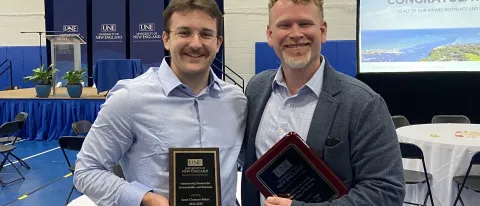
As local governments across the United States increasingly prioritize climate action, the demand for professionals who can measure, analyze, and plan for carbon reduction is surging. Recent USA news highlights a growing trend of municipalities turning to academic institutions for support in these complex environmental efforts. A prime example of this collaboration is the City of Biddeford, Maine, which partnered with the University of New England (UNE) to assess its carbon footprint. This partnership not only provided the city with valuable data but also served as a critical stepping stone for a recent business graduate pursuing advanced sustainability graduate studies.
For students and career changers looking to enter the environmental sector, understanding how practical experience bridges the gap between undergraduate education and elite graduate programs is essential. The story of how a UNE business alumnus used a local fellowship to secure a spot in a highly competitive master’s program offers a clear, actionable blueprint for career development in sustainability.
Schedule a free consultation to learn more about how fellowship programs can accelerate your environmental career.
How Local Fellowships Build Professional Networks in Sustainability
Academic coursework provides a necessary foundation in environmental science and policy, but practical fellowships offer the professional networks required to advance in the field. The UNE Summer Sustainability Fellowship Program, launched in 2024 by Cameron Wake, Ph.D., director of UNE North: The Center for North Atlantic Studies, was designed specifically to address this need. The program’s overarching goal is to create a network of sustainably-minded leaders equipped to tackle pressing environmental questions.
In just two years, the program has experienced rapid growth, expanding from an initial cohort of six fellows to 23. The number of UNE advisors—faculty and staff with expertise in business, sustainability, and research—has also grown from two to eight. This expansion reflects a broader trend seen in USA news: the demand for localized, actionable sustainability work in states like Maine is outpacing the supply of qualified professionals.
For participants, the fellowship provides an immediate professional network. Fellows work alongside peers with similar goals and connect with experienced mentors like Jeremy Pare, LPD, M.S., director of the Sustainability in Business Program at the UNE College of Business, and municipal leaders like Brad Favreau, Biddeford’s economic development coordinator. These connections often lead to future employment opportunities and graduate school recommendations.
Conducting a Greenhouse Gas Inventory for Biddeford, Maine
The core of a sustainability fellowship often revolves around applied data projects. Scott Clemons-Baker, who graduated from UNE in 2025 with a degree in sustainability and business, was selected for the fellowship’s second cohort. His assignment was to update the City of Biddeford’s greenhouse gas inventory, a task that had not been completed since 2021.
Creating a municipal carbon inventory requires meticulous data collection across multiple departments and external agencies. Clemons-Baker had to track down fuel and mileage records from the Biddeford Public Works Department’s vehicle fleet, gather ridership data from the city’s public bus service, secure electricity usage figures from Central Maine Power, and obtain vehicle-miles-traveled estimates for both municipal and residential travel from the Department of Transportation.
Submit your application today to start your career in environmental data analysis and municipal planning.
Analyzing Transportation Emissions and Climate Action Plans
The data Clemons-Baker compiled revealed a challenging reality for Biddeford’s climate action planning. Despite local efforts to promote cleaner energy—such as heat pump adoption—the city’s overall emissions had risen since the last inventory. The primary culprit was an increase in vehicle travel.
“Transportation is the biggest piece of emissions for a town like Biddeford,” Clemons-Baker noted. While the Sustainability Commission had predicted this trend, having the actual, quantified data made the issue concrete and actionable. This type of finding is common in municipal USA news, where smaller cities frequently discover that transportation emissions are the most difficult sector to decarbonize.
Beyond simply calculating the total emissions, Clemons-Baker was tasked with creating a standardized, repeatable process. He built a clear paper trail and methodology that future interns or fellows could use to conduct subsequent inventories efficiently. This focus on process creation is a critical skill in sustainability, ensuring that environmental monitoring becomes an ongoing municipal function rather than a one-time project.
The Role of Data Analysis in Modern Sustainability Careers
The modern sustainability sector relies heavily on quantitative data. Businesses and governments no longer base their climate action plans on broad assumptions; they require precise carbon audits to set realistic benchmarks and track progress. Clemons-Baker’s fellowship required him to work within an environment dominated by data analysis, planning, and forecasting.
For students considering a shift into this field, developing strong data literacy is non-negotiable. You must be comfortable working with large datasets, understanding utility reporting formats, and translating raw numbers into strategic recommendations. The ability to present complex data to a city’s Sustainability Commission at City Hall—as Clemons-Baker did in August 2025—is the type of tangible deliverable that proves professional competence to future employers or academic committees.
Explore our related articles for further reading on the technical skills required for climate-focused careers.
Transitioning from Undergraduate Fellowships to Elite Graduate Studies
One of the most direct benefits of completing a rigorous undergraduate or post-baccalaureate fellowship is the advantage it provides when applying to graduate school. Admissions committees for top-tier programs look for candidates who have moved beyond theoretical understanding and have demonstrated the ability to apply their knowledge in real-world settings.
The UNE Summer Sustainability Fellowship served as a professional on-ramp for Clemons-Baker. By producing a complete, professional carbon audit for a real city, he acquired a portfolio piece that clearly demonstrated his aptitude. This practical experience was a decisive factor in his acceptance into the inaugural class of Duke University’s Master in Business, Climate, and Sustainability program.
Duke’s program is notable because it is a joint venture between the Nicholas School of the Environment and the Fuqua School of Business. It represents the cutting edge of graduate studies, recognizing that solving climate change requires both business acumen and deep environmental knowledge. Getting accepted into such a highly competitive, interdisciplinary program requires a track record of success, which a focused fellowship provides.
Actionable Advice for Students Pursuing Sustainability Graduate Studies
If your goal is to follow a similar path from undergraduate work to elite graduate studies in sustainability, consider the following strategic steps:
- Seek Local Government Partnerships: Look for fellowship opportunities or internships that partner directly with municipalities. Working on actual city climate action plans provides a level of complexity and real-world constraint that classroom projects cannot replicate.
- Focus on Data Literacy and Process Design: Do not just analyze data; build systems. Showing that you can create a replicable process for carbon accounting makes you an asset to any organization.
- Build a Tangible Portfolio: Graduate school applications require more than essays. Ensure you have at least one major project—like a greenhouse gas inventory or a corporate sustainability audit—that you can present as proof of your capabilities.
- Network with Practitioners: Use fellowships to connect with working professionals in your desired field. Mentors can provide guidance and write the detailed letters of recommendation that carry weight in graduate admissions.
Have questions? Write to us! We can provide more information on structuring your academic path for a career in sustainability.
The Growing Demand for Sustainability Experts in Maine and Beyond
The rapid expansion of the UNE fellowship program—from six to 23 fellows in a single year—illustrates a broader economic reality. The demand for professionals who understand both business operations and environmental systems is growing rapidly in Maine and across the United States. Of the 45 Sustainability Fellows who have graduated from the UNE program thus far, several have already secured full-time employment in fields directly related to their fellowship pathways.
As local and state governments implement stricter environmental regulations and businesses face increasing pressure from consumers and investors to decarbonize, the need for trained professionals will only increase. Whether your ultimate goal is to work in municipal government, corporate sustainability, or advanced research, gaining hands-on experience through a fellowship remains one of the most effective ways to establish your career and prepare for the rigors of graduate studies.
Share your experiences in the comments below regarding local climate action initiatives or sustainability fellowships in your area.