
Review the University of New England CGH Fall Schedule Bridging Humanities and Sciences in the USA
Why the Intersection of Humanities and Sciences Matters in Modern Education
For decades, academic institutions in the USA have often treated the humanities and the sciences as completely separate disciplines. Students were frequently encouraged to choose a rigid path: either pursue the empirical rigor of scientific research or engage with the critical, interpretive frameworks of the humanities. Today, this siloed approach is increasingly recognized as inadequate for addressing the complex, multifaceted challenges of the modern world. From climate change and artificial intelligence to global health crises and social isolation, the most pressing issues require insights from both scientific data and humanistic inquiry.
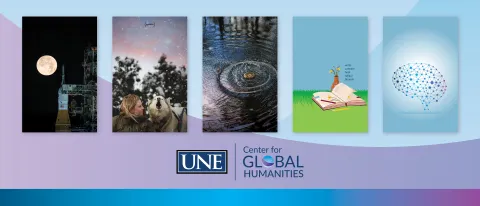
The University of New England (UNE) recognizes this reality and actively fosters an interdisciplinary approach through its Center for Global Humanities (CGH). Now entering its 18th year, the CGH is launching a fall season that explicitly bridges these two vital areas of study. By bringing together environmental historians, neuroscientists, physicians, and literary scholars, UNE provides a blueprint for how integrated education can produce more well-rounded professionals. This upcoming series of lectures and films offers valuable lessons for students, educators, and professionals across the USA on why combining scientific literacy with humanistic empathy is essential for future innovation.
Schedule a free consultation to learn more about UNE’s academic programs.
Space Exploration and Environmental History Converge
The History and Future of the Moon
When we think of space exploration, we typically picture aerospace engineers and physicists. However, understanding our relationship with space requires a deep dive into human history and environmental science. The fall CGH season opens on September 28 with a lecture by Dagomar Degroot, Ph.D., an environmental historian from Georgetown University. His presentation, titled “The History and Future of the Moon,” challenges the purely technological narrative surrounding space travel.
Degroot’s work focuses on the concept of a “Lunar Anthropocene.” Just as human activity has fundamentally altered Earth’s ecosystems, recent missions like Artemis signal the beginning of permanent human impact on the lunar surface. By examining the history of human fascination with the moon, Degroot demonstrates how environmental humanities provide crucial context for scientific advancement. If humanity is to become a multi-planetary species, we must apply the lessons learned from environmental degradation on Earth to our activities in space. This lecture highlights how historians and scientists must collaborate to establish ethical and sustainable frameworks for future exploration.
Addressing Social Anxiety Through Experiential Learning
Folktales Documentary Screening
While the hard sciences often dominate conversations about human health, the social sciences and humanities offer equally important insights into human well-being. On October 19, the CGH will screen the documentary “Folktales,” which follows a group of teenagers grappling with severe loneliness and social anxiety. Rather than turning solely to clinical therapy or pharmaceutical interventions, these young people enroll in a traditional “folk high school” in the remote wilderness of northern Norway.
This documentary serves as a powerful case study in the psychology of resilience and the sociology of education. The folk high school model, deeply rooted in Scandinavian educational philosophy, prioritizes personal growth, community building, and experiential learning over standardized testing and rigid curricula. By relying on themselves and a pack of sled dogs, the students in the film navigate the difficult transition from childhood to adulthood. For educators and mental health professionals in the USA, this screening prompts critical questions about how modern, technology-driven environments contribute to youth anxiety and how alternative, nature-based educational models might offer viable solutions.
Submit your application today to join a community that values interdisciplinary learning.
Reclaiming Natural Time in a Capitalist Framework
Thoreau’s Sense of Time
Henry David Thoreau is most frequently studied for his contributions to early environmentalism and transcendentalism. However, scholar Kristen Case, Ph.D., brings a fresh perspective to his work in her October 28 matinee lecture on the Biddeford Campus, titled “Thoreau’s Sense of Time.” Fresh off her appearance in the Ken Burns documentary on Thoreau, Case shifts the focus from his ecological observations to his “temporal imagination.”
Case argues that Thoreau’s work at Walden Pond was not just an experiment in simple living, but a deliberate resistance to the “thin, linear time of industrial capitalism.” In modern terms, Thoreau was pushing back against the hustle culture and constant connectivity that define contemporary life in the USA. By advocating for a richer, cyclical sense of time rooted in the natural world, Thoreau’s writings offer a philosophical antidote to modern burnout. Case’s lecture demonstrates how literary analysis and historical philosophy can provide practical frameworks for improving mental health and workplace productivity today, proving that the humanities are not just abstract, but deeply applicable to daily life.
Integrating Narrative Medicine into Healthcare Training
The Power of Narrative in an Uncertain World
The integration of humanities into healthcare training has gained significant traction in recent years, largely under the umbrella of “narrative medicine.” On November 16, Carolyn Roy-Bornstein, M.D., will visit the Portland Campus for the Health Sciences to lead an interactive session on this very topic. Rather than delivering a standard lecture, Roy-Bornstein will guide attendees through narrative-medicine-style exercises, demonstrating how reflective writing can help individuals find clarity amidst daily challenges.
Healthcare professionals in the USA face unprecedented levels of burnout, a crisis that has only worsened in recent years. Roy-Bornstein’s presentation highlights that clinical skills alone are insufficient to sustain a long, healthy career in medicine. The ability to process trauma, connect with patients on a human level, and understand one’s own emotional responses are competencies developed through humanistic practice. The first 75 attendees will receive a copy of her award-winning 2026 book, “A Prescription for Burnout,” underscoring the tangible resources the humanities can provide to STEM professionals. This event clearly illustrates why UNE’s health professions programs encourage students to engage with the CGH.
Explore our related articles for further reading on the medical humanities.
The Neuroscience and Ethics of Memory Manipulation
How to Change a Memory
The fall series concludes on December 7 with a fascinating look at the cutting-edge of neuroscience. Boston University neuroscientist Steve Ramirez will present “How to Change a Memory,” detailing his groundbreaking research on the mechanisms of memory formation, retention, and erasure. Ramirez’s work focuses on the physical substrates of memory in the brain, exploring how it is possible to strengthen, weaken, or even fabricate memories.
While the science itself is astounding, the core of Ramirez’s presentation lies in the philosophical and ethical questions it raises. If neuroscientists can erase a traumatic memory, should they? Does our collection of memories constitute our identity, meaning that altering them fundamentally changes who we are? Or does freeing someone from the burden of trauma allow them to become the person they want to be? These are not questions that can be answered in a laboratory. They require the rigorous ethical reasoning, historical context, and philosophical analysis provided by the humanities. Ramirez’s lecture perfectly encapsulates the theme of the CGH season: as our scientific capabilities expand, the humanities become more critical, not less, acting as the necessary guardrails for technological progress.
Engage with Interdisciplinary Humanities and Sciences News in the USA
The upcoming CGH fall season at the University of New England serves as a prime example of how higher education can evolve to meet the demands of the 21st century. By deliberately scheduling events that intersect the humanities with environmental science, psychology, philosophy, medicine, and neuroscience, UNE is preparing its students to think critically and act compassionately. The challenges facing the USA and the world—from establishing a sustainable presence in space to combating the mental health crisis and reforming healthcare—cannot be solved by STEM alone.
For prospective students, current applicants, and lifelong learners, attending these events offers a chance to experience a modern, interdisciplinary education in action. Engaging with these topics helps build the kind of intellectual agility that employers and graduate programs highly value. Understanding the ethical implications of neurotechnology, the historical context of environmental degradation, or the psychological benefits of narrative writing creates a professional profile that stands out.
All CGH events are free and open to the public, providing an accessible entry point into high-level academic discourse. Taking advantage of these opportunities allows individuals to broaden their perspectives and engage with leading scholars without leaving their local community.
Visit the UNE Center for Global Humanities events page to plan your attendance.