
Review How Adelphi University’s Ruth S. Ammon College of Education and Health Sciences Professor Won an Emmy Award for Autism and Neurodiversity in USA News
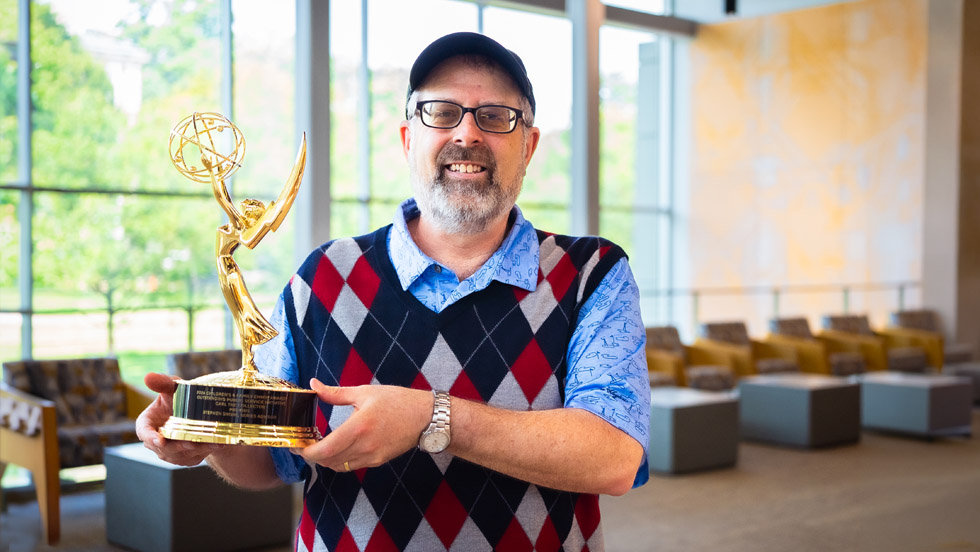
Recent education and disability advocacy news in the USA has been dominated by a remarkable achievement at the 4th Annual Children’s & Family Emmy Awards in New York. A clinical associate professor from Adelphi University’s Ruth S. Ammon College of Education and Health Sciences has been recognized on a national stage for his contributions to a groundbreaking public television initiative. Stephen Shore, EdD, received a 2026 Emmy Award for his role as a technical advisor on the PBS KIDS animated series, Carl the Collector. This recognition highlights a significant shift in how autism and neurodiversity are portrayed in American media and underscores the critical importance of lived experience in academic and clinical settings.
Submit your application today to join a leading institution in neurodiversity education and advocacy.
Understanding the Impact of Authentic Neurodiversity Representation in Media
For decades, mainstream media representations of autism in the USA often relied on narrow stereotypes, frequently framing the condition through a deficit-based lens. However, the conversation surrounding neurodiversity has evolved substantially. Neurodiversity is the concept that neurological differences, including autism, are natural variations in the human brain rather than disorders that need to be cured. This paradigm shift demands a parallel shift in media representation.
Accurate representation matters because children, parents, and educators consume media as a primary source of social learning. When a children’s show presents autism accurately, it does more than entertain; it educates. It provides neurotypical children with a framework for understanding their peers, and it offers neurodivergent children the rare experience of seeing themselves reflected on screen in a positive, validating light. The recent USA news coverage of Carl the Collector demonstrates that there is a massive, eager audience for this type of authentic storytelling.
How “Carl the Collector” Sets a New Standard for Children’s Programming
Carl the Collector follows the life of Carl, a young raccoon on the autism spectrum who has a deep passion for collecting items ranging from rare leaves to unique bottle caps. Alongside his friends Sheldon, a beaver, and Lotta, an artistic fox who is also neurodivergent, Carl navigates everyday childhood dilemmas. The show utilizes Carl’s extraordinary attention to detail as a tool to solve problems, framing his traits as assets rather than obstacles.
The series won the Emmy Award for Outstanding Public Service Initiative precisely because it moves beyond mere visibility to achieve authentic inclusion. The production team actively included neurodiverse writers, animators, and advisors throughout the creative process. Dr. Shore’s role involved reviewing every story, script, and stage of animation to ensure that the characters’ reactions, communication styles, and sensory experiences were depicted accurately. His guidance ensured that when misunderstandings occur among the characters, they are resolved with empathy and understanding within the span of an 11-minute episode, modeling healthy social dynamics for young viewers.
Schedule a free consultation to learn more about how Adelphi University integrates contemporary media and advocacy into its curriculum.
The Critical Role of Lived Experience in Autism Advocacy
What sets Dr. Shore apart in the field of special education and autism advocacy is his integration of academic rigor with personal lived experience. Dr. Shore is himself on the autism spectrum. As a young child, his ability to meticulously take apart and reassemble intricate mechanical watches signaled a profound aptitude, yet professionals at the time recommended that he be institutionalized. His parents recognized his unique talents and refused the recommendation, a decision that altered the trajectory of his life.
Dr. Shore often reframes this early narrative with a characteristic, grounded wit: he notes that those early professionals were correct in suggesting he belonged in an institution—an institution of higher education. Today, as a professor in the Ruth S. Ammon College of Education and Health Sciences, he uses his personal history to insist that autism be understood as a “different rather than disordered way of being.” This perspective is invaluable. While clinical knowledge provides a framework for understanding autism, lived experience provides the nuanced, real-world context necessary to apply that framework effectively and humanely.
Bridging the Gap Between Clinical Theory and Real-World Practice
In higher education, particularly within special education programs, bridging the gap between textbook theories and the realities of neurodivergent individuals is a constant challenge. Dr. Shore’s work on Carl the Collector serves as a masterclass in this bridging process. By ensuring that an animated raccoon’s behaviors are grounded in reality, he is effectively translating complex clinical concepts into accessible, visual narratives. This approach aligns perfectly with the pedagogical goals of modern special education, which emphasize practical, empathetic understanding over rote memorization of diagnostic criteria.
Bringing Emmy-Winning Insights into the Classroom at Adelphi University
The impact of Dr. Shore’s Emmy Award extends far beyond the television screen and directly into the classrooms at Adelphi University. During the production of Carl the Collector, episodes were embargoed until their broadcast dates. However, once released, Dr. Shore immediately integrated them into his coursework, particularly within his Special Education (Teaching Students With Disabilities) classes.
For his graduate and undergraduate students, the show acts as a dynamic, contemporary case study in authentic representation. Instead of relying solely on academic journals or historical case studies, students analyze how modern media can be utilized as a tool for public education and social change. They examine the specific techniques used in the show to portray neurodivergence accurately, learning how to evaluate media for bias and authenticity. Furthermore, Dr. Shore brings these insights to national and international conference audiences, modeling for future educators and clinicians how to advocate for accurate neurodiversity representation in all forms of public communication.
Adelphi University’s commitment to this level of education is further exemplified by its Bridges to Adelphi program. This comprehensive support program for neurodivergent students has itself received national recognition, winning the Grand Gold Medal for Equity, Inclusion, Social Justice and Related from the National Association of Student Affairs Administrators in Higher Education (NASPA) in both 2022 and 2023. The synergy between a faculty member winning an Emmy for autism advocacy and the university operating a nationally acclaimed neurodiversity support program creates a robust, supportive ecosystem for students.
Explore our related articles for further reading on special education programs and neurodiversity initiatives.
What This USA News Means for the Future of Special Education
The national attention generated by this Emmy Award carries significant implications for the future of special education in the United States. It signals a growing public and institutional recognition that neurodivergent voices must be centered in the creation of policies, curricula, and media that affect them. When a major network like PBS prioritizes authentic representation, backed by experts with lived experience, it sets an industry standard that others will inevitably be measured against.
However, this progress also faces practical challenges. Dr. Shore has noted that production on a second season of Carl the Collector is currently uncertain due to funding shortages at PBS, though other organizations have expressed interest in sponsoring the show. This highlights a recurring theme in both public broadcasting and special education: impactful, necessary programs often operate on precarious financial footing. Advocacy must therefore extend beyond cultural representation to include sustained financial and legislative support for initiatives that serve the neurodivergent community.
Practical Takeaways for Educators and Advocates
For educators, clinicians, and parents consuming this news, there are several actionable takeaways. First, prioritize media literacy by evaluating the shows and materials used to teach children about neurodiversity. Seek out programs that consult with actual neurodivergent individuals. Second, apply the “different, not disordered” framework in educational settings. This means shifting Individualized Education Programs (IEPs) and classroom strategies to focus on leveraging a student’s specific strengths—like Carl’s attention to detail—rather than merely mitigating their challenges. Finally, recognize that neurodivergent adults have invaluable expertise to offer the educational system, whether as consultants, teachers, or policy advisors.
Have questions? Write to us! We welcome your thoughts on neurodiversity in education.
Conclusion
The journey from a childhood recommendation of institutionalization to receiving an Emmy Award on a national stage is a profound testament to the power of recognizing and nurturing neurodivergent potential. Dr. Stephen Shore’s work on Carl the Collector, grounded in his role at Adelphi University’s Ruth S. Ammon College of Education and Health Sciences, represents a significant milestone in USA news regarding disability advocacy. It demonstrates that when academic expertise is combined with lived experience, the results can reshape cultural narratives and provide tangible, high-quality educational tools for the next generation. As the conversation around neurodiversity continues to advance, this Emmy Award stands as a clear marker of progress, reminding educators and advocates that authentic representation is not just a public service, but an absolute necessity.
Share your experiences with neurodiversity representation in the comments below.