How UConn Summer Research Experiences Drive Student Career-Building in the USA
Understanding the Value of Undergraduate Research Programs
Participating in hands-on laboratory work or startup incubation during the summer months provides a significant advantage for students navigating a competitive job market. Across the USA, research programs are increasingly recognized as essential components of higher education, bridging the gap between theoretical coursework and practical application. Rather than simply reading about scientific methodologies or business commercialization in a textbook, students actively engage in the messy, iterative process of discovery.
These summer research experiences offer more than just resume lines; they fundamentally alter a student’s trajectory. By working closely with faculty mentors and industry professionals, undergraduates gain clarity on whether they truly want to pursue graduate degrees, medical school, or corporate research roles. This early exposure prevents wasted time and tuition dollars down the road, making student career-building efforts highly targeted and effective. Explore our related articles for further reading on how undergraduate engagement shapes long-term professional success.
Breakdown of UConn’s Health Research Program (HRP)
Recent UConn news highlights the Health Research Program (HRP) as a prime example of how structured summer initiatives yield tangible benefits. Hosted at UConn Health, the HRP is a rigorous 10-week commitment requiring 360 hours of dedicated research. This past summer, 44 undergraduates—from first-year students to rising seniors—completed the program, working under the direct mentorship of active researchers at the medical center.
The demand for these research programs is growing rapidly. Micah Heumann, Director of UConn’s Office of Undergraduate Research (OUR), noted that HRP applications have more than doubled in just two years, jumping from 106 applicants in 2024 to 240 in 2026. This surge reflects a broader trend across the USA: students are no longer waiting until graduate school to get their hands dirty in the lab. They are arriving on campus with the explicit goal of securing research positions early in their academic careers.
Applying Classroom Theory to Real-World Medical Challenges
The true value of the HRP lies in the specific, high-stakes projects students tackle. For instance, Patrick Lonergan, a biomedical engineering major, utilized his background in computer modeling to address a long-standing clinical issue. Working in Dr. Liisa Kuhn’s lab, Lonergan helped create anatomically accurate breast prosthetics for women who have undergone mastectomies. By combining digital imaging, CAD modeling, and advanced 3D printing, his team developed lighter, highly personalized alternatives to commercial products.
“I’m using skills I already have and I’m not just doing experiments. I’m actually helping, from the reaction of Dr. Kuhn’s patients,” Lonergan noted during Summer Research Day. This direct feedback loop between researcher and patient accelerates student career-building by instilling a sense of purpose and demonstrating the real-world impact of engineering solutions.
Similarly, Nabil Mardhy, a neurobiology major, focused on computational modeling under the guidance of Associate Professor Michael Blinov. Mardhy’s project involved testing whether mathematical models originally designed to track COVID-19 could be adapted to study chronic traumatic encephalopathy (CTE). Cross-disciplinary work like this teaches students how to transfer analytical tools across entirely different biological systems—a highly sought-after skill in modern biomedical research.
Bridging Science and Business: The TIP Innovation Fellowship
While the HRP focuses on traditional bench science, UConn’s Technology Incubation Program (TIP) Innovation Fellowship approaches student career-building from an entrepreneurial angle. Twelve undergraduate and master’s degree students spent the summer paired with university startup companies. Instead of purely academic research, these fellows focused on technology development, marketing, and commercialization strategies.
Caroline Dealy, director of the TIP Innovation Fellowship Program, emphasized that the synthesis of these experiences triggers critical professional growth. “Not only do they do research, they synthesize what they’ve learned into a presentation that non-experts will understand,” Dealy explained. “That’s where they gain a higher level of understanding and real pride in their project.”
Paul Parker, director of TIP Farmington, added that exposure to the business side of science often changes students’ academic paths. “We’ve had students change majors or come back to get a Ph.D. as a result of this program,” he said. Understanding how a scientific discovery moves from the lab to the consumer market is a vital perspective for aspiring entrepreneurs and researchers alike. Have questions? Write to us! to learn more about the intersection of science and business.
Case Study: Marketing a Rapid Lyme Disease Test
A standout example of the TIP fellowship’s unique approach involved Adonis Smith, a digital design major, and Valentina Gutierrez, an allied health sciences major. The duo was paired with Therapeutic Bandage Products, a TIP startup developing a rapid at-home test for Lyme disease and other tick-borne illnesses.
Rather than conducting the underlying biochemical research, Smith and Gutierrez were tasked with creating a compelling digital presentation to promote the upcoming product. This required them to translate complex scientific mechanisms into accessible, consumer-friendly messaging. For students in the USA looking to work in health communications, medical device sales, or biotech marketing, this type of experience is invaluable. It proves they can navigate the jargon-heavy world of healthcare and extract the key selling points that matter to end-users.
Developing Essential Professional Skills Beyond the Lab
Technical proficiency is only one piece of the puzzle when it comes to student career-building. Summer research experiences also cultivate a suite of soft skills that employers and graduate admissions committees heavily weigh.
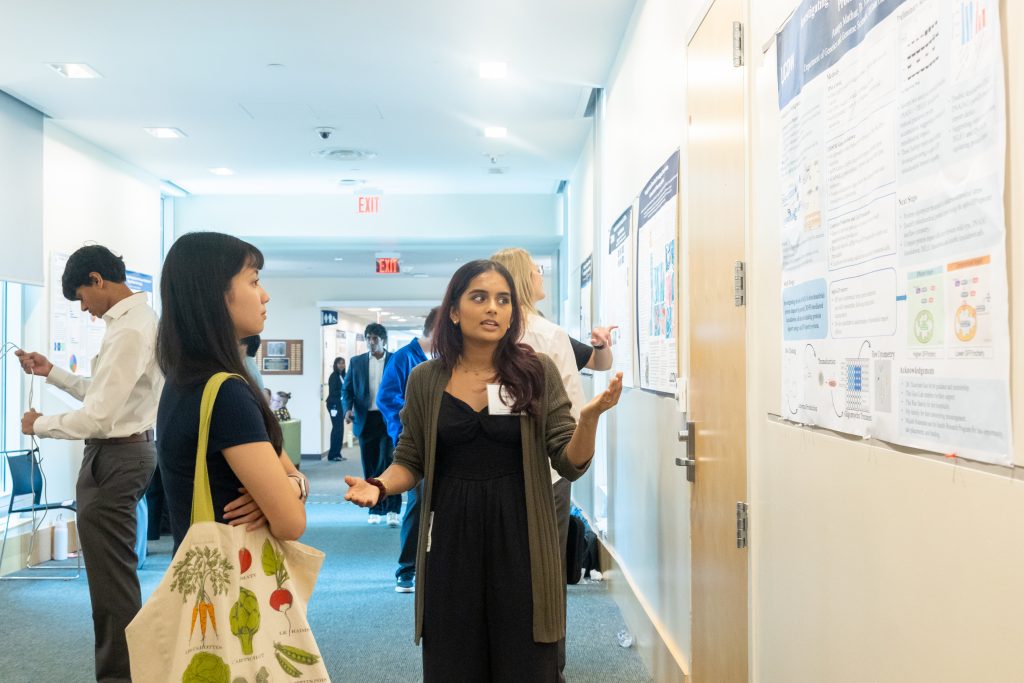
During events like UConn’s Summer Research Day, students must stand by their posters and explain their methodology, results, and conclusions to a steady stream of attendees. This requires the ability to think on their feet, adjust their vocabulary based on the audience’s expertise, and defend their work under questioning. Mastering this type of science communication builds confidence and public speaking abilities that extend far beyond the academic rotunda.
Furthermore, managing a 360-hour project over 10 weeks requires strict time management, problem-solving when experiments inevitably fail, and professional collaboration with lab mates and principal investigators. These are universal workplace competencies. Schedule a free consultation to learn more about how to highlight these transferable skills on your resume or graduate school applications.
Navigating Funding Challenges for Research Opportunities
Despite the clear benefits of summer research experiences, securing the necessary funding remains a persistent challenge. Recent cuts to federal and state funding have placed significant pressure on student experience budgets. Programs like the HRP and TIP rely heavily on targeted philanthropy and institutional support to operate.
The HRP stipends, for example, are funded through the Barbara C. Setlow Health Research Program, while the TIP fellows are supported by UConn’s Technology Commercialization Services (TCS) and participating schools and colleges. “With recent cuts in funding, particularly the student experience, support from UConn is critical for career-building experiences such as these,” Dealy noted. “There is no replacement for a hands-on experience.”
For students and universities across the USA, this highlights the importance of advocating for undergraduate research funding. When financial barriers are removed, students from all socioeconomic backgrounds can participate, leading to a more diverse and capable scientific workforce.
Actionable Steps to Secure a Research Position
Finding and securing a spot in competitive summer research programs requires proactive planning. Based on the frameworks used by successful UConn applicants, students should follow a strategic timeline:
- Start early: Begin researching programs and potential faculty mentors in the fall semester. Do not wait until the spring to start sending inquiries.
- Tailor your outreach: When emailing professors, specifically reference their recent publications or ongoing projects. Explain how your background aligns with their work rather than sending a generic request.
- Leverage university resources: Offices of Undergraduate Research, like UConn’s OUR, exist to help students navigate the application process, polish their resumes, and practice their interview skills.
- Consider alternative pathways: If traditional lab research is not your primary interest, look for innovation fellowships, tech incubators, or science communication internships that still offer rigorous, project-based learning.
Taking these steps ensures that you present yourself as a serious, prepared candidate capable of contributing meaningfully to a research team. Submit your application today to take the first step toward a transformative summer experience.
Prepare for Your Future in Research
Summer research experiences represent a critical inflection point for undergraduate students. Whether analyzing mathematical models for neurological diseases, engineering custom medical prosthetics, or marketing cutting-edge diagnostic tools, these programs provide a foundational understanding of how professional research and development actually function. The growth in applications to programs like UConn’s HRP proves that students recognize this value and are actively seeking out these opportunities to bolster their career readiness. By combining technical execution with business acumen and science communication, these fellowships produce well-rounded graduates ready to tackle the complex challenges of the modern workforce. Share your experiences in the comments below to join the conversation about the impact of undergraduate research.