
How Pace University in the USA is Advancing Integrative Care and Acupuncture Education
The Growing Demand for Evidence-Based Integrative Care in the USA
The healthcare landscape in the USA is undergoing a significant shift. For decades, the dominant paradigm relied almost exclusively on conventional biomedicine to treat illness and injury. Today, however, patients and providers alike are recognizing the limitations of a strictly binary approach to health. This realization has fueled the rise of integrative care—a model that combines conventional medical treatments with evidence-based complementary therapies to address the full spectrum of a patient’s physical, mental, and emotional needs. At the forefront of this movement is Pace University, an institution actively shaping how future healthcare professionals understand and apply these combined modalities.
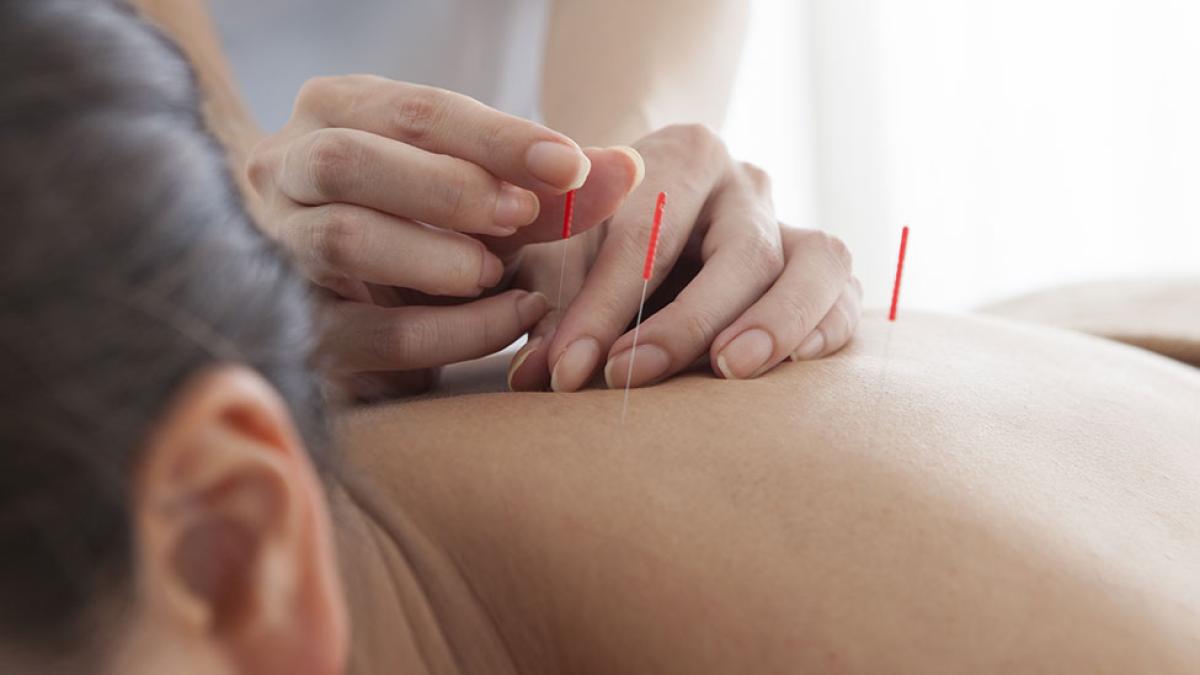
Integrative care is not about choosing alternative medicine over modern science. Instead, it is about expanding the clinical toolkit so that practitioners can offer the most effective, personalized care possible. Acupuncture, once viewed with deep skepticism by the mainstream medical community, has become a primary example of this evolution. As research validates its efficacy—particularly for pain management, stress reduction, and supportive care—the demand for practitioners who understand both conventional and complementary approaches continues to grow across the USA.
Schedule a free consultation to learn more about our health professions programs.
Transitioning from Molecular Biology to Chinese Medicine
The integration of acupuncture into modern healthcare requires advocates who can speak the language of both traditional practices and rigorous science. Belinda Anderson, PhD, MA(Ed), LAc, an associate dean and professor of allied health in the College of Health Professions at Pace University, exemplifies this bridge. Her career trajectory offers a compelling case study in how diverse scientific backgrounds can converge to advance patient care.
Anderson began her professional journey as a molecular biologist, immersed in the precise, reductionist mechanisms of modern science. Yet, she consistently observed that biomedicine alone could not always answer complex questions about patient healing and overall well-being. This curiosity led her to explore Chinese medicine, a field she had personally encountered through acupuncture and herbal treatments. Rather than abandoning her scientific foundation, she built upon it, eventually earning a master’s degree and becoming a licensed acupuncturist while continuing her work as a researcher.
The Role of Scientific Skepticism in Healthcare Education
Thirty years ago, moving from molecular biology into Chinese medicine often meant facing professional marginalization. Anderson has noted that the shift meant transitioning from a respected scientist to someone whom some colleagues viewed skeptically. However, rather than viewing this skepticism as a barrier, she recognized it as a standard and necessary component of scientific advancement. The common language of healthcare is evidence, and Anderson’s career has been dedicated to generating and presenting that evidence so that therapeutic interventions are judged on their clinical merit rather than historical precedent.
Real-World Evidence vs. Traditional Clinical Trials
A critical component of validating integrative care involves understanding how treatments perform outside the highly controlled environment of a traditional clinical trial. While randomized controlled trials remain the gold standard for establishing initial efficacy, they often fail to capture the complexities of everyday clinical practice. This is where real-world evidence becomes invaluable, and it is a major focus of the research happening at Pace University.
Real-world research utilizes data drawn from electronic health records (EHRs) to analyze how acupuncture is delivered across diverse practices and patient populations in the USA. By examining anonymized records, researchers can track how patients with chronic conditions—such as persistent lower-back pain—respond to treatment over time. This data also reveals how clinicians make decisions in real-time and how symptoms evolve in naturalistic settings. For students studying healthcare education, learning to interpret and utilize real-world evidence is an essential skill that prepares them to evaluate treatments rigorously and objectively.
Policy and Access: The Medicare Coverage Challenge
Generating evidence is only the first step; ensuring that patients can actually access evidence-based treatments is an equally pressing challenge. Anderson serves as a consultant on a National Institutes of Health (NIH)-funded study examining acupuncture access, utilization, and outcomes among Medicare beneficiaries suffering from chronic lower-back pain. This research highlights a significant, often overlooked gap in the US healthcare system.
In 2020, Medicare took a monumental step by beginning to cover acupuncture for chronic lower-back pain. However, the policy includes a strict limitation: reimbursement is only available when acupuncture is delivered under direct supervision within a health system clinic. Because licensed acupuncturists cannot directly bill Medicare, and approximately 80% of these practitioners operate in private practices, the policy effectively restricts access for a vast portion of the senior population. Addressing these systemic barriers is a necessary part of advancing integrative care, requiring professionals who understand both clinical efficacy and health policy.
Explore our related articles for further reading on healthcare policy and education.
Applying Integrative Care in Clinical Practice: Fertility and Women’s Health
The theoretical benefits of integrative care are best understood through practical application. As a licensed acupuncturist since 2004, Anderson has specialized in women’s health and fertility, providing a clear example of how different medical traditions can collaborate according to their distinct strengths. From 2009 to 2018, she practiced at the New York University (NYU) Fertility Center, working directly alongside reproductive endocrinologists to treat patients undergoing assisted reproductive procedures, including in vitro fertilization (IVF).
In this high-stakes clinical environment, modern biomedicine was indispensable for managing the physiological complexities of infertility. However, complementary therapies like acupuncture provided critical additional support, helping patients manage the severe stress, anxiety, and physical discomfort often associated with fertility treatments. This collaborative model demonstrates the core philosophy of integrative care: the ultimate goal of a clinician is to help patients heal, achieve wellness, and live full, satisfying lives by utilizing every safe and effective tool available.
Healthcare Education: Training Future Practitioners at Pace University
Translating the principles of integrative care into widespread clinical practice requires a fundamental shift in healthcare education. Institutions like Pace University are taking a proactive approach by ensuring that students in various health disciplines are exposed to complementary modalities early in their training. Anderson has brought her clinical and research experience directly into the Pace classroom, working extensively with master’s level programs.
Most notably, she has served as a guest lecturer for the Occupational Therapy (OT) master’s program. The objective of these lectures is not to teach OT students how to perform acupuncture, but rather to educate them on when it might be an appropriate referral for their clients and how it can complement occupational therapy services. This type of interdisciplinary education is crucial. It breaks down the silos that often exist between different health professions and encourages a team-based approach to patient care.
Hands-On Learning and Interdisciplinary Collaboration
To make the concepts tangible, Pace University students are given the opportunity to experience complementary therapies firsthand. During her lectures, Anderson guides students through auricular acupuncture—a protocol involving needles placed in the ear designed specifically for stress relief. Experiencing the treatment themselves helps future occupational therapists understand the physiological and psychological effects of the modality, making them better equipped to discuss it with future patients. Furthermore, these sessions open students’ eyes to advanced career pathways, including the pursuit of dual credentials in both occupational therapy and acupuncture.
Submit your application today to join the next generation of healthcare leaders.
The Future of Healthcare Education and Integrative Medicine
The trajectory of healthcare in the USA is clearly moving toward a more inclusive, evidence-based model. As the body of research supporting therapies like acupuncture continues to expand, the healthcare system must adapt by training professionals who can navigate both conventional and complementary domains. Pace University’s College of Health Professions is actively contributing to this transition by fostering an academic environment where rigorous scientific inquiry meets holistic patient care.
Through the work of faculty members like Belinda Anderson, students learn that effective healthcare is not about adhering to a single philosophical doctrine. It is about evaluating treatments objectively, educating patients accurately, and building a system where evidence and patient needs dictate the course of care. For aspiring health professionals, gaining exposure to integrative care is no longer just an elective interest; it is a critical component of modern healthcare education that will define the quality and comprehensiveness of their future practice.
Share your experiences with integrative medicine in the comments below.