
Examine Student Research and Academic Innovation at the University of the Pacific Summer Scholars Symposium
Understand the Value of Undergraduate Research Programs
Participating in hands-on scholarly work before graduation provides a significant advantage for students entering competitive job markets or rigorous graduate programs. Across recent USA news cycles, higher education experts consistently highlight that practical, faculty-mentored research is one of the most effective high-impact practices for undergraduate students. At the University of the Pacific, this commitment to experiential learning takes center stage through the annual Summer Scholars Symposium.
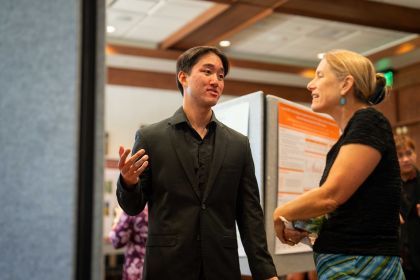
This event serves as a formal venue for undergraduates to present the findings from nearly 30 distinct research projects. Rather than simply absorbing information from textbooks, students spend their summer months formulating hypotheses, gathering data, and testing their assumptions in real-world environments. The symposium highlights how academic innovation thrives when institutions give learners the time, space, and financial backing to pursue complex questions alongside dedicated faculty mentors.
Submit your application today to join a community that actively supports undergraduate scholarly endeavors and values practical experience.
Reviewing Recent Projects from the Summer Scholars Symposium
The breadth of topics presented at the University of the Pacific demonstrates that student research is not confined to traditional laboratory sciences. The symposium features work spanning the humanities, social sciences, and the arts, proving that academic innovation requires a multidisciplinary approach. By examining a few standout projects from the recent event, prospective students and academic professionals can better understand the caliber of work undergraduate researchers are capable of producing.
Applying Music Therapy to Improve Patient Outcomes
Audrey Ewing, a music therapy major, utilized the summer program to investigate the clinical and emotional benefits of amplified cardiopulmonary recordings. This specific music therapy intervention involves blending a patient’s recorded heartbeat with meaningful music to create a highly personalized audio legacy. Traditionally, this technique is reserved for patients at the end of life, serving as a comforting keepsake for families.
Ewing sought to determine if this intervention could hold value in other contexts. She spent a month living with her grandmother, conducting a four-week analysis that combined qualitative interviews with quantitative measures of life satisfaction and social connectedness. The results indicated a noticeable increase in her grandmother’s reported well-being, suggesting that heartbeat-integrated music therapy can effectively reduce isolation and improve quality of life outside of hospice settings.
This project underscores a vital aspect of student research: the ability to take established methodologies and apply them to new populations. As program director Eric Waldon noted, the core question for any student researcher should be, “What do you want to get smarter about?” Ewing used her research to deepen her understanding of how music bypasses traditional communication barriers to foster human connection.
Analyzing Artificial Intelligence in Academic Settings
As artificial intelligence continues to integrate into daily life, its presence in higher education has sparked intense debate. Cameron Davila, a sociology major, used the Summer Scholars Symposium to present exploratory qualitative research on student-teacher relations in the age of AI. Rather than focusing on the technology itself, Davila examined the human elements—specifically how faculty and students perceive AI use, detection, and enforcement in the classroom.
Through a series of focus groups, Davila identified several emerging themes, including human intellectual responsibility, context-dependent acceptability, and the psychological effects of surveillance. Participants recognized that while AI might be acceptable for certain tasks depending on the assignment’s goals, maintaining authorship and critical thinking remains paramount. The research highlights a growing tension in modern education: balancing the practical utility of AI tools with the need to preserve academic integrity and genuine learning.
Davila’s work is a prime example of how undergraduate student research can address immediate, societal-level questions. By capturing the nuanced opinions of both students and faculty, this project provides a foundation for future policy development regarding AI use on college campuses.
Preserving Cultural Traditions Through Brass Pedagogy
Not all research happens in a clinic or a focus group room. Ciera Alkhoury, a student in the Conservatory of Music, combined performance with ethnographic study by researching the alphorn—a traditional Swiss instrument dating back to the 14th century. Her project investigated how practicing this historical instrument can strengthen skills used in modern brass performance and pedagogy.
Because the alphorn produces sound solely through open harmonic tones without the aid of valves or slides, performers must rely entirely on precise lip control, breath support, and advanced listening skills. Alkhoury’s research took her across the United States and ultimately to Switzerland, where she studied regional playing styles, met with instrument makers, and competed in an international alphorn festival.
A key finding of Alkhoury’s work was the importance of oral tradition. She observed that the subtle rules and stylistic variations of alphorn playing cannot be fully captured in textbooks; they must be learned in person. Furthermore, she noted the ethical responsibility of bringing a traditional, culturally significant instrument into a modern university setting, warning against the over-institutionalization of practices that are meant to be lived and shared organically.
Secure Funding and Faculty Mentorship for Academic Projects
Conducting high-level research over the summer requires more than just a good idea; it requires financial resources and expert guidance. The projects showcased at the University of the Pacific are largely made possible by the Summer Undergraduate Research Fellowship (SURF) program. This initiative provides students with the funding necessary to dedicate their summer months fully to their scholarly work, rather than taking on part-time jobs.
The SURF program benefits from the generosity of the Fletcher Jones Foundation, as well as Dreyfus and Stauffer endowments and other private donors. These contributions cover research materials, travel expenses—such as Alkhoury’s trip to Switzerland—and living stipends. Equally important is the role of faculty mentors. Professors like Sadie Glass, who accompanied Alkhoury to Switzerland, provide the logistical support, academic framing, and professional networks that allow undergraduate students to execute complex projects successfully.
Schedule a free consultation to learn more about how to secure funding and mentorship for your own research initiatives.
Build Career Readiness Through Hands-On Experience
The primary goal of undergraduate research is not necessarily to produce groundbreaking, publishable discoveries—though that frequently happens. Instead, the focus is on building career readiness. As noted by Zachary Stahlschmidt, director of undergraduate research at the University of the Pacific, immersive, full-time research prepares students for life after graduation by developing critical thinking, project management, and professional communication skills.
Consider the specific skills gained by the symposium participants. Ewing learned how to design a longitudinal study, collect both qualitative and quantitative data, and build rapport with a human subject. Davila developed skills in qualitative coding, facilitating focus groups, and analyzing complex social dynamics. Alkhoury gained international experience, cross-cultural communication skills, and a deep understanding of musicology. These are precisely the competencies that employers and graduate school admissions committees look for in candidates.
When students return to the classroom after a summer of focused research, they bring a deeper, more nuanced understanding of their field. They know how to approach a problem that does not have a clear answer in a textbook, and they possess the confidence that comes from having executed a long-term project from start to finish.
Find the Right Institution for Your Academic Goals
For high school students and transfer applicants evaluating colleges, the presence of a robust undergraduate research program should be a major deciding factor. Institutions that prioritize academic innovation and provide structured pathways for student research offer a more rigorous and rewarding educational experience. Look for universities that offer dedicated fellowships, host annual symposiums, and highlight faculty-student collaboration in their marketing materials.
The Summer Scholars Symposium at the University of the Pacific serves as a model for what is possible when a university invests in its undergraduates. By treating students as junior scholars rather than just consumers of information, the institution fosters an environment of intellectual curiosity and rigorous inquiry.
Take the Next Steps in Your Academic Journey
Engaging in undergraduate research is one of the most effective ways to maximize the return on a college education. Whether your interests lie in healthcare, sociology, the arts, or the hard sciences, finding a program that supports your investigative endeavors is crucial. The examples from the University of the Pacific illustrate that with the right resources and mentorship, undergraduate students can produce work that has real-world applications and cultural significance.
Have questions? Write to us! We can help you identify institutions that align with your research interests and academic goals.
Share your experiences with undergraduate research in the comments below. How has hands-on scholarly work shaped your academic or professional path?
Explore our related articles for further reading on how experiential learning impacts student outcomes and career trajectories.