
Cal State San Marcos Biology Student Turns Academic Setback Into CSU Trustees’ Award for Outstanding Achievement
In higher education news across the USA, coverage of student achievement often follows a predictable pattern: strong grades, steady progress, and timely graduation. Some of the most instructive stories, however, come from students whose journeys bend, break, and rebuild. Kaitlyn Stowinsky’s path fits squarely into the second category.
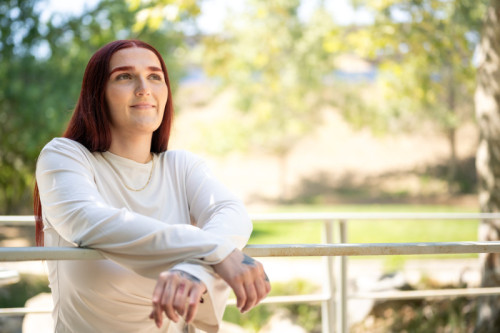
Stowinsky, a molecular and cellular biology student at California State University San Marcos (CSUSM), is the university’s recipient of the 2026 CSU Trustees’ Award for Outstanding Achievement—the California State University system’s highest recognition of student accomplishment. Five years ago, she was a college dropout raising a newborn without childcare or family support during a global pandemic. Today, she is a dean’s list student, a national honor society member, and a campus leader preparing for graduate study.
Her story offers practical lessons for any student—especially student parents, former foster youth, and non-traditional learners—who has ever believed that a single academic failure defines their future.
If Stowinsky’s story resonates with your own circumstances and you are considering a return to college, start by contacting the admissions or advising office at your nearest community college. Many institutions maintain re-enrollment programs designed specifically for students in your position.
One of the Highest Student Honors in the CSU System
Each year, the California State University recognizes one student from each of its campuses with the Trustees’ Award for Outstanding Achievement. Selection is based on four criteria: superior academic performance, personal accomplishments, community service, and financial need. Stowinsky was named a CSU Trustee Emeritus Kenneth Fong Scholar and accepted her award in person at a ceremony held during the CSU Board of Trustees meeting in Long Beach on September 22.
CSUSM President Ellen Neufeldt emphasized the significance of the honor, noting that Stowinsky “has overcome tremendous personal hardship while pursuing higher education and raising her young daughter” and calling her “the very best of the CSU system.”
For context, the Trustees’ Award is not simply a grade-based prize. It evaluates the whole student—academic results alongside service, leadership, and the obstacles a student has overcome. That framing matters, because it signals to students from difficult backgrounds that perseverance itself carries weight in how institutions measure achievement.
A Setback That Became a Turning Point
In 2021, only two days after her daughter Aaleyah was born, Stowinsky began the fall semester at Grossmont College. She attended classes online while caring for an infant—without childcare or family support. Overwhelmed, she stopped attending, failed multiple courses, and ultimately withdrew from the school.
“Walking away initially felt easier than facing another disappointment,” Stowinsky said. “But over time, that decision weighed heavily on me. I realized I did not want my daughter growing up believing that setbacks meant giving up. I wanted her to see resilience, accountability and perseverance, even during difficult moments.”
The following spring, she re-enrolled at Grossmont despite her fear of failing again. Three years later, she had earned an associate degree and transferred to Cal State San Marcos. What looked like the end of her education in 2021 became, in retrospect, the starting point of her most significant academic chapter.
The Years Before College: Instability as the Norm
Stowinsky entered the foster care system at age 4, after her mother went on military deployment. As she grew older, she would wait by the door each night wondering when her mother would come home. She attended eight different high schools and struggled with her mental health. By early adulthood, the labels attached to her—foster youth, runaway, young mother—had shaped how she viewed her own prospects.
“I believed my future would always be limited by my circumstances,” she said.
That sense of fatalism changed when Aaleyah was born in August 2021. Overnight, the purpose of persevering as a student shifted. Success in education was no longer only about her own future—it was about modeling a different outcome for her daughter.
“Education became more than an opportunity,” Stowinsky said. “It became my way out, my proof that I could rewrite my story.”
Academic Excellence in Molecular and Cellular Biology
At CSUSM, Stowinsky has built a record that stands out in a demanding scientific field. She is a dean’s list student and a member of Tau Sigma, the national academic honor society for transfer students who earn a GPA of 3.5 or higher at the end of their first term. She is on track to graduate with her bachelor’s degree in molecular and cellular biology in May.
Her research interests center on genetics, gender and development, and the ways human physiology influences neurological and psychological development.
“These fields fascinate me because they merge scientific exploration with deep human questions about identity, resilience and how biology and environment shape who we become,” she said.
Creating the Support System She Never Had
What distinguishes Stowinsky’s record further is how much of it takes place outside the classroom. At Cal State San Marcos, she works for Project Rebound, a campus program that supports formerly incarcerated and system-impacted students—work that draws directly on her own experience navigating institutional systems.
At Grossmont College, she served as a biology peer mentor, a chemistry tutor, and a workshop organizer for the school’s Math, Science and Engineering Achievement (MESA) program, which provides academic support and resources for students pursuing STEM careers.
“Many students entering STEM fields feel isolated or intimidated, especially those from underrepresented or nontraditional backgrounds,” Stowinsky said. “Because I understand those feelings personally, I strive to create the kind of support system I once needed myself.”
Research on STEM retention consistently shows that mentorship and peer networks are among the strongest predictors of whether students—particularly those from underrepresented backgrounds—persist through difficult coursework. Stowinsky’s dual role as a student and mentor reflects that evidence in practice.
Five Lessons in Perseverance for Students Facing Educational Setbacks
Stowinsky’s experience translates into actionable guidance for anyone who has stepped away from school or is struggling to stay enrolled:
1. Treat a withdrawal as a chapter, not a conclusion
Stowinsky’s failed semester did not disqualify her from academic honors five years later. Colleges re-admit returning students every semester, and most institutions weigh recent performance far more heavily than old transcripts. The practical step is simple: contact the registrar’s office and ask about the re-enrollment process.
2. Identify a motivation that outlasts the obstacle
For Stowinsky, the birth of her daughter reframed what perseverance meant. Whether it is family, career goals, or community impact, a concrete reason for finishing a degree helps students push through semesters when circumstances get difficult.
3. Use structured support programs early
MESA, Project Rebound, TRIO programs, tutoring centers, and peer mentoring exist on most campuses precisely for students facing significant barriers. Stowinsky’s decision to both use and later staff these programs shows their value from two sides.
4. Rebuild academic standing deliberately
Stowinsky returned to a community college, completed an associate degree, and transferred. That step-by-step approach—rather than an immediate leap back into a four-year program—allowed her to rebuild her GPA and confidence before pursuing her bachelor’s degree.
5. Let accountability, not shame, drive the return
Walking away initially felt easier than facing another disappointment, Stowinsky admitted. Her return was powered by taking responsibility for the setback while refusing to treat it as permanent.
Have you returned to school after stepping away, or supported someone who has? Share your experiences in the comments below—your story may be exactly what another reader needs to see.
Looking Ahead: Graduate Study and Equitable Healthcare
Stowinsky’s ambitions now extend well beyond a bachelor’s degree. She plans to pursue a master’s in science, with the goal of contributing to research that advances equitable healthcare outcomes and supports people with complex personal histories—populations she knows from lived experience.
The timing of the award carries its own symbolism. Her daughter Aaleyah turned 5 and started kindergarten in August, the same month Stowinsky began what she expects to be her final year at CSUSM. Two students, at two very different stages, moving through the education system at the same time.
“This award is so much more than a recognition of an accomplishment,” Stowinsky said. “To me, it is a reminder that people have seen my journey, my dedication, my growth and my dreams, and they too believe in me. Their belief is what continues to push me forward on the days when things feel difficult. It motivates me to keep growing into the person, and mother, I know I am meant to become and to continue working every day to honor the faith and support that has been placed in me.”
Why Stories Like This Matter in USA Education News
Reports of student achievement like Stowinsky’s serve a purpose beyond celebration. In a period when college enrollment across the USA has declined and many prospective students question whether higher education is worth the cost, examples of real people overcoming real obstacles provide concrete evidence that the system can work for those it has historically underserved.
For former foster youth, student parents, and others labeled “at risk,” the message embedded in the CSU Trustees’ Award is direct: institutions of higher education are paying attention to more than transcripts. Perseverance, service, and personal growth count.
Considering a return to college or a path into the sciences? Schedule a meeting with an academic advisor at a community college near you to map out a realistic plan. And if you want more coverage of student achievement, perseverance, and education news from across the USA, explore our related articles or subscribe to our newsletter for updates delivered directly to your inbox.