Analyze Pacific University Week of Welcome Events Driving Student Engagement in the USA
Understanding the Impact of Orientation Week on College Success
Transitioning from high school or a previous institution to a university environment presents a complex set of academic and social challenges. Extensive educational research across the USA demonstrates that the first few weeks of a student’s college experience heavily influence their long-term retention, academic performance, and overall satisfaction. Universities that intentionally design structured orientation programs consistently report higher first-year retention rates compared to those that leave students to navigate the transition independently. Recent news from University of the Pacific highlights exactly how a well-executed Week of Welcome can establish a strong foundation for incoming classes, proving that early, intentional student engagement is a critical driver of collegiate success.
When students feel connected to their institution from day one, they are more likely to seek help when they struggle academically, utilize campus resources, and form study groups. Conversely, students who fail to establish these connections during the crucial early weeks often experience feelings of isolation, which can quickly escalate into academic disengagement. Pacific University recognizes this dynamic and has structured its orientation week not merely as a series of social mixers, but as a comprehensive introduction to the academic and cultural fabric of the institution.
Schedule a free consultation to learn more about how to evaluate college support systems during your admissions process.
Key Components of the Pacific University Week of Welcome
The Pacific University Week of Welcome operates on a multi-tiered strategy that addresses different aspects of the student experience. By blending high-energy social events with meaningful academic traditions, the university ensures that students are exposed to the full spectrum of campus life. This deliberate programming is a prime example of effective student engagement in action, providing multiple entry points for students with varying interests and personality types.
Tiger Roar and New Student Convocation Traditions
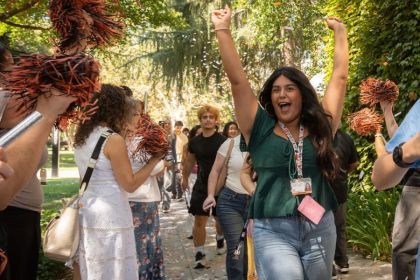
Creating a sense of ceremonial significance is a powerful tool for marking major life transitions. Pacific University leverages this through events like Tiger Roar and the New Student Convocation. Tiger Roar acts as a vibrant, high-energy kickoff, featuring a confetti-filled walk across campus that immediately injects excitement into the new student experience. This kind of shared, celebratory moment helps break down initial social anxieties and creates a unified class identity.
Following the energetic kickoff, the New Student Convocation serves a more formal, grounding purpose. It introduces students to the academic rigor and historical legacy of the institution. By participating in this formal ceremony, students mentally shift from a vacation mindset to an academic one. They are reminded that they are now part of a long lineage of scholars, which fosters a sense of responsibility and belonging. These paired events—one exuberant, one reflective—work together to fully integrate students into the Pacific community.
Connecting Through the Tiger Fair and Block Party
Extracurricular involvement is strongly correlated with academic success and post-graduation employability. However, students cannot join clubs they do not know exist. The Tiger Fair and community block party serve as a centralized marketplace for student engagement, directly connecting new students with the myriad of organizations available on campus. According to recent reports, more than 500 students attended these specific events to sing karaoke, play games, and gather information about Pacific clubs and resources.
This environment allows students to explore their interests outside the classroom in a low-pressure setting. Whether a student is looking to join a cultural association, an academic honor society, or an intramural sports team, the Tiger Fair provides immediate access. Furthermore, the block party atmosphere ensures that this exploration feels like a natural extension of the week’s festivities rather than a mandatory administrative task. Engaging with peers who share similar passions helps students build a micro-community within the larger university, anchoring them socially during the turbulent first semester.
The Role of Community Service in Student Engagement
Modern higher education in the USA increasingly emphasizes civic responsibility and community integration. Universities are no longer viewed as isolated ivory towers, but as active participants in their local ecosystems. Pacific University embeds this philosophy directly into its Week of Welcome through the Pacific Day of Service, demonstrating that student engagement extends beyond the campus borders.
Pacific’s Day of Service: By the Numbers
The scale of the Day of Service is a testament to the university’s commitment to community involvement. More than 600 students, faculty, and staff volunteered at 16 local nonprofits during this year’s orientation week. The tasks were hands-on and immediately impactful: boxing food at local banks, pulling weeds in community gardens, and painting benches in public spaces. This collective effort translates the university’s stated values into tangible action.
For new students, participating in the Day of Service accomplishes several goals simultaneously. First, it provides an immediate, structured opportunity to meet peers and faculty members in a collaborative, non-academic setting. Working side-by-side to pull weeds or sort food naturally facilitates conversation and teamwork. Second, it grounds students in their new geographic location. Students arriving from over 30 states and nearly 20 countries may have no prior connection to the local area. Community service forces them to venture off-campus, interact with local residents, and begin viewing their college town as their new home. This local integration is a vital, often overlooked, component of overall student engagement.
Building a Support Network from Day One
A successful college transition relies heavily on the visibility and accessibility of support networks. Moving into a new environment—often far from family and childhood friends—can be isolating. Pacific University’s approach to move-in and orientation is deliberately designed to surround students with a visible network of peers, mentors, and professionals from the very first moment they arrive on campus.
Faculty, Staff, and Alumni Involvement
During the Week of Welcome, faculty, staff, and alumni do not remain on the sidelines; they actively participate in welcoming the new class. This visibility is crucial. When students see their future professors helping them carry boxes into a residence hall or cheering for them at Tiger Roar, it humanizes the faculty. It breaks down the traditional hierarchy that often intimidates first-year students, making them much more likely to visit office hours or ask for help when they encounter difficult course material later in the semester. Alumni involvement further reinforces this network by providing students with tangible examples of where a Pacific education can lead, subtly boosting institutional pride and motivation.
Utilizing Campus Support Services Early
Many universities make the mistake of waiting until a student is in academic or personal crisis before introducing them to support services. Pacific University flips this model by integrating academic support, career services, and health and wellness resources into the Week of Welcome schedule. With more than 1,400 new and returning students moving into on-campus housing, the university seizes the opportunity to familiarize students with these resources while they are in a positive, receptive state of mind.
When over 800 students attend orientation events that explicitly highlight where to find tutoring, how to access mental health counseling, and where to go for career advice, the university is proactively removing barriers to success. Students learn the physical locations of these offices and, more importantly, learn that utilizing these services is a normal, expected part of the college experience. This proactive education dramatically reduces the stigma associated with seeking help and ensures that when students inevitably face challenges, they know exactly where to turn.
Submit your application today to secure your spot at a university that prioritizes your holistic success from day one.
Why First-Year Engagement Matters in USA Higher Education
The strategies employed by Pacific University reflect a broader shift in how institutions across the USA approach student retention. National data consistently shows that a significant percentage of students who leave college do so not because of academic inability, but because of a lack of connection and belonging. The financial and emotional costs of attrition are high for both the student and the institution.
By investing heavily in a comprehensive Week of Welcome, universities like Pacific are making a strategic commitment to their students’ futures. The diversity of the incoming class—representing over 30 states and nearly 20 countries—means that a one-size-fits-all approach to engagement will fail. Effective programming must offer varied touchpoints, from high-energy social events to quiet academic workshops, and from on-campus mixers to off-campus community service. This multi-faceted approach ensures that regardless of a student’s background, personality, or interests, they can find a niche where they feel valued and supported.
Furthermore, strong student engagement during the first year creates a positive feedback loop. Engaged students achieve higher grades. Higher grades lead to increased confidence. Increased confidence encourages deeper involvement in leadership roles, internships, and advanced research. Ultimately, the connections forged during something as seemingly simple as a Week of Welcome lay the groundwork for a successful career and a lifelong relationship with the university.
Take the Next Steps in Your College Journey
Evaluating how a university welcomes its newest students is one of the most telling indicators of its overall culture. A robust Week of Welcome signifies an institution that values community, plans meticulously, and prioritizes the holistic well-being of its student body. The recent news from Pacific University serves as an excellent case study for prospective students and parents trying to understand what to look for in a college environment.
As you research institutions and prepare for your own transition, consider how you will find your place on a new campus. Look for universities that offer structured opportunities to meet faculty, engage with the local community, and explore extracurricular interests before classes even begin. The effort a university puts into your first week is a direct reflection of the effort it will put into your next four years.
Have questions about what to look for in a college orientation program? Write to us!
Explore our related articles for further reading on maximizing your college experience and evaluating campus culture.