Wildlife Cinematography and Conservation: Lessons from Filmmaker Mauricio Handler’s UNE Lecture in Maine
What does it take to capture a newborn sperm whale calf on camera, guided into view by its own mother? For internationally recognized underwater cinematographer Mauricio Handler, moments like these are not accidents of luck but the result of decades of dedication to wildlife cinematography, technical mastery, and a deep commitment to conservation storytelling. On Monday, October 5, the University of New England (UNE) in Biddeford, Maine, will host Handler for its annual Connections Lecture, offering students, aspiring filmmakers, and community members a rare behind-the-scenes look at the craft of documenting the natural world.
Handler’s presentation, titled “Carpe Diem”: A Wildlife Cinematographer’s Insight into Filmmaking, begins at 12:30 p.m. in the Multipurpose Rooms of UNE’s Campus Center. The event is free and open to the public, with refreshments provided and a question-and-answer session following the talk. For anyone in the USA interested in wildlife cinematography, marine science, or environmental storytelling, this is an opportunity worth marking on the calendar.
Have questions about attending events like this one? Reach out to the university’s events office or share your thoughts in the comments below.
Why Wildlife Cinematography Matters for Conservation
Wildlife cinematography is far more than an artistic pursuit. It serves as one of the most powerful tools available for advancing conservation goals. When audiences see an endangered South American sea otter learning to survive in its habitat, or witness the quiet intelligence of a sperm whale mother presenting her calf to a trusted observer, abstract environmental problems become personal and immediate.
Professor Eric Zuelow, Ph.D., an environmental historian and organizer of the Connections Lecture series, put it plainly: storytelling is critical regardless of what field a student plans to enter. Explaining environmental issues to the widest possible audience, and demonstrating why people should care, is arguably the key to solving the planet’s biggest challenges.
This is the central argument that Handler’s career embodies. Documentary film offers a path toward more effective conservation because it builds emotional connections between creatures living in the oceans and the humans whose actions will define their fate. Data and policy briefs rarely move hearts. A well-told story, captured through a camera lens in waters off Chile or along the Maine coast, can.
The Science Behind the Lens
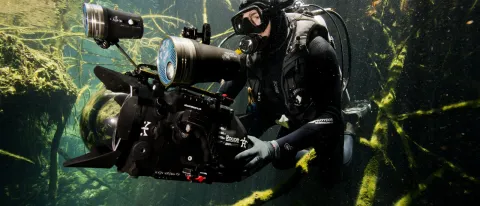
Effective wildlife cinematography requires more than expensive equipment. It demands a working knowledge of animal behavior, marine ecosystems, seasonal migration patterns, and the patience to wait weeks for a single shot. Handler has spent decades photographing and filming above and below the water in both saltwater and freshwater environments, with a particular focus on sharks and marine mammals. His expeditions have taken him to Chile, the Azores, Indonesia, Maine, and beyond, producing stories for major cable and television networks.
For students considering careers in marine and environmental sciences, filmmaking, or communications, Handler’s work demonstrates how technical expertise and scientific literacy reinforce one another. Understanding why a species behaves a certain way allows a cinematographer to anticipate the moment worth capturing, and that moment, once captured, becomes an advocacy tool for the species itself.
What to Expect from the UNE Connections Lecture
The Connections Lecture series, hosted by UNE’s College of Arts and Sciences, brings leading thinkers to campus to examine ideas from multidisciplinary perspectives. The series is grounded in the belief that deeper understanding emerges when disciplinary boundaries are broken down. Handler’s October 5 presentation fits this mission perfectly, bridging the worlds of marine biology, filmmaking, environmental history, and public communication.
During the lecture, Handler will take attendees behind the scenes of productions filmed across multiple continents. Using excerpts from his projects and stories from his career, he will explore the cinematographer’s role as a storyteller in conservation. Attendees can expect to learn:
- How an idea develops into a screen-ready story. From concept to expedition planning to the final edit, Handler will trace the arc of a wildlife production.
- How filmmakers connect stories with audiences. Emotional resonance is engineered through structure, pacing, and perspective, not just subject matter.
- How accessible storytelling tools empower new voices. Modern technology has lowered the barriers to entry, meaning the next generation of conservation storytellers may hold a camera in their hands today.
- The professional realities of wildlife filmmaking. Handler will discuss the skills, knowledge, and technical expertise required to build a career in this competitive field.
Planning to attend or interested in learning more about programs at the University of New England? Submit your questions to the admissions office or leave a comment to continue the conversation.
Local Relevance: Maine’s Coastal Waters Take Center Stage
While Handler’s career spans the globe, the lecture carries particular significance for Maine audiences. Handler is currently completing a film documenting the spring migration of key marine species off the Maine coast as part of a larger series he is producing titled North American Waters. For students at UNE, an institution with nationally recognized programs in marine sciences and a coastal campus in Biddeford, the subject matter hits close to home.
Maine’s coastal ecosystem is a living laboratory. The Gulf of Maine is warming faster than most of the world’s oceans, making the stories told about its species urgent ones. When a filmmaker of Handler’s caliber turns his lens toward these waters, the resulting work contributes to a broader public understanding of what is at stake for the region’s marine life and the communities that depend on it.
Handler’s Journey: From Chile to the World’s Oceans
Born in Chile, Handler has maintained a deep professional and personal connection to the country throughout his career. Among his many experiences, he filmed the story of an endangered South American sea otter learning to navigate its environment, a project that highlights how individual animal narratives can illuminate broader conservation challenges. In one of the most remarkable encounters of his career, he was once introduced to a newborn sperm whale calf by its mother, a moment that speaks to the trust and mutual respect that can develop between patient filmmakers and wild animals.
These stories underscore an important lesson for anyone interested in wildlife cinematography: the work is built on relationships. Relationship with the environment, with the animals being documented, and with the scientists and local communities who make access possible. Aspiring filmmakers should understand that technical skills open doors, but respect and persistence keep them open.
Are you a student or early-career professional exploring paths in environmental media? Schedule a free consultation with your academic advisor or career center to discuss how storytelling skills fit into your goals.
Actionable Advice for Aspiring Wildlife Storytellers
Handler’s upcoming lecture is not just for passive viewing. For those hoping to follow a similar path, the event and the broader field offer several concrete takeaways.
1. Start Telling Stories Now
You do not need a network contract to begin. Handler emphasizes that accessible storytelling tools can empower people to tell their own stories. A smartphone, a local shoreline, and curiosity about the creatures in your own backyard are enough to start building a portfolio. Document the tide pools, the migrating birds, or the harbor seals near your community. Practice finding the narrative arc in real observations.
2. Build Cross-Disciplinary Knowledge
The Connections Lecture series exists because the most compelling work happens at the intersection of fields. Aspiring wildlife cinematographers benefit from studying marine biology, environmental science, history, and communications alongside film production. Universities with strong marine and environmental science programs, like UNE in the USA, offer structured ways to gain this breadth. Explore the marine and environmental sciences programs at institutions near you to see how coursework can support a media career.
3. Attend Public Lectures and Events
Events like the October 5 Connections Lecture are free, open to the public, and include time for audience questions. Attending in person allows you to hear directly from working professionals, network with faculty and students, and ask the specific questions that matter to your own career planning. Follow university event calendars in your area and make attendance a habit.
4. Understand the Conservation Context
Storytelling without substance is empty. The most effective wildlife filmmakers ground their narratives in real ecological understanding. Read the scientific literature relevant to your subjects, connect with researchers, and never sacrifice accuracy for drama. Conservation audiences, and the animals themselves, deserve stories that hold up to scrutiny.
5. Practice Environmental Communication
As Professor Zuelow notes, explaining environmental issues to the widest possible audience is key to solving our biggest challenges. That skill, translating complex ecological realities into accessible narratives, applies to filmmakers, scientists, journalists, educators, and advocates alike. Write, film, and speak about environmental topics regularly. The ability to communicate is a career asset in every field.
Want to stay informed about lectures, events, and opportunities in conservation and media? Share this article with a friend or subscribe to university news updates in your region.
The Broader Impact of Storytelling on Environmental Awareness
The questions guiding Handler’s lecture, how documentary film can offer a path toward more effective conservation, and how storytelling can change minds, are questions with implications far beyond a single campus event. Across the USA and around the world, conservation organizations increasingly recognize that narrative is central to their mission. Films, documentaries, and even short-form social media content shape public opinion, influence policy debates, and drive funding for protection efforts.
When viewers feel a connection to a specific animal or place, they are more likely to support the policies and behaviors that protect it. This is why wildlife cinematography occupies a unique position at the meeting point of art, science, and advocacy. It is not enough to document decline; skilled storytellers show audiences what is worth saving and why the window to act remains open.
For the Biddeford community and the broader Maine public, the October 5 lecture offers a chance to engage with these ideas in person. For students, it is an invitation to consider how their own future careers, whatever field they pursue, might benefit from the ability to tell a story well.
Plan Your Visit to the UNE Connections Lecture
The event details are straightforward. Mauricio Handler’s Connections Lecture takes place on Monday, October 5, at 12:30 p.m. in the Multipurpose Rooms of the Campus Center on UNE’s Biddeford Campus in Maine. Admission is free, refreshments will be served, and audience questions will follow the presentation. Media inquiries can be directed to the university’s Office of Communications.
Seating at popular lectures can fill quickly, so arriving early is a sensible plan. Students from other institutions, high school students exploring college options, and members of the public with an interest in marine life or filmmaking are all welcome. Check the university’s events page for updates and additional details before you go.
If you attend, consider what questions you would ask a professional who has filmed endangered species and shared moments with whale mothers and their calves. Preparation turns a good lecture experience into a great one.
Final Thoughts on Wildlife Cinematography and Conservation
Mauricio Handler’s career demonstrates that wildlife cinematography is a discipline of patience, skill, and purpose. The stories he tells, from the waters of Chile to the coast of Maine, remind audiences that the fate of marine life rests in human hands, and that well-crafted narratives can move those hands toward protection rather than harm.
The University of New England’s Connections Lecture on October 5 offers a free, accessible way to learn from a master of the craft. Whether you are an aspiring filmmaker, a student of marine science, an environmental advocate, or simply someone who cares about the oceans, the insights shared at this event will be worth your time. Storytelling is critical in every field, and learning how professionals use it to advance conservation is a lesson with lasting value.
Will you be attending the lecture or following Handler’s work in North American Waters? Share your experiences and questions in the comments below, and explore related articles on conservation storytelling and marine science for further reading.