
View the Nancy Rankin Art Exhibit at the University of New England Campus Center
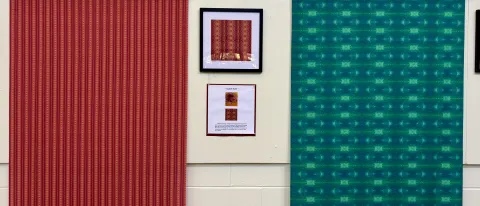
The University of New England (UNE) continues to foster a vibrant cultural environment for its students and the surrounding community. Through August 31, the UNE Campus Center on the Biddeford Campus is hosting a compelling display of visual arts. The Nancy Rankin art exhibit, titled “Photo Balms,” offers a distinct perspective on textile creation, blending natural photography with digital manipulation to produce striking fabric designs. For those tracking UNE news or seeking out notable Biddeford art events, this exhibition provides a focused look at how traditional artistic mediums evolve through modern technology.
Share your experiences in the comments below.
Examine the Intersection of Nature and Fabric Design USA
At the core of the Nancy Rankin art exhibit is a profound connection to the natural world. Rather than sketching or painting from imagination, Rankin utilizes the raw visual data provided by her surroundings. Her subjects include orchids, beets, beaver dams, and even household mold. By capturing these elements through a camera lens, she establishes a grounded, realistic starting point. However, the final results transcend traditional nature photography, securing a unique place within the broader scope of fabric design USA.
When visitors attend USA art shows, they often expect to see standard quilts or woven tapestries. Rankin’s work subverts these expectations. The patterns she develops retain a “hint of the familiar,” as the artist notes, but the inherent elements are entirely reimagined. This method speaks to a contemporary trend in textile arts where the boundary between digital graphic design and physical fabric printing becomes increasingly fluid. By taking organic shapes and restructuring them into repeatable patterns, Rankin creates a bridge between the organic irregularity of nature and the precise geometry required for textile manufacturing.
The Creative Process Behind the Nancy Rankin Art Exhibit
Understanding the methodology behind the artwork enhances the viewing experience. The project originated during the COVID-19 pandemic, a period that prompted many individuals to explore new hobbies and revisit old interests. For Rankin, the catalyst was a student who introduced her to the Instagram Layout app.
Initially, Rankin experimented with her existing photo library, which contained images of flowers, vegetables, shadows, and ripples in sand. As her familiarity with the application grew, her approach became more deliberate. She began photographing specific, often overlooked details of everyday subjects, such as the intricate lines inside a beet, the varied textures of squash, or the complex internal structures of tomatoes and flowers.
This phase was characterized by trial and error. Rankin openly acknowledges that not every conceptual experiment yields a successful final product. This candid acknowledgment of failure highlights the experimental nature of her process. It serves as a valuable reminder to aspiring artists that the journey from concept to completed piece is rarely linear.
Using Digital Manipulation to Reimagine Natural Subjects
The technical workflow Rankin employs is both accessible and sophisticated. She begins by cropping a selected photograph and uploading it to the Layout app. From there, she systematically cuts the image into halves, thirds, or quarters. By flipping these segments horizontally or vertically, she begins to disrupt the original composition.
This flipping and mirroring process is rarely completed in a single step. Rankin often repeats the manipulation through three or four iterations. With each pass, the original subject matter—perhaps a simple beet interior—becomes increasingly abstract. The natural lines and colors remain, but they are rearranged into a kaleidoscopic or geometric pattern that bears little resemblance to the source material. This digital manipulation is a critical step that separates her work from standard photography and aligns it with complex fabric design.
Bringing Patterns to Life: From Digital Screen to Printed Textiles
A digital pattern remains intangible until it is physicalized. To transition her screen-based designs into tangible art, Rankin partnered with Spoonflower, a well-known North Carolina-based company specializing in printing digital images onto fabric.
The choice of Spoonflower is significant for those interested in the logistics of modern fabric design USA. It democratizes the textile printing process, allowing independent artists to produce custom fabrics without the need for massive commercial manufacturing contracts. When Rankin received her first printed fabric, she noted the excitement of seeing how accurately the colors transferred from the digital file to the woven material.
For Rankin, this step represented a full-circle moment. Her relationship with fabric is lifelong; she has long appreciated the interplay of colors, patterns, textures, weave, and drape. Sewing was a central part of her life for many years, and she has professionally facilitated community quilt projects. In these workshops, she often used the physical qualities of fabric—how pieces fit together, how colors clash or complement each other—as metaphors for community building and life experiences.
Explore our related articles for further reading on community art projects.
Why This Exhibit Stands Out Among Biddeford Art Events
The local art scene in southern Maine is robust, characterized by coastal landscapes, maritime themes, and traditional crafts. However, the Nancy Rankin art exhibit introduces a different aesthetic vocabulary to the region. By focusing on digitally manipulated, nature-inspired textiles, the exhibition expands the definition of what local art can look like.
Hosting this exhibit at the UNE Campus Center ensures high visibility. The Campus Center serves as a hub for student activity, faculty meetings, and community events. Placing contemporary art in a high-traffic, non-traditional gallery space integrates visual arts into the daily routines of students and staff. This approach to curating Biddeford art events breaks down the barriers that often exist between formal galleries and the general public.
Schedule a free consultation to learn more about UNE’s arts and humanities programs.
Nancy Rankin’s Academic Legacy at the University of New England
The exhibition also serves as a retrospective nod to Rankin’s long-standing relationship with the University of New England. Her connection to the institution is deeply rooted in its academic framework. She initially moved to Maine to serve as the director of counseling services at UNE. Following this administrative role, she transitioned into the academic sphere, teaching in the psychology program for more than two decades before retiring in 2019.
Her psychological background profoundly influences her artistic output and her approach to teaching. Among her favorite courses to teach was the introduction to art therapy. This specific discipline sits at the intersection of mental health and creative expression. By teaching art therapy, Rankin helped students understand how the act of creating—whether through drawing, painting, or textile work—can serve as a powerful tool for emotional processing and healing.
The Role of Art Therapy in Higher Education
Art therapy programs in higher education emphasize that creative expression is not merely a leisure activity but a clinically validated method for improving mental well-being. Rankin’s ability to share the power of the arts in the healing process while fostering her students’ own creative expression left a lasting impact on the UNE community. Her current foray into digital fabric design can be viewed as a continuation of this philosophy: a personal exploration of creativity that yields therapeutic and meditative benefits. The exhibit, therefore, is not just an art display; it is a physical manifestation of an academic career dedicated to holistic education.
Have questions? Write to us!
Plan Your Visit to See This Unique Fabric Design USA Showcase
For those interested in experiencing this intersection of psychology, nature, and digital textiles, planning a visit is straightforward. The “Photo Balms” exhibit is located in the lobby of the UNE Campus Center at 11 Hills Beach Road in Biddeford, Maine.
The exhibition runs through August 31, providing ample opportunity for summer visitors, incoming students, and local residents to attend. The summer operating hours for the Campus Center are designed to accommodate various schedules. The building is open Monday through Friday from 6:00 a.m. to 7:00 p.m., and on weekends from 10:00 a.m. to 4:00 p.m. These extended hours make it highly accessible for those looking to explore Biddeford art events throughout the summer months.
Attending local university exhibitions is an excellent way to support regional artists and engage with the cultural offerings of higher education institutions. The Nancy Rankin art exhibit provides a specific, focused look at how digital tools can be harnessed to reinterpret the natural world, resulting in textiles that are both visually arresting and conceptually rich. Whether you are a student of psychology, an aspiring textile designer, or simply a local resident looking for a stimulating afternoon, this showcase is a noteworthy addition to the current calendar of USA art shows.
Submit your application today if you are inspired by the intersection of art and psychology.