
Study Music Therapy at University of the Pacific: Heartbeat Recordings in End-of-Life Care
Integrating Music Therapy into End-of-Life Care in the USA
Providing comfort and dignity during the final stages of life requires a specialized set of clinical skills and deep emotional intelligence. In the USA, end-of-life care has increasingly embraced holistic approaches to support patients and their families. Among these approaches, music therapy has emerged as a powerful clinical tool to help individuals process grief, manage anxiety, and find closure. Recent University news highlights how the University of the Pacific is training the next generation of clinicians to use innovative techniques, specifically heartbeat recordings, to create lasting legacies for patients in hospice and palliative settings.
For aspiring clinicians and healthcare professionals, understanding the intersection of music, medicine, and emotional support is essential. Programs that combine rigorous musical training with hands-on clinical experience prepare students to make a tangible difference in patient care. Explore our related articles for further reading on how the arts intersect with modern healthcare practices.
The Clinical Value of Music Therapy in Palliative Settings
Music therapy in end-of-life care goes far beyond simply playing calming background music. It is an evidence-based clinical practice where credentialed professionals use music interventions to address physical, emotional, cognitive, and social needs. In hospice environments, patients often face complex emotional states, including fear, isolation, and existential distress. Families, meanwhile, begin the anticipatory grieving process.
Clinical music therapists use various techniques—such as songwriting, lyric analysis, and receptive listening—to help patients articulate feelings they may not be able to express with words alone. Music provides a structured yet flexible medium for emotional expression. As noted by experts in the field, life can be viewed much like a song, complete with a beginning, middle, and end. Music therapy helps patients and families navigate that final movement with grace and intentionality.
Understanding the Heartbeat Recordings Technique
One of the most profound advancements in hospice music therapy involves the use of heartbeat recordings. This technique centers on capturing the literal rhythm of a patient’s heart—often using a digital stethoscope or specialized amplification equipment—and integrating that rhythm into a musical composition. The resulting track serves as a highly personalized musical legacy that families can keep long after their loved one has passed.
The process requires technical proficiency in audio recording and a delicate, empathetic touch. The therapist must isolate the heartbeat, determine its tempo (often measured in beats per minute), and build a harmonic and melodic structure around it. The heartbeat might become the underlying drum track, the rhythmic pulse of a piano piece, or the foundation for an original song with lyrics written by the patient or their family members.
Board-certified music therapists, such as Brian Schreck, who has extensively pioneered this work, emphasize that these recordings provide a concrete, physical connection to the deceased. Hearing the actual heartbeat of a loved one embedded in a song offers a unique form of grief support that traditional therapies cannot replicate. It validates the life lived and provides a lasting auditory memory.
Inside the Cadence of Life Symposium at University of the Pacific
The practical application of these advanced techniques requires specialized training. The University of the Pacific’s Conservatory of Music recently addressed this need by hosting the Cadence of Life: Music Therapy in Hospice and Palliative Care symposium. This event provided a platform for students and professionals to examine the nuances of hospice-based music therapy.
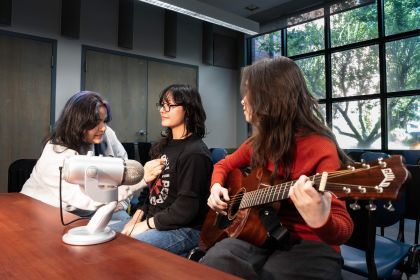
The symposium was integrated into the Amplified Cardiopulmonary Recordings in Music Therapy course, led by Eric Waldon, a professor and the program director. The curriculum bridges theoretical knowledge with practical application, teaching students exactly how to capture, process, and musicalize biological sounds. By inviting established clinicians like Schreck to share their real-world experiences, the university ensures that students receive current, field-tested knowledge. Schedule a free consultation to learn more about how specialized academic programs can shape your clinical career.
Building Projects in a Controlled Environment
Working with heartbeat recordings in a clinical hospice setting carries significant emotional weight. To prepare students for these realities, the University of the Pacific structures the coursework to begin in a controlled, non-clinical environment. Students initially practice their recording and production techniques on friends, family members, and even pets.
This approach serves multiple purposes. First, it allows students to master the technical aspects of audio amplification and digital audio workstation (DAW) software without the immediate pressure of a patient’s declining health. Second, it familiarizes them with the interpersonal dynamics of asking someone to share an intimate biological process. Finally, it allows students to create their own legacy projects, fostering a deep, personal understanding of the emotional impact these recordings hold. As Janice Smith, a music therapy master’s equivalency student at Pacific, noted, receiving direct knowledge from experienced music therapists is invaluable for taking into future clinical practice.
Bridging Classroom Theory with Field Practice
The transition from the classroom to the bedside is one of the most challenging steps for any healthcare student. Music therapy programs must provide supportive, personalized, and sensitive mentoring to help students navigate this transition successfully. Professor Waldon highlights that the deeply personal nature of end-of-life work requires an educational environment that prioritizes emotional safety and ethical practice.
Through symposiums, specialized courses, and guided projects, students learn to establish therapeutic rapport, maintain professional boundaries, and manage their own countertransference and grief. They learn that the goal of a heartbeat recording session is not to create a perfect musical masterpiece, but to facilitate a meaningful human experience. The focus remains entirely on the patient’s and family’s emotional needs, using the music simply as the vehicle for connection.
Career Pathways for Music Therapists in the USA
For those considering this career path, the job outlook for music therapists in the USA remains steady, particularly in specialized areas like end-of-life care. Hospice agencies, palliative care units within major hospital systems, and specialized grief counseling centers increasingly recognize the value of incorporating credentialed music therapists into their interdisciplinary care teams.
Working in this sector requires standard credentialing through the Certification Board for Music Therapists (CBMT). After completing an approved academic program—such as the one offered at the University of the Pacific’s Conservatory of Music—and a mandatory clinical internship, candidates sit for the board certification exam. Maintaining this credential requires ongoing professional development, which makes events like the Cadence of Life symposium a critical component of a therapist’s career longevity and effectiveness.
Professionals in this field must be adaptable, comfortable working in home settings, hospitals, and dedicated in-patient hospice facilities, and capable of collaborating with doctors, nurses, social workers, and chaplains. The ability to articulate the clinical goals of music therapy to medical professionals is just as important as the musical skills themselves. Submit your application today if you are ready to start your journey toward board certification in this rewarding field.
How to Pursue Specialized Training in Hospice Music Therapy
Choosing the right academic program is a critical first step for aspiring music therapists. Prospective students should look for universities that offer a dedicated music therapy degree within a conservatory or school of music, as this ensures a high level of musical proficiency alongside clinical training. The curriculum should explicitly cover psychology, anatomy, and human development, as well as advanced music therapy techniques.
Furthermore, students should investigate the specific clinical fieldwork opportunities a program offers. Access to diverse internship sites, including hospices and hospitals, is essential for building a well-rounded clinical portfolio. Programs that bring in active clinicians for guest lectures and symposiums offer a distinct advantage, as they expose students to the latest methodologies—like heartbeat recordings—directly from the practitioners who developed them.
Creating Meaningful Impact Through Sound
The integration of heartbeat recordings into end-of-life care represents a beautiful synthesis of technology, art, and clinical compassion. It provides families with a tangible piece of their loved one’s existence, turning the inevitable conclusion of life into a lasting legacy of sound. As the University news from Pacific demonstrates, training students in these advanced techniques requires a commitment to both technical excellence and profound human empathy.
For healthcare professionals and students alike, the field of music therapy offers a unique avenue to provide comfort where it is needed most. By mastering these specialized skills, therapists ensure that even at the end of life, a person’s rhythm continues to resonate with those they leave behind. Have questions? Write to us! to discuss how you can integrate these practices into your academic or professional path.