Sean Quick ’27 Achieves College Acceptance to Northeast College of Health Sciences Chiropractic Program
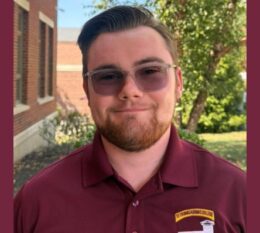
Securing a college acceptance into a competitive graduate healthcare program requires more than just strong grades; it demands a proactive approach to academic preparation and campus involvement. Recent STAC News highlights the achievements of Sean Quick ’27, a student at St. Thomas Aquinas College who has successfully been admitted to the Doctor of Chiropractic program at Northeast College of Health Sciences. His trajectory from an undergraduate student to a prospective chiropractic doctor offers a practical roadmap for current and future students aiming for similar careers in the USA news landscape of healthcare education.
Navigating the Path from Undergraduate Studies to a Doctor of Chiropractic Program
The transition from an undergraduate degree to a doctoral-level healthcare program is a rigorous process. For students targeting a chiropractic program, the undergraduate years must be strategically planned. Students must complete specific prerequisite courses, typically including biology, chemistry, organic chemistry, physics, and psychology, while maintaining a competitive GPA. Furthermore, admissions committees look for candidates who demonstrate a genuine understanding of the profession, often verified through shadowing hours with licensed chiropractors.
Sean Quick ’27 utilized his time at St. Thomas Aquinas College to build this exact foundation. By aligning his undergraduate coursework with the expectations of Northeast College of Health Sciences, he ensured that his college acceptance was the result of deliberate, measurable academic progress. Aspiring chiropractors must view their undergraduate degree not as a separate endeavor, but as the first formal step of their medical training. Researching the specific admission criteria of target graduate schools early in your college career prevents costly academic detours and ensures you meet all baseline requirements before the application cycle begins.
Submit your application today to start your pre-health journey at St. Thomas Aquinas College.
Building a Strong Foundation Through Campus Involvement at STAC
Academic metrics alone rarely secure a spot in a highly competitive doctoral program. Graduate schools seek well-rounded candidates who possess strong interpersonal skills, leadership qualities, and the ability to manage multiple responsibilities. Engaging in campus life provides the ideal training ground for these soft skills, which are directly transferable to patient care.
During his time at St. Thomas Aquinas College, Sean Quick became a highly visible and involved member of the community. His active participation in campus initiatives demonstrated to admissions committees that he possesses the communication skills and emotional intelligence required to manage a diverse patient panel in the future. Healthcare is an inherently social field; a chiropractor must listen to patients, explain complex anatomical concepts in accessible terms, and build trust quickly. Campus involvement forces students to interact with diverse peer groups, resolve conflicts, and collaborate on projects—mirroring the collaborative nature of modern healthcare teams.
The Role of Spartan Journey Orientation in Student Development
A specific highlight of Sean’s undergraduate career was his heavy involvement in the Spartan Journey Orientation program. This initiative is designed to welcome incoming students to the St. Thomas Aquinas College campus and facilitate their transition into college life. Serving as a leader or mentor in such programs requires a high degree of responsibility, patience, and adaptability.
For pre-health students, participating in orientation programs offers a distinct advantage. It requires public speaking, event coordination, and the ability to guide individuals through stressful or unfamiliar situations. When a graduate school admissions committee reviews a resume, seeing a leadership role in student orientation signals that the applicant is reliable, approachable, and capable of taking initiative. These are the exact traits that make a future healthcare practitioner successful.
Schedule a free consultation to learn more about student engagement opportunities.
Evaluating Chiropractic Curriculums: The Value of Early Clinical Exposure
When evaluating potential graduate schools, prospective students must look beyond institutional names and examine the specific structure of the curriculum. Not all chiropractic program options are designed the same way. The sequencing of clinical exposure versus didactic classroom learning can significantly impact a student’s readiness to practice upon graduation.
Sean Quick noted a specific reason for his excitement regarding Northeast College of Health Sciences: the early integration of hands-on clinical techniques. At this institution, students begin learning chiropractic adjustments—the core manual manipulation techniques used to treat musculoskeletal issues—as early as their second or third trimester. In contrast, many other institutions delay this critical hands-on training until the fifth or sixth trimester.
Why Early Hands-on Adjustments Matter in Chiropractic Education
Understanding the mechanics of a chiropractic adjustment requires both theoretical knowledge and tactile proficiency. The human spine and extremity joints present complex biomechanical challenges. When students are introduced to these adjustments earlier in their education, they benefit from an extended period of psychomotor skill development. Muscle memory, proper body mechanics, and the nuanced feel of a successful adjustment cannot be rushed.
By beginning this training in trimester two or three, students have more time to practice under direct faculty supervision, refine their technique, and correct bad habits before they become ingrained. This accelerated clinical timeline prepares graduates to enter the workforce with a higher baseline of confidence and practical competency. For prospective students comparing USA news rankings and program outcomes, analyzing the trimester-by-trimester course schedule should be a primary step in the decision-making process.
Explore our related articles for further reading on healthcare degree pathways.
Planning for the Future: Private Practice and Global Healthcare Opportunities
A clear career vision is another component that strengthens a graduate school application. Admissions committees prefer candidates who know exactly what they want to do with their degree. Sean Quick ’27 has articulated a precise set of professional goals that extend well beyond simply obtaining a doctorate.
His primary objective is to open his own private practice. Operating a private chiropractic practice requires a hybrid skill set that blends clinical expertise with business acumen. A practice owner must understand healthcare billing and coding, marketing, employee management, regulatory compliance, and customer service. Undergraduate students who plan to open their own practices should consider taking elective courses in business administration, entrepreneurship, or healthcare management alongside their science prerequisites.
Furthermore, Sean has expressed a desire to integrate travel into his career and help others on a global scale. Chiropractic care is increasingly recognized worldwide as an effective, non-invasive treatment for neuromusculoskeletal disorders. Many chiropractors participate in international mission trips, providing care to underserved populations who lack access to conventional medical infrastructure. This global health perspective is highly attractive to admissions committees, as it demonstrates a commitment to service and a broad understanding of public health needs.
Strategic Advice for Current and Prospective College Students
When asked what advice he would offer to students beginning their own college journey, Sean emphasized the importance of a proactive mindset. His guidance centers on a simple but powerful principle: say yes to opportunities.
In the context of higher education, this means stepping outside of your comfort zone. If a professor offers a research assistant position, say yes. If an upperclassman suggests joining a specific student organization, say yes. If an opportunity arises to volunteer at a local clinic or shadow a professional, say yes. Each affirmative response builds your resume, expands your professional network, and introduces you to facets of your chosen field that you might not have encountered in a classroom setting.
The compounding effect of saying yes is what ultimately differentiates a standard application from an exceptional one. The connections made through these activities often lead to the letters of recommendation that carry significant weight in a college acceptance decision. Furthermore, diverse experiences help students confirm that their chosen career path is the right fit before investing years into a graduate program.
Exploring Pre-Health Pathways at St. Thomas Aquinas College
The story of Sean Quick ’27 serves as a concrete example of how strategic undergraduate planning translates into graduate-level success. St. Thomas Aquinas College provides an environment where students in the sciences can access the academic rigor and extracurricular opportunities necessary to build competitive applications for doctoral programs.
Students interested in pursuing a chiropractic program or other health sciences should actively seek out academic advising early in their freshman year. Establishing a relationship with a pre-health advisor ensures that you remain on track with prerequisite coursework and GPA requirements. Additionally, leveraging the resources offered by the college’s career center can help you secure shadowing hours and internships, which are critical components of a well-rounded graduate school application.
The path to becoming a healthcare professional is demanding, but it is entirely achievable with careful planning and active engagement. By following the blueprint established by successful students—maintaining academic excellence, participating in campus leadership, researching graduate curriculums thoroughly, and saying yes to new opportunities—aspiring doctors can navigate the complex admissions landscape and achieve their professional goals.