
Review the Latest Student Housing News at CSUSM USA: Black Oak Hall and Kwíila Dining
Addressing the Critical Need for Affordable Housing USA Campuses Face
The challenge of securing affordable living arrangements is a pressing issue across higher education, making recent affordable housing USA developments a focal point for students, parents, and university administrators alike. At California State University San Marcos (CSUSM), this challenge is being met head-on with the opening of Black Oak Hall, a state-of-the-art residential facility designed to alleviate financial pressure on students. As tuition costs continue to rise, the availability of reasonably priced on-campus living can be the deciding factor in whether a student completes their degree.
Black Oak Hall stands out in current student housing news because of its direct response to state-level initiatives aimed at expanding campus housing. The seven-story structure adds 555 new beds to the CSUSM campus, but more importantly, 390 of these beds are specifically designated as affordable. This was made possible through the Higher Education Student Housing Grant program, established by Senate Bill 169, which allocated $91 million in funding from the Governor and the California Legislature. By leveraging state resources, CSUSM USA has created a model for how public universities can directly support students who might otherwise be priced out of higher education.
Schedule a free consultation to learn more about financial aid and housing options.
Examining the Impact of Black Oak Hall on Student Success
Building a dormitory is about more than just providing a place to sleep; it is about constructing an environment conducive to academic achievement. Research consistently shows that students who live on campus have higher retention and graduation rates compared to their commuter counterparts. They spend less time navigating traffic and more time engaging with faculty, utilizing campus resources, and participating in extracurricular activities.
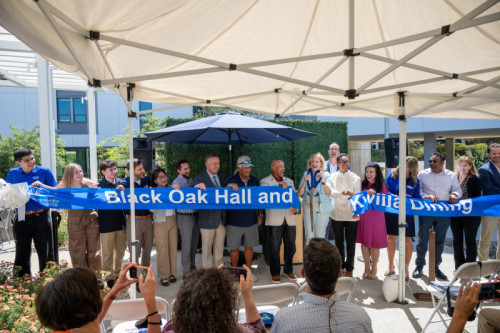
For CSUSM, a university where more than half of the student population are first-generation college students, this residential space represents a critical support system. President Ellen Neufeldt emphasized during the facility’s ribbon-cutting ceremony that when housing is affordable and close to campus, students gain the necessary time to study, build peer relationships, and persist to graduation. This focus on social mobility is a cornerstone of the CSUSM mission. By removing the barrier of exorbitant rent, Black Oak Hall allows students from diverse socioeconomic backgrounds to focus entirely on their academic and professional development.
Design and Community Features
Built on the site of a former parking lot for the University Village Apartments, Black Oak Hall replaces underutilized asphalt with a vibrant living community. The facility offers modern amenities tailored to the needs of contemporary students. During the opening ceremony, students led tours of the new dorm rooms, showcasing the functional, comfortable spaces intended to make residents feel at home. The transition from a static parking area to a dynamic living space perfectly illustrates the university’s commitment to maximizing its land use to benefit the student body.
Analyzing the Latest Dining Facility News: Kwíila Dining
Adjacent to Black Oak Hall is Kwíila Dining, a 10,000-square-foot culinary addition that brings fresh dining facility news to the San Marcos campus. Serving as the university’s second major dining hall, Kwíila Dining is operated by Sodexo and focuses on providing a variety of locally sourced foods. This emphasis on local sourcing not only supports regional agriculture but also ensures that students have access to fresher, more nutritious meal options throughout their busy days.
Beyond the menu, Kwíila Dining serves a vital social function. College is a time for networking and building lifelong connections, and communal dining spaces are historically the epicenters of this socialization. By providing a convenient, high-quality dining option steps away from the new dormitories, CSUSM ensures that students can easily foster connections outside the classroom. The facility was designed to be a gathering place where study groups can meet, student organizations can host events, and casual interactions can spark new friendships.
Honoring Local Heritage Through Naming
A significant aspect of this dining facility news is the thoughtful nomenclature chosen for the hall. “Kwíila” is the Luiseño word for “acorn,” selected specifically to honor the local tribal heritage and acknowledge the land on which CSUSM resides. This act of cultural recognition is an important step in creating an inclusive campus environment. It serves as a daily educational touchpoint for students, reminding them of the rich history and enduring presence of the Luiseño people in the San Marcos area.
Prioritizing Sustainability in Modern Construction
Contemporary housing news is incomplete without a discussion of environmental impact, and the Black Oak Hall and Kwíila Dining project excels in this regard. CSUSM has articulated a strong commitment to sustainability, pursuing LEED Gold certification for the new complex. This internationally recognized green building certification requires strict adherence to standards regarding energy efficiency, water usage, indoor environmental quality, and material selection.
The project incorporates renewable energy systems that will reduce the facility’s carbon footprint over its lifespan. Additionally, the landscaping surrounding the buildings utilizes native plants, which require significantly less water and maintenance than non-native species, while also providing a natural habitat for local wildlife. The use of sustainable building materials further minimizes the environmental impact of the construction process itself. For environmentally conscious students, living and dining in a facility that aligns with their values adds an extra layer of appeal to the on-campus experience.
Explore our related articles for further reading on sustainable campus infrastructure.
Evaluating the Economic and Community Ripple Effects
The opening of these facilities is a major milestone not just for the university, but for the broader San Marcos community. The construction of Black Oak Hall and Kwíila Dining, managed by McCarthy Building Companies and designed by Gensler, generated significant local economic activity, creating jobs and supporting local businesses. Now that the facility is operational, the influx of hundreds of students living on campus full-time will provide a steady economic boost to local retail and service providers.
Local and state dignitaries, including San Marcos Mayor Rebecca Jones and Chief Deputy Treasurer Patrick Henning, attended the ribbon-cutting ceremony, underscoring the collaborative effort required to bring such a project to fruition. Mayor Jones even issued a formal proclamation in support of the housing and dining project, highlighting the strong partnership between the city and the university. This synergy is essential; when a university grows responsibly, the surrounding community benefits from a more educated workforce, increased cultural events, and enhanced civic engagement.
Actionable Advice for Prospective Students Evaluating Campus Infrastructure
For high school seniors and transfer students currently evaluating their college options, developments like those at CSUSM USA offer important lessons. When researching a university, looking beyond the brochures to examine actual investments in infrastructure can reveal a lot about an institution’s priorities. Here is how prospective students can use this housing news to inform their college search:
- Investigate Housing Guarantees and Costs: Find out if the university guarantees housing for first-year students and, crucially, how the costs compare to local off-campus rentals. Look for institutions that are actively expanding affordable options rather than relying entirely on market-rate housing.
- Assess Campus Life Integration: Evaluate how residential life integrates with academic life. Facilities like Kwíila Dining that are strategically placed near dormitories remove friction from daily routines, allowing students to maximize their time.
- Consider the University’s Commitment to Sustainability: A campus that invests in LEED-certified buildings is likely one that takes climate change seriously and integrates sustainability into its curriculum and operations.
- Look for Cultural Competency: Pay attention to how a university honors the indigenous lands it occupies. Thoughtful naming conventions and cultural centers indicate a campus culture that values diversity and inclusion.
Submit your application today to secure your spot in modern, affordable campus housing.
Conclusion: Setting a New Standard for Student Living
The celebration surrounding the opening of Black Oak Hall and Kwíila Dining is well-deserved. This project represents a tangible solution to the affordable housing crisis gripping higher education, directly addressing the needs of a diverse, first-generation student population. By combining affordable residential spaces with high-quality, locally sourced dining options—all wrapped in a sustainable, culturally respectful design—CSUSM has set a high bar for future campus developments. As students begin moving in this month, they will experience firsthand how thoughtful infrastructure can remove barriers and create a supportive environment where academic and personal success can flourish.