
Pacific University’s Mortar Board Chapter Receives National Silver Torch Award for Community Service
How Pacific University Students Achieved National Recognition in 2026
Recent USA higher education news highlights the impressive achievements of students who go beyond standard academic requirements to make a tangible difference. Pacific University has once again demonstrated its commitment to student development and civic engagement as its Knolens Chapter of the Mortar Board National College Honor Society earned the 2026 Silver Torch Award. This national recognition honors college chapters that consistently demonstrate excellence in scholarship, leadership, and service.
For prospective and current students, understanding what it takes to earn such an accolade provides a clear blueprint for collegiate success. The Silver Torch Award is not given lightly; it requires a sustained, coordinated effort from student leaders who dedicate their time to uplifting both their campus and the surrounding local communities. At Pacific University, this recognition reflects a deliberate strategy to expand organizational reach, foster cross-disciplinary relationships, and execute high-impact community service projects.
Explore our related articles for further reading.
Understanding the Mortar Board Silver Torch Award Criteria
To appreciate the significance of this news, it is necessary to examine the rigorous standards set by the Mortar Board National College Honor Society. The organization evaluates chapters based on three foundational pillars: scholarship, leadership, and service. A chapter must excel in all three areas simultaneously to be considered for the Silver Torch Award.
Scholarship
Mortar Board chapters are expected to promote and recognize academic excellence among their members. This involves maintaining high grade point averages, participating in academic support initiatives, and encouraging intellectual curiosity across various fields of study.
Leadership
Effective leadership in this context means guiding peers, organizing complex events, and representing the university effectively. It requires students to take initiative, manage logistical challenges, and collaborate with university administration and local organizations.
Service
Community service is the most visible pillar of the Silver Torch Award criteria. Chapters must design, implement, and participate in volunteer projects that address specific community needs. Pacific University’s focus on youth literacy perfectly exemplifies how academic institutions can leverage student organizations to solve real-world problems.
Strategic Growth and Inclusive Leadership at Pacific University
One of the most compelling aspects of Pacific University’s recent recognition is the strategic approach the Knolens Chapter took to achieve it. According to chapter leadership, the organization intentionally expanded its eligibility requirements over the past two years. Previously limited to seniors, the chapter now welcomes rising juniors. This structural change had an immediate and profound impact on the organization’s capacity.
By opening membership to juniors, the chapter effectively doubled the timeline students have to contribute to major initiatives. This shift allowed the organization to grow to more than 50 active members and welcome its largest incoming class of new members this past spring. Furthermore, this expansion ensured that the membership represents every college and school within Pacific University.
This cross-disciplinary representation is a critical factor in the chapter’s success. When an organization includes student-athletes, fraternity and sorority members, and leaders from diverse academic disciplines, it creates a rich networking environment. Students are exposed to perspectives and problem-solving methods entirely different from their own, which enhances the quality and creativity of their community service efforts.
Driving Community Service Through the ‘Reading Is Leading’ Program
At the core of the Knolens Chapter’s service initiatives is the Mortar Board’s national “Reading Is Leading” program. This program mandates that chapters actively promote youth literacy in their surrounding communities. Pacific University students executed this mandate through highly localized, actionable events.
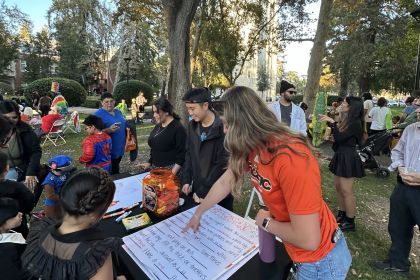
A prime example occurred during the Pacific Trick or Treat event. Instead of merely participating as attendees, chapter members set up targeted stations to interact directly with local families. They distributed informational materials guiding parents and children on how to obtain local library cards. More importantly, they engaged the children in creative storytelling activities, encouraging them to write and share their own narratives.
This type of community service goes beyond passive volunteering. By actively teaching children how to access library resources and fostering a direct love for reading, these students are addressing literacy deficits at the grassroots level. For the families in Stockton, California, the interaction provided practical tools for educational development. For the Pacific University students, it offered a lesson in how to translate academic privilege into community assets.
Schedule a free consultation to learn more.
The Historical Context of the Knolens Chapter at Pacific University
The 2026 Silver Torch Award is a modern milestone, but it is built upon a foundation that spans more than seven decades. The Knolens Chapter was originally established in 1949 as the Knolens Women’s Senior Honor Society. The organization was named in honor of Emily Knoles, the wife of former Pacific President and Chancellor Tully Knoles, recognizing her significant contributions to the university community.
As the higher education landscape evolved, so did the organization. In 1967, the local honor society transitioned to become an official chapter of the national Mortar Board organization, aligning itself with a broader network of collegiate scholars. Eight years later, in 1975, the chapter expanded its membership to include both women and men, reflecting a broader cultural shift toward inclusive academic excellence. Today, the chapter’s ability to earn national awards is a direct result of this long history of adaptation and institutional support.
Actionable Advice for Students Seeking Honor Society Recognition
For students looking to replicate the success of the Pacific University Knolens Chapter, whether at Pacific or other institutions across the USA, several actionable strategies can be applied to student organizations.
Restructure Membership Timelines
If your organization only recruits seniors, advocate for expanding eligibility to juniors. This provides a necessary pipeline for knowledge transfer and ensures that long-term projects do not lose momentum when senior leaders graduate.
Prioritize Cross-Disciplinary Recruitment
Avoid the trap of remaining insular within one specific college or major. Actively recruit members from engineering, arts, sciences, and athletics. Diverse membership leads to more innovative service projects and stronger campus-wide support.
Align Local Service with National Frameworks
Utilize established national programs, such as “Reading Is Leading,” but adapt them to fit the specific needs of your local community. Assess what resources your local area lacks—such as library access or after-school programming—and design your events to fill those specific gaps.
Document and Communicate Impact
National awards require documented evidence of success. Keep detailed records of event attendance, resources distributed, and community feedback. Use this data not only for award applications but to continuously improve your initiatives year over year.
Submit your application today.
Future Plans for Pacific University’s Honor Society Members
Earning the Silver Torch Award serves as both a validation of past efforts and a catalyst for future growth. The leadership of the Knolens Chapter has outlined clear objectives for the upcoming academic year. Plans include strengthening connections with alumni by hosting dedicated events during Homecoming and Family Weekend. Engaging former members provides current students with mentorship opportunities and career networking advantages.
Additionally, the chapter intends to expand its volunteer opportunities during Mortar Board Week in the spring. This nationwide initiative allows chapters to highlight their service efforts simultaneously, creating a sense of shared purpose among honor society members across the country. As Pacific University continues to support these student-led initiatives, the broader community stands to benefit from increased literacy resources and enhanced civic engagement.