
Navigate the Simmons University Direct-Entry MSN and FNP Program for Community Health Nursing in Boston
Understanding the Direct-Entry MSN and FNP Pathway in the USA
For individuals who hold a bachelor’s degree in a non-nursing field but wish to transition into advanced practice, the direct-entry Master of Science in Nursing (MSN) pathway offers an efficient and rigorous route. According to recent healthcare news in the USA, the demand for highly trained nursing professionals continues to grow, particularly in underserved urban areas. Accelerated programs like the direct-entry MSN and post-graduate certificate family nurse practitioner (MSN/PGC FNP) track at Simmons University are specifically designed to meet this demand by preparing career changers to enter the field with advanced clinical competencies.
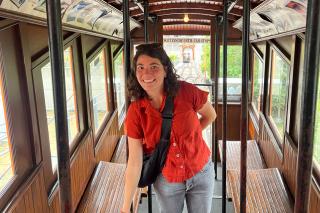
The structure of a direct-entry program compresses the foundational requirements of a traditional nursing degree into an accelerated timeframe. Students first complete the necessary pre-licensure coursework and clinical hours to sit for the Registered Nurse (RN) examination. Once they achieve RN licensure, they immediately transition into the graduate-level portion of the curriculum, which focuses on advanced practice nursing. For students like Joan Vera, who completed her undergraduate studies in Vermont before moving to Massachusetts, this structure provided a clear trajectory from a general healthcare background in case management to a specialized role as a future family nurse practitioner.
Choosing to pursue this degree in a major metropolitan hub like Boston provides distinct advantages. The city is renowned for its dense concentration of world-class medical facilities, community health centers, and teaching hospitals. Students benefit from proximity to industry leaders and a diverse patient population, which is critical for developing the clinical acumen required in modern nursing.
Submit your application today to start the evaluation process for the upcoming academic cycle.
Gaining Clinical Experience in Boston’s Healthcare Network
A defining characteristic of the Simmons University nursing program is its early integration of clinical placements. Rather than waiting until the final semesters to engage with patients, students begin their hands-on training early in the pre-licensure phase. This approach ensures that theoretical knowledge is immediately applied to practical settings, reinforcing learning and building clinical confidence.
The Role of Simulation Labs in Nursing Education
Before stepping into a real clinical environment, students spend significant time in the Nursing Simulation Center. These simulation days are critical for acclimating students to the fast-paced nature of healthcare settings without the high stakes of direct patient care. In the simulation lab, students practice basic and advanced nursing skills, respond to simulated patient declines, and conduct comprehensive assessments. The low-stakes environment allows for immediate feedback and debriefing from instructors, helping students refine their techniques and eliminate procedural errors before they interact with actual patients.
Transitioning to Real-World Clinical Rotations
Following simulation preparation, students are placed in various clinical sites throughout the Boston area. These rotations are supervised by clinical nursing instructors—experienced professionals contracted by the university to guide students on the floor. A strong clinical instructor provides a framework for what students can expect, acts as a coach during complex procedures, and ensures that classroom knowledge is effectively translated into bedside care.
The culmination of the RN portion of the program is the Clinical Capstone Practicum. During this phase, students work one-on-one with a clinical instructor, often taking on increased responsibility in specialized units. For example, completing a capstone at a facility like the Cambridge Health Alliance exposes students to unique healthcare dynamics. At such sites, students might work alongside doulas, midwives, and attending physicians, observing integrated care models that prioritize patient-centered approaches during critical moments like labor and delivery. Experiencing a high-volume, diverse clinical environment teaches students how to operate efficiently as part of a multidisciplinary team.
Schedule a free consultation to learn more about clinical placement requirements and partnerships.
Integrating Social Justice and Population Health in Nursing Curriculum
Modern nursing education must extend beyond biological sciences and pharmacology to include the social determinants of health. The curriculum at Simmons University deliberately integrates social and racial justice as a foundational element of providing high-quality nursing care. This focus is essential for producing nurses who are equipped to serve diverse populations and address systemic health disparities.
Courses such as Community & Population Health provide students with the tools to assess the health needs of entire communities rather than just individual patients. Students learn to identify barriers to healthcare access, analyze epidemiological data, and design interventions that promote health equity. By framing nursing practice within a social justice context, the program prepares graduates to advocate for vulnerable populations and influence policy at the institutional and local levels.
As students progress into the graduate portion of the program, the coursework becomes increasingly specialized. Classes in Advanced Health Assessment Across the Lifespan and Advanced Pharmacology Across the Lifespan build the clinical expertise necessary for family nurse practitioners. These advanced courses require students to synthesize complex medical data, formulate differential diagnoses, and develop evidence-based treatment plans. The faculty leading these courses bring extensive clinical experience to the classroom, ensuring that the instruction remains grounded in current best practices and realities of the healthcare system.
Working in Community Health While Completing an Advanced Degree
One of the most effective ways to solidify advanced nursing concepts is to work concurrently in the healthcare field. After passing the NCLEX and obtaining RN licensure, many students in the MSN/PGC FNP program transition into active nursing roles. Working as an RN while completing nurse practitioner coursework provides a continuous feedback loop between academic learning and clinical practice.
Employment in community health settings, such as clinics operated by organizations like Boston Health Care for the Homeless, offers unparalleled experience in managing complex, chronic conditions. Nurses in these environments treat patients facing significant socioeconomic challenges, including housing instability, substance use disorders, and limited access to primary care. Working three days a week in an outpatient clinic and shelter environment exposes nurses to a high volume of diverse clinical presentations, sharpening their triage skills and clinical judgment.
Furthermore, working in community health aligns directly with the theoretical frameworks taught in the MSN program. When a nurse practices addiction medicine or homeless healthcare in the morning and discusses population health strategies in the classroom in the afternoon, the educational experience is deeply reinforced. Collaborating daily with nurse practitioners, physicians, social workers, and volunteers also provides a practical understanding of interprofessional care models, which is exactly the type of teamwork required of a family nurse practitioner.
Have questions? Write to us! We can provide additional details on balancing work and academic responsibilities.
Career Outlook for Family Nurse Practitioners in Urban Settings
The role of the family nurse practitioner has expanded significantly in recent years, particularly in urban centers across the USA. As primary care physician shortages persist, NPs are increasingly taking on primary care roles, diagnosing illnesses, prescribing medications, and managing overall patient wellness. For those specializing in community health, the career opportunities are particularly robust.
Community health centers rely heavily on nurse practitioners to provide continuous, comprehensive care to underserved populations. An FNP with a background in social justice frameworks and a demonstrated commitment to marginalized groups is uniquely positioned to lead these initiatives. Whether managing a clinic focused on homeless healthcare, leading community outreach programs, or providing primary care in a low-income neighborhood, the impact of an FNP in these settings is profound.
Moreover, the interprofessional skills developed during an MSN program—such as collaborating with social workers, public health officials, and specialists—make graduates highly effective in administrative and leadership roles within community health organizations. The combination of advanced clinical training and a deep understanding of social determinants of health allows these practitioners to improve patient outcomes on both an individual and systemic level.
Take the Next Steps in Your Nursing Career
Transitioning into nursing through an accelerated direct-entry MSN program requires dedication, resilience, and a clear understanding of your long-term career goals. The experiences of students in the Simmons University program demonstrate that combining rigorous academic preparation with early clinical immersion and concurrent fieldwork produces highly competent, socially aware nursing professionals. For those who wish to make a tangible difference in community health in Boston and beyond, this pathway offers the necessary tools, credentials, and clinical exposure.
Evaluating your readiness for an accelerated program involves considering your academic background, your capacity for an intensive workload, and your commitment to the core values of modern nursing. If your objective is to provide advanced care to diverse populations and address health disparities head-on, pursuing an MSN and FNP certification is a strategic and rewarding professional move.
Explore our related articles for further reading on advanced practice nursing and healthcare career strategies.
Share your experiences in the comments below if you have transitioned into nursing from another field.