
Monitor Kent State University USA Sustainability and Earth Day Research Initiatives
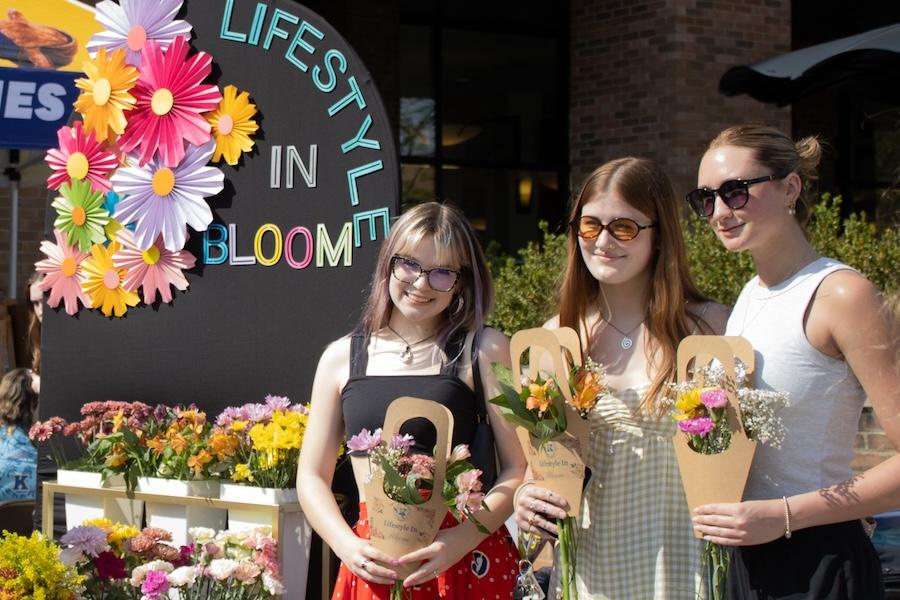
Understand the importance of environmental stewardship by examining how Kent State University USA uses Earth Day as a platform to showcase its ongoing commitment to sustainability. Each year, universities across the nation face the critical task of reducing their carbon footprints, fostering green practices, and educating the next generation of environmental leaders. At Kent State, this responsibility is not treated as a simple checklist item but is woven deeply into the fabric of academic life, facility management, and community engagement. By analyzing the university’s recent Earth Day events—which included interactive fairs, rigorous academic research presentations, and practical demonstrations of green technology—prospective students, current scholars, and environmentally conscious professionals can gain valuable insights into how large institutions can effectively monitor and manage their environmental impact.
Schedule a free consultation to learn more about how large institutions implement sustainability frameworks.
How Earth Fest Connects Students to Environmental Action
Earth Fest serves as the central gathering point for Kent State’s Earth Day programming, transforming the university’s Risman Plaza into a dynamic hub of environmental engagement. Rather than relying solely on lectures, the event utilizes hands-on demonstrations to make the concept of sustainability accessible and tangible. With more than 50 organizations participating, students have the opportunity to interact directly with local nonprofits, university departments, and student-led groups. This direct engagement is crucial for translating abstract environmental concepts into actionable lifestyle changes.
Integrating Green Practices Across Campus Facilities
At the core of the university’s efforts is the Office of Sustainability. As explained by Leah Graham, Kent State’s sustainability coordinator, the office focuses on incorporating green practices and processes across both campus facilities and academics. This dual approach ensures that sustainability is not just an academic theory but a visible, operational reality. When students see their campus utilizing energy-efficient systems, reducing waste, and prioritizing green infrastructure, it reinforces the culture of sustainability that the university aims to promote. For prospective students evaluating universities based on their environmental credentials, seeing a dedicated office actively managing these initiatives is a strong indicator of institutional commitment.
Submit your application today to join a campus community actively dedicated to operational sustainability.
Public Art and Creative Reuse of Materials
Sustainability extends beyond science and facility management into the realm of art and design. A standout feature at Earth Fest was a large-scale, glow-in-the-dark salamander sculpture created by Mark Schatz, an associate professor of art. The sculpture was designed to highlight the salamander as an important indicator species—meaning its population health reflects the broader health of the local ecosystem. What makes this project particularly relevant to sustainability is its material composition. The sculpture was constructed almost entirely from used cardboard, scrap lumber, bamboo reed from a discarded window shade, and a half-roll of Tyvek house wrap. These materials represent typical construction excess that cannot be returned to vendors. By repurposing this waste into public art for the Canalway Towpath Trail Lantern Parade, Schatz demonstrated how industries can creatively divert waste from landfills. This project serves as a practical case study for art and design students on how to rethink unused materials and serve a new, educational purpose.
Scientific Research Driving Environmental Solutions
While Earth Fest caters to broad public engagement, the Environmental Science and Design Research Institute (ESDRI) Research Showcase highlights the rigorous scientific methodologies being used to solve complex environmental problems. Hosted in the Integrated Science building, the showcase featured graduate and doctoral students presenting data-driven posters. For students considering advanced degrees in environmental science, ecology, or urban planning, these presentations offer a clear window into the type of high-level research conducted at Kent State University USA.
Analyzing Flood Risks in Historical Industrial Areas
One critical area of research presented by graduate researcher Allie Beniston focused on the intersection of historical industrial redevelopment and increasing flood risks, specifically around Pittsburgh, Pennsylvania. Her data revealed a troubling trend: in the year 2000, approximately 80 to 90 square miles of the studied area were located within floodplain zones. By 2020, that number had expanded to between 100 and 110 square miles. Beniston’s research illustrates how economic redevelopment, while economically beneficial, can unintentionally place new residential and commercial infrastructure in areas that are becoming increasingly vulnerable to climate-driven flooding. For urban planners and environmental scientists, this type of data is vital. It provides the empirical evidence needed to advocate for stricter zoning laws and better stormwater management systems in industrial regions across the USA. The ability to accurately monitor these shifting floodplain boundaries is essential for future city planning.
Understanding Invasive Species and Pollinator Behavior
Abigail Koman, a second-year doctoral student in ecology, presented research targeting multiflora roses, an aggressive invasive plant species in Ohio. Invasive species management requires a deep understanding of how these plants reproduce and spread. Koman utilized mesh cages of varying sizes to isolate and observe which specific insects could reach and effectively pollinate the flowers. Her findings revealed that the most frequent visitor to the flowers was the margined calligrapher, a type of syrphid fly. However, her research concluded that despite their high visitation rates, these flies are not effective pollinators for the multiflora rose. Identifying which insects do or do not contribute to the spread of invasive species allows land managers and conservationists to develop more targeted, efficient strategies for controlling invasive plant populations without disrupting native ecosystems.
Community Partnerships and Local Engagement
Effective sustainability efforts rarely stop at the campus borders. Kent State actively fosters partnerships with local organizations to broaden its environmental impact. Representatives from Kent Parks and Recreation attended Earth Fest to educate the student body on the importance of preserving local natural spaces, including wetlands and bogs. Many residents and students are unaware that Kent contains significant swamp lands and wetlands that cannot be developed. Protecting these areas is critical for maintaining local water quality and managing regional water sources. Organizations like Rural Action also participated, highlighting statewide service opportunities such as a massive initiative to plant 7,000 trees across Ohio on private landowner properties.
Have questions? Write to us to learn more about engaging with local environmental initiatives!
Supporting Local Agriculture at the Farmers’ Market
The Haymaker Farmers’ Market set up shop at Risman Plaza to connect students with local food systems. Supporting local agriculture is a fundamental pillar of sustainability, as it reduces the carbon emissions associated with long-distance food transport and supports the regional economy. Vendors like Busy B Patisserie, which offers French and American-inspired pastries including gluten-free and vegan options, demonstrated that sustainable consumer choices do not require sacrificing quality or taste. Market vendors emphasized the importance of students stepping off campus to utilize the regular Saturday farmers’ market, thereby building habits that support local, sustainable food networks long after graduation.
The Transition to Electric Vehicles on Campus
Addressing transportation emissions is a necessary component of any comprehensive sustainability plan. Kent State’s Electric Vehicle (EV) Showcase sought to educate the campus community on the practical and economic benefits of transitioning away from internal combustion engines. Joseph Ortiz, Ph.D., a professor in the Department of Earth Sciences, coordinated the event to dispel common myths about electric vehicles. A major focus was placed on the total cost of ownership. Ortiz highlighted that EVs are currently comparable to, and often less expensive than, traditional gas-powered vehicles when factoring in fuel savings and reduced maintenance costs. By allowing students to explore various electric vehicle models up close, the showcase provided a practical, low-pressure environment for students to consider how their future transportation choices will impact national sustainability goals. As the USA continues to build out EV infrastructure, understanding these vehicles becomes crucial for all consumers.
Share your experiences in the comments below regarding the transition to electric vehicles.
Fostering the Next Generation of Science Educators
The long-term success of environmental sustainability relies heavily on education. Students from the College of Education, Health and Human Services used Earth Fest as a platform to recruit future science educators. Science education is currently a diminishing field, yet it remains critically important for teaching the next generation about ecological systems, climate science, and conservation. By engaging with undecided undergraduates through hands-on science demonstrations, these future teachers highlighted the direct impact that a career in education can have on global environmental literacy. Encouraging students to pursue science education ensures that the push for sustainability will continue in K-12 classrooms long into the future.
Building a Lasting Culture of Environmental Responsibility
Combining rigorous academic research with community engagement and campus celebrations creates a holistic approach to environmental education. Events like FAB’s Day in Paradise, which provided a tropical-themed celebration with Hawaiian shirts and boba tea, demonstrate that sustainability can be joyful and community-focused. Creating positive associations with environmental action helps ensure that students carry these values forward into their professional and personal lives. By integrating art, science, local business, and campus operations, Kent State University USA provides a working model of how institutions can effectively promote a culture of sustainability. Monitoring these comprehensive efforts offers valuable lessons for any organization striving to make a meaningful environmental impact.
Explore our related articles for further reading on how universities are implementing sustainability programs.