
How the Simmons & NECC Partnership Advances Autism Education and Research in the USA
Autism education in the USA depends on educators who combine classroom experience with rigorous research skills. For more than three decades, the partnership between Simmons University and the New England Center for Children (NECC) has produced exactly that kind of professional. The annual Applied Autism Research poster session, held at NECC’s Southborough, Massachusetts campus, offers a clear window into how this collaboration works and why it matters for educators, students with disabilities, and the broader field of autism education.
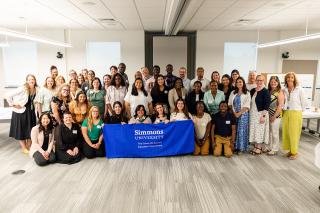
This summer, 27 graduate students presented original research at the event, showcasing work on prompting procedures, skill acquisition, chaining strategies, and procedural integrity. If you are an educator, a school administrator, or someone considering a career in special education, understanding what this partnership offers can help you evaluate whether a research-based graduate pathway is right for you.
Why the Simmons and NECC Partnership Matters for Autism Education
Since 1992, Simmons University and NECC have worked together to deliver graduate training in autism education to NECC staff. The model is straightforward but effective: employees at NECC enroll in Simmons University’s Master of Science in Education: Autism Specialization with Severe Disabilities Licensure through an on-site program, allowing them to earn a graduate degree without leaving the environment where they apply their skills daily.
This structure solves a common problem in special education training. Many aspiring autism educators must choose between continuing to work and pursuing advanced study. The Simmons-NECC partnership removes that trade-off. Teachers and behavior technicians study evidence-based practices in the evening and implement them with learners the next morning.
The benefits flow in both directions:
- For students: NECC staff who complete the program bring current, research-validated teaching methods back to the learners they support in residential programs, day programs, and Partner Program classrooms across Massachusetts and New Hampshire.
- For educators: Participants graduate with a master’s degree, severe disabilities licensure preparation, and hands-on research experience that strengthens their professional credentials.
- For the field: Each cohort produces new applied research that contributes to the collective knowledge base on autism intervention.
If you are weighing graduate options in special education, explore programs that embed research practice into coursework, such as Simmons University’s autism specialization, to see whether this applied model fits your goals. Learn more about NECC’s graduate programs, including the free on-site Simmons University degree.
Inside the Applied Autism Research Poster Session
The poster session is the capstone of the course Applied Autism Research II/Lab (SPND 495), a required component of the Simmons master’s curriculum for NECC employees. Rather than writing a paper that sits in a drawer, students design, conduct, and present an original study to a live audience of faculty, alumni, and peers.
What the 2026 Presenters Studied
This year’s 12 research posters covered topics that reflect the daily challenges autism educators face:
- Prompting procedures: How and when to deliver assistance so learners gain skills without becoming prompt-dependent.
- Chaining strategies: Breaking complex tasks, such as self-care routines, into teachable steps.
- Skill acquisition: Identifying the conditions that help learners master new academic and functional skills.
- Procedural integrity: Measuring whether interventions are implemented as designed, a critical factor in treatment effectiveness.
- Functional and academic skills: Teaching abilities that directly improve independence and classroom participation.
Presenters came from across the NECC community—the Southborough campus, residential and day programs, and Partner Program classrooms in communities such as Barnstable, Massachusetts, and Derry, New Hampshire. This geographic reach demonstrates that high-quality applied research does not need to be confined to a university lab. It can happen wherever dedicated practitioners work with learners.
Recognizing Outstanding Research
Partner Program educators Libby Sibbio ’27MSEd and Ryan Massey ’27MSEd received the “Outstanding Poster Award” for their study, Comparing Prompt Fading Procedures: Most-to-Least, Least-to-Most, and Flexible Prompt Fading. Their work addresses one of the most practical questions in autism education: which fading strategy produces the fastest, most durable skill mastery?
A judging panel that included Simmons adjunct faculty Amanda Willand, Holly Wiggins, and Tanvi Pendharkar, along with NECC staff and Simmons alumnae/i, evaluated the presentations. Professor of Practice and Department of Education Chair Christine Evans led the evening, continuing a tradition that has become an annual highlight of the partnership.
“Every year, I’m impressed by the thought, care, and enthusiasm our students bring to this experience,” Evans noted, emphasizing that the curriculum prepares students to move from developing research to completing a practicum in a public school inclusive classroom.
From Student to Judge: The Long-Term Career Impact
One of the most telling moments at this year’s event came from a program alumna. Jescah Apamo-Gannon ’06MSEd, ’17PhD, returned to serve as a judge—decades after she first stood as a presenter in the same room.
“It was inspiring to see so many students share research focused on improving educational outcomes and promoting meaningful independence for learners,” she said. “Having once stood in their place as a Simmons graduate student, returning as a judge was a meaningful reminder of the lasting impact this program can have on a person’s career.”
Her trajectory illustrates a pattern common among graduates of research-based teacher preparation programs. Many go on to leadership roles as special education directors, doctoral researchers, clinical supervisors, or university faculty. The research skills built in a course like SPND 495 do not expire at graduation; they become the foundation for a career of evidence-based decision-making.
If you are early in your education career and want to build that same foundation, review the curriculum and outcomes of graduate autism education programs before you apply. Take the next step and explore whether NECC’s free on-site Simmons University program fits your situation.
What Applied Autism Research Looks Like in Practice
For readers unfamiliar with applied behavior analysis and special education research, the topics presented at the poster session may sound technical. Here is how they translate into everyday classroom decisions.
Prompt Fading and Learner Independence
When a teacher helps a child zip a jacket or write their name, that help is called a prompt. The goal is never to leave the learner dependent on prompts, but to fade them systematically. Comparing most-to-least fading against least-to-most fading—or a flexible approach that adjusts in real time—helps educators determine which method produces independence fastest for a given learner. Sibbio and Massey’s award-winning study contributes directly to this decision-making process.
Procedural Integrity and Consistent Outcomes
An intervention only works if it is implemented correctly and consistently. Research on procedural integrity examines whether the adults delivering a teaching plan follow it as written. Findings in this area help school teams build training and supervision systems that protect the quality of instruction for every student, not just those in research studies.
Chaining and Functional Skills
Teaching a learner to brush their teeth, prepare a simple meal, or navigate a morning routine requires breaking the task into a logical sequence. Chaining research identifies the most efficient way to teach these sequences—whether starting from the first step, the last step, or teaching individual steps in isolation first. These are the skills that translate most directly into adult independence.
Educators who conduct this kind of research themselves become better consumers of published studies and stronger advocates for their students. That is the core rationale behind requiring original research in a master’s program.
Lessons for Educators and School Leaders Considering Graduate Study
The Simmons-NECC model offers several transferable lessons for anyone pursuing professional growth in autism education or special education more broadly.
Prioritize Programs That Connect Theory to Your Current Role
The most effective graduate training lets you test new strategies with real learners while you study them. On-site programs, embedded practicums, and assignment structures tied to your caseload accelerate learning in ways that purely theoretical coursework cannot.
Treat Research as a Professional Skill, Not an Academic Requirement
Designing a small study—selecting a question, defining measurement procedures, collecting data, and interpreting results—builds habits of inquiry. Educators who can evaluate evidence critically make better instructional decisions and adapt more quickly when new research emerges.
Seek Out Professional Community
The poster session succeeded partly because of its audience: faculty mentors, alumnae/i, and peers who understood the work. Presenting research in a supportive professional community builds communication skills and confidence. When evaluating a graduate program, look for cohort models, live presentations, and alumni networks that will outlast the degree itself.
Investigate Employer-Supported Pathways
NECC staff access the Simmons master’s program on-site and at no cost—a model that removes financial barriers for working educators. If you currently work in a school or behavioral health setting, ask your employer whether tuition support, partnerships with local universities, or grant-funded training programs exist. Many districts and agencies maintain agreements that are not widely advertised.
Have questions about whether a research-focused master’s in autism education is the right move for your career? Schedule time to review program details and eligibility requirements through NECC’s graduate programs office.
The Broader Significance for Autism Education in the USA
The demand for qualified special educators—particularly those trained specifically in autism and severe disabilities—continues to outpace supply in many parts of the United States. Partnerships like the one between Simmons University and NECC represent one proven response: meet educators where they work, train them in the evidence base, and require them to contribute to that evidence base themselves.
The poster session is more than a graduation requirement. It is a visible demonstration that rigorous research can happen in residential programs, day classrooms, and community-based Partner Program settings—not only in university laboratories. Each of the 12 posters presented this summer represents a question an educator cared enough about to investigate systematically, and a set of findings their colleagues can apply immediately.
For 34 years, this partnership has turned practicing staff into researcher-practitioners. The 2026 cohort, with its award-winning comparison of prompt fading procedures and its studies of procedural integrity and skill acquisition, shows the model working exactly as intended: educators who learn, apply, and generate knowledge in the same environments where students with autism learn every day.
If you are ready to build research skills that strengthen your teaching and expand your career options, explore what a graduate specialization in autism education can offer. Request program information and take the first step toward advancing autism education in your own classroom.