
Examine Whittier College Student Contributions to USA Environmental Reporting and Climate Change News in Red Canary Magazine
Why Localized Environmental Reporting Shapes USA Climate Change News
Accurate and detailed environmental reporting serves as the foundation for an informed public, particularly when addressing complex, systemic issues like climate change. In the USA, climate change news often focuses on international summits or broad federal policies, leaving local communities searching for information on how these massive shifts impact their immediate surroundings. Independent publications play a critical role in filling this gap by providing granular, community-focused journalism that highlights specific ecological threats and the people working to mitigate them.
Recent Whittier news highlights exactly how undergraduate students are stepping into this vital space. By publishing rigorous, research-backed articles in independent outlets, students demonstrate that impactful journalism does not require decades of experience—rather, it requires dedicated research, a willingness to investigate complex topics, and a platform that values thorough storytelling over clickbait. The work produced by Whittier College students exemplifies how academic institutions can serve as incubators for serious environmental reporting, directly contributing to the national dialogue on ecological preservation.
Schedule a free consultation to learn more about how a liberal arts education can facilitate hands-on journalistic experiences.
Analyzing PFAS Contamination: What the River Carries
One of the most pressing environmental issues facing the USA today is the pervasive spread of per- and polyfluoroalkyl substances, commonly known as PFAS or “forever chemicals.” These synthetic chemicals are used in a vast array of consumer products, from non-stick cookware to water-resistant fabrics, due to their ability to resist heat, oil, and water. Unfortunately, this same chemical stability means they do not break down naturally in the environment. When PFAS enter water systems, they persist indefinitely, accumulating in soil, wildlife, and human bodies over time.
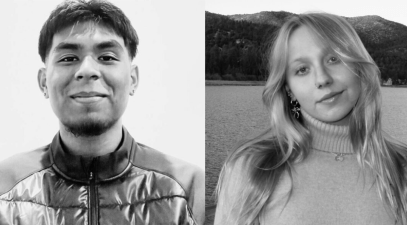
Isabella Cabral, a rising senior at Whittier College, tackled this complex subject in her article, “What the River Carries,” published in Red Canary Magazine. Cabral’s reporting focuses specifically on the presence of PFAS in New Mexico’s Rio Grande. Rather than simply summarizing scientific studies, her work investigates the tangible impact of these chemicals on local ecosystems and the communities that rely on the river for agriculture, recreation, and daily water needs.
What makes Cabral’s approach to climate change news and environmental reporting particularly effective is her academic background. Majoring in psychology with a minor in social work, she brings a uniquely human-centric lens to the hard science of chemical contamination. Her article does not just list toxicity levels; it explores the psychological toll and social disruption experienced by communities facing long-term water quality issues. This interdisciplinary approach proves that effective environmental journalism requires more than just scientific literacy—it demands an understanding of how environmental degradation intersects with human health and social equity.
Assessing Climate Impacts on Coastal Wetlands: Living on the Edge
While inland water contamination presents severe challenges, coastal ecosystems face an equally existential threat from rising global temperatures and sea levels. Coastal wetlands are among the most productive and ecologically valuable environments on Earth. They provide critical habitat for migratory birds, serve as nurseries for commercial fisheries, and act as natural buffers that protect inland areas from storm surges and flooding. However, as sea levels rise, these delicate ecosystems risk being inundated with saltwater, fundamentally altering their ecological balance.
Kevin Bravo Salto, a business administration major with a concentration in accounting, co-authored the feature “Living on the Edge” for Red Canary Magazine. This piece examines the direct effects of climate change on the Bolsa Chica Ecological Reserve, one of the few remaining coastal wetlands in Southern California. The article details the ongoing conservation efforts required to maintain the reserve’s integrity in the face of accelerating environmental changes.
Bravo Salto’s involvement in this specific piece of environmental reporting illustrates a crucial point for aspiring journalists: you do not need to be a hard science major to report on the environment. His background in business and accounting provides a practical framework for understanding the financial mechanisms, funding allocations, and economic costs associated with large-scale conservation projects. Protecting wetlands like Bolsa Chica is not solely an ecological endeavor; it is an economic one that requires budgeting, resource allocation, and long-term financial planning. By applying his specific academic skill set to USA environmental issues, Bravo Salto demonstrates how diverse academic perspectives can elevate the quality and depth of climate change news.
Submit your application today to learn how you can combine your unique academic interests with real-world environmental advocacy.
Connect Academic Disciplines to Real-World Environmental Reporting
The achievements of Cabral and Bravo Salto underscore a fundamental principle of modern education: the most pressing global problems cannot be solved—or even accurately reported—within the confines of a single academic discipline. Climate change, water pollution, and habitat loss are multifaceted issues that require insights from the natural sciences, social sciences, humanities, and business sectors.
Whittier College’s emphasis on a liberal arts curriculum directly facilitates this cross-pollination of ideas. When students are encouraged to take courses outside their primary major and engage in experiential learning, they develop a holistic worldview. A psychology student learns to ask questions about community resilience. A business student learns to question the economic viability of conservation efforts. When these students transition into environmental reporting, they carry these multifaceted perspectives with them, resulting in articles that are richer, more nuanced, and more useful to the public.
Furthermore, the process of moving a project from a classroom setting to a professional publication teaches students the rigorous standards required in modern journalism. It requires them to verify data, seek out expert interviews, adhere to editorial guidelines, and revise their work based on professional feedback. This transition from academic exercise to published Whittier news is a critical step in professional development, providing students with tangible proof of their capabilities before they even graduate.
The Mechanics of Investigating Local Ecology
Producing high-quality climate change news at the local level requires a specific set of investigative mechanics. Students must learn how to read and interpret environmental impact reports, parse data from state and federal environmental agencies, and translate complex scientific jargon into accessible language. For instance, understanding the specific threshold levels of PFAS contamination in the Rio Grande requires consulting Environmental Protection Agency (EPA) guidelines and comparing them against local water quality board data.
Similarly, reporting on the Bolsa Chica Ecological Reserve demands an understanding of tidal patterns, saltwater intrusion, and the specific biological indicators of wetland health. Students must contact local conservationists, wildlife biologists, and city planners to gather firsthand accounts of the changes occurring on the ground. This level of rigorous investigation ensures that the resulting environmental reporting is not merely anecdotal but is firmly grounded in verifiable, empirical evidence.
Gain Professional Experience Through Red Canary Magazine
Getting published in a recognized independent magazine is a significant milestone for any writer, let alone an undergraduate student. Red Canary Magazine operates as an independent publication dedicated to in-depth journalism focusing on environmental and social justice issues. Unlike mainstream news outlets that may prioritize speed and sensationalism, independent magazines often prioritize long-form, deeply researched pieces that explore the root causes of environmental issues.
For students reading this Whittier news, the takeaway is clear: seeking out independent publications is a highly effective strategy for building a professional portfolio. These outlets are often more accessible to emerging writers who can provide specialized, local knowledge that larger publications might overlook. By pitching to magazines like Red Canary Magazine, students can bypass the highly competitive internship pipelines at major networks and instead build a resume based on actual, published bylines.
The editorial process at such publications also serves as an invaluable mentorship opportunity. Working with experienced editors helps students refine their narrative structures, strengthen their investigative methods, and learn how to navigate the ethical considerations inherent in reporting on vulnerable communities and sensitive ecological data.
Explore our related articles for further reading on the intersections of academia, journalism, and environmental advocacy.
Take Action: Launch Your Career in Environmental Journalism
The success of Whittier College students in publishing significant environmental reporting provides a clear blueprint for other aspiring journalists across the USA. If you want to contribute meaningfully to climate change news, consider the following actionable steps:
- Identify local ecological threats: Look closely at the waterways, forests, or urban green spaces in your immediate area. National issues always manifest locally. Find the specific angle that affects your community.
- Leverage your unique academic background: Do not feel pressured to abandon your major to pursue journalism. If you study economics, report on the financial impacts of climate policy. If you study sociology, report on how marginalized communities are disproportionately affected by pollution.
- Master the data: Teach yourself how to read scientific studies, government databases, and environmental reports. Credibility in environmental reporting relies entirely on your ability to accurately interpret and present data.
- Pitch to independent publications: Research magazines and digital outlets that focus on environmental and social justice. Craft a concise, well-researched pitch that outlines your story, why it matters now, and the specific sources you plan to interview.
- Seek experiential learning opportunities: Take advantage of college courses that offer project-based learning. Use classroom assignments as opportunities to build the foundation for a publishable article.
The field of environmental journalism needs diverse voices and rigorous thinkers. As the examples set by Cabral and Bravo Salto show, you do not have to wait until after graduation to start making an impact. By utilizing the resources available to you, refining your investigative skills, and targeting the right publications, you can contribute vital stories to the ongoing conversation about our planet’s future.
Have questions about integrating journalism into your academic path? Write to us!