
Examine Whittier College News and the 2025 Strategic Plan for Student Success
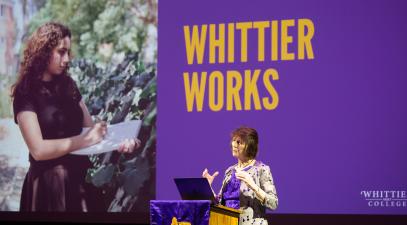
Understanding the trajectory of a higher education institution requires looking closely at its data, its community initiatives, and its vision for the future. Recent Whittier College news provides a detailed look into how a historic liberal arts college is adapting to the modern educational landscape. During the 2025 State of the College Address, President Kristine Dillon ’73, Ph.D., outlined a comprehensive college strategic plan that emphasizes enrollment growth, record-breaking philanthropy, and hands-on learning. This breakdown explores the key takeaways from the address and what they mean for the broader context of USA education news.
If you are evaluating liberal arts colleges or simply tracking trends in higher education, reviewing these developments offers valuable insights into how institutions balance tradition with innovation. Schedule a free consultation to learn more about how strategic planning impacts college selection and student outcomes.
Assessing the Progress of Whittier College’s Short-Range Strategic Plan
Higher education institutions across the country are navigating shifting demographics and changing student expectations. Whittier College is addressing these challenges head-on through its Short-Range Strategic Plan, now entering its third year. According to President Dillon, the college is moving ahead with “clarity, purpose, and pride,” resulting in measurable gains across multiple key performance indicators.
The most immediate evidence of this plan’s success is found in the enrollment data. The college has successfully increased its footprint in the Western United States, a highly competitive region for higher education. Since the fall of 2024, Whittier has doubled its inquiry numbers, reflecting a growing awareness of the institution among prospective students. Furthermore, the college projects approximately 5,800 applications for the fall 2026 semester. This upward trajectory in applications and deposits signals that the institution’s targeted investments in talented admissions staff and advanced technological infrastructure are paying tangible dividends.
Strategic planning in higher education is not merely about increasing the number of students on campus; it is about aligning institutional capacity with student needs. By focusing on targeted outreach in the West and upgrading its technological capabilities to streamline the admissions process, Whittier College serves as a practical case study of how a college strategic plan can reverse stagnant enrollment trends.
Record Fundraising Secures the Future of USA Education at Whittier
Financial stability is a critical, yet often overlooked, component of institutional success. In the realm of USA education news, stories of budget cuts and financial strain are common. However, Whittier College has bucked this trend by celebrating a record-breaking fundraising year. The institution secured $7.19 million in funding, achieving 101.8% of its 2024–25 goal.
This financial success was driven by specific, focused campaigns. The Trustees Leadership Challenge, which targeted $1 million, overachieved by 166% for the second consecutive year. Additionally, the Faithful Friends—dedicated annual donors—reached 150% of their goal. The momentum culminated in the 10th annual Big Poet Give, which became the most successful in the event’s history, finishing 60% higher than the college’s previous best.
These fundraising achievements are not isolated financial metrics. They represent a profound vote of confidence from alumni and the broader community. When donors give at these levels, they are validating the institution’s direction and ensuring that the college has the resources necessary to support its academic mission, maintain its campus infrastructure, and expand student services.
Explore our related articles for further reading on how institutional fundraising directly impacts academic programming and student scholarship availability.
Expanding Access and Enhancing Student Life USA
A defining characteristic of a strong liberal arts college is its commitment to access and affordability. Whittier College reports that 100% of its student body receives financial aid, with half of the students qualifying for federal Pell Grants. This statistic is particularly significant in discussions surrounding student life USA, as it demonstrates an institutional commitment to serving low- and middle-income families.
To further support access, the college has recently expanded its scholarship offerings. New funding tiers, including Trustee, Presidential, and Dean’s Scholars, have been established to ensure that financial barriers do not prevent talented students from attending. These targeted scholarships are essential tools for promoting socioeconomic diversity on campus.
Beyond the classroom, the college is actively investing in the co-curricular experience. Athletics play a central role in campus culture, with 35% of incoming students competing in collegiate sports. In a notable move to expand student life, the college has reinstated its football and men’s lacrosse programs. Coupled with ongoing renovations to the George Allen Fitness Center, these investments ensure that athletes and the general student body have access to high-quality recreational facilities. As President Dillon noted, these improvements mean fitness equipment will be conveniently distributed across campus for all students to use.
Have questions? Write to us! to discuss how campus life and athletic programs influence student retention and engagement.
Connect Classroom Learning to Careers via Whittier Works
Perhaps the most innovative element highlighted in the recent Whittier College news is the launch of the Whittier Works initiative. In today’s competitive job market, students and parents alike are increasingly focused on the return on investment of a college degree. Whittier Works directly addresses this concern by linking classroom learning to concrete career pathways through community engagement and experiential education.
Led by Professor Cinzia Fissore, Assistant Dean for Experiential Education Megan Gray, and Director of Career and Professional Development Sandra Arana, the program moves beyond traditional internships. It fosters interdisciplinary projects that mirror real-world industry challenges. For example, students are engaging in collaborative projects that bridge kinesiology and sport management, physics and aerospace, and art and design.
A flagship example of this initiative is the college’s on-campus coffee orchard. While an agricultural project might seem unusual for a liberal arts college, it perfectly illustrates the Whittier Works philosophy. The orchard functions as a living laboratory where students can bridge academic instruction, scientific research, industry partnerships, and hands-on agricultural experience. This type of applied learning ensures that students graduate not just with theoretical knowledge, but with demonstrable, practical skills.
The Value of Experiential Learning Models
Experiential learning models like Whittier Works are gaining traction nationally because they dismantle the silos between academic departments. When a physics student collaborates with an art student on an aerospace design project, both develop critical soft skills—such as communication and teamwork—that are highly valued by employers. Integrating these experiences directly into the college strategic plan ensures they are sustainably funded and formally recognized within the curriculum.
Submit your application today if you are looking for an academic environment that prioritizes practical, career-focused experiential learning.
Measuring Whittier Community Impact Through National Recognition
The ultimate test of an institution’s strategic plan is external validation. Whittier College is seeing significant Whittier community impact reflected in its rising national rankings. The college currently ranks No. 92 among national liberal arts colleges and, importantly, No. 14 in the nation for social mobility.
The social mobility ranking is a critical metric in modern USA education news. It measures how well an institution graduates students from lower-income backgrounds and propels them into successful careers. A top-15 ranking in this category validates the college’s aggressive financial aid policies and its focus on student support systems. It proves that the institution is not just enrolling diverse students, but actively supporting them through to graduation.
Additionally, the intellectual capital of the faculty is gaining national visibility. Faculty experts have recently contributed thought leadership to major media outlets, including U.S. News & World Report, MarketWatch, The Hechinger Report, Time, and Newsweek. This media presence elevates the college’s brand reputation and demonstrates the high caliber of research and scholarship occurring on campus. As President Dillon summarized during the address: “We may be small, but we are recognized for our outsize effect.”
Take the Next Steps in Your Educational Journey
Analyzing the 2025 State of the College Address reveals an institution that is actively managing its growth rather than passively reacting to market pressures. By increasing its application pool, breaking fundraising records, expanding athletic and recreational facilities, and launching innovative experiential learning programs, Whittier College is executing a deliberate strategy to enhance its value proposition.
For prospective students and families, these developments highlight the importance of looking beyond brochure descriptions. Evaluating a college’s strategic plans, its social mobility rankings, and its specific investments in student life provides a much clearer picture of the institutional trajectory. The data presented in the State of the College indicates that Whittier is building on its Quaker roots of service and leadership to create a modern, relevant educational experience.
Share your experiences in the comments below regarding what factors matter most to you when evaluating a college’s strategic direction and long-term viability.