Examine Student Success and Education Opportunities at Pace University USA Class of 2026
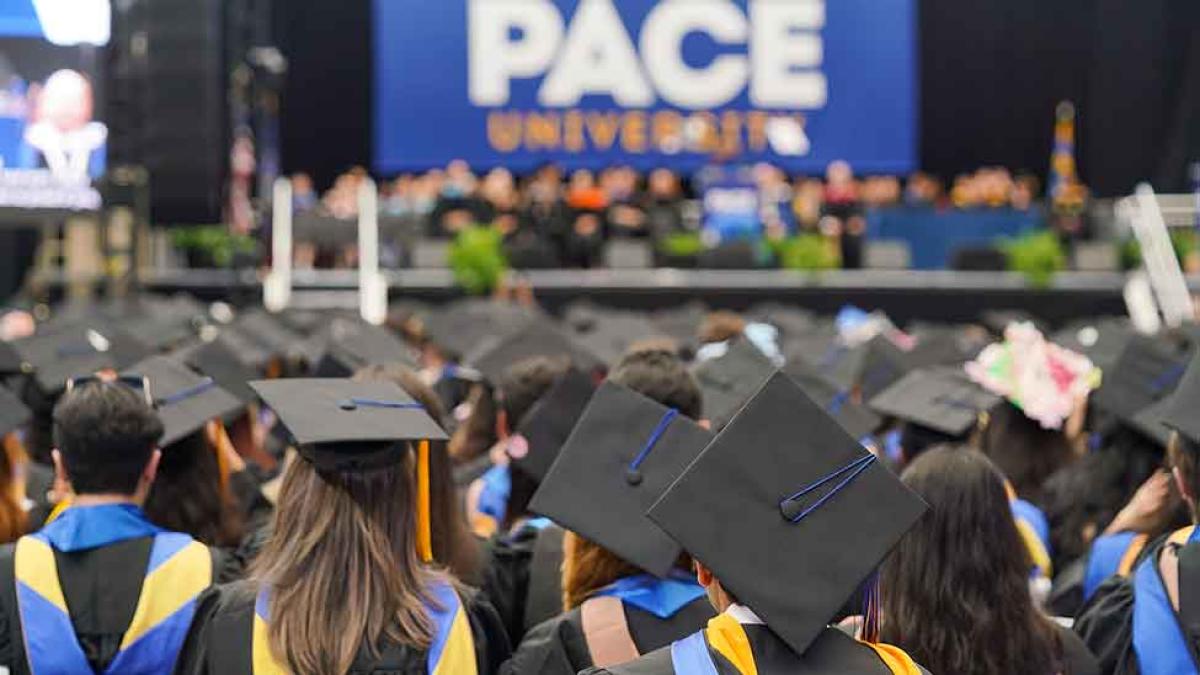
Evaluate the trajectory of higher education by looking at its outcomes. Recently, more than 4,300 graduates crossed the stage at Pace University, marking the culmination of their academic careers and the beginning of their professional lives. For prospective students and parents researching education opportunities in the USA, analyzing the accomplishments and messages of the Pace University Class of 2026 provides a concrete framework for understanding what makes a university experience truly valuable. This cohort of graduates entered the workforce as journalists, healthcare professionals, legal experts, technologists, and business leaders, demonstrating the tangible results of a rigorous, results-focused academic environment.
Schedule a free consultation to learn more about how to identify universities that prioritize real-world student success.
How Pace University in the USA Prepares Graduates for the Workforce
Academic theory remains a cornerstone of higher education, but employers increasingly demand practical experience. The Class of 2026 at Pace University benefited from an educational model that extends learning far beyond the traditional lecture hall. As President Marvin Krislov noted during the commencement ceremonies, student education unfolded in residence halls, internships, rehearsal studios, clinics, courtrooms, and laboratories throughout New York and beyond.
This geographical and experiential advantage is a critical factor for students evaluating colleges in the USA. Access to a major metropolitan hub like New York City provides immediate networking opportunities, diverse internship placements, and exposure to industry leaders. Pace University leverages this location to ensure students build robust resumes before they ever receive a diploma.
The Role of Mentorship and Hands-On Experience
Student success is rarely achieved in isolation. The transition from a classroom environment to a professional setting requires guidance. At Pace, this is facilitated through dedicated career services, faculty mentorship, and structured resume-building experiences. When students engage directly with the challenges of their chosen industries—whether arguing a mock trial, developing a software application, or analyzing economic policy—they develop the critical thinking and adaptability required in modern workplaces.
Key Takeaways from the Class of 2026 Commencement Speakers
Commencement ceremonies often serve as a microcosm of a university’s values, reflected through the individuals selected to address the graduating class. The speakers for the Pace University Class of 2026 included prominent figures in journalism, healthcare, law, and business. Their collective advice provides a roadmap for aspiring students.
Embracing Uncertainty in Career Planning
Lester Holt, award-winning journalist and Dateline NBC anchor, delivered the main ceremony address. Rather than providing a rigid step-by-step guide to success, Holt focused on the necessity of risk-taking. He challenged graduates to consider, “How far a leap are you willing to make to realize your dream?”
Holt acknowledged that choosing the safe path often feels like the most logical strategy. However, he pointed out that professionals frequently reach crossroads where the reasonable choice feels entirely unreasonable. For prospective students, this translates to an important lesson: academic and career paths are rarely linear. Selecting a major, changing career goals, or moving to a new city requires a willingness to embrace uncertainty rather than retreating to comfort.
Defining Professional Success on Your Own Terms
Pedro Rivera, an Emmy Award-winning journalist and co-anchor of ABC7 Eyewitness News, returned to his alma mater to address graduates from the Dyson College of Arts and Sciences, the Sands College of Performing Arts, and the School of Education. Rivera emphasized the importance of intrinsic motivation over external validation.
“Manifest your success,” Rivera advised the crowd. “Say your goals out loud. Write them down and really embed them into your mind, because everything you do—the jobs you take, the people you surround yourselves with—will lead you toward that success. And success is not about money or status. It’s about happiness.”
This perspective is vital for students navigating the high-pressure environment of US higher education. Identifying personal fulfillment as the ultimate metric for success allows students to pursue fields they are genuinely passionate about, which often leads to higher achievement and job satisfaction in the long run.
Prioritizing Persistence Over Perfection
Addressing the graduate and professional school ceremonies, Hon. Francesca E. Connolly, an associate justice of the Appellate Division of the New York State Supreme Court, offered a pragmatic view of professional growth. “Success in this profession does not require perfection,” Connolly stated. “It requires persistence. It requires preparation. It requires integrity. And most of all, it requires a belief that you are capable of much more than you imagine right now.”
For students pursuing rigorous fields such as law, healthcare, or computer science, the pressure to achieve perfect grades can be overwhelming. Justice Connolly’s reminder shifts the focus from flawless execution to sustained effort—a much more sustainable and realistic approach to long-term career development.
Submit your application today to universities that foster resilience and prioritize long-term professional growth over short-term metrics.
Real-World Examples of Student Success at Pace University
The themes discussed by commencement speakers were already evident in the achievements of the students themselves. Analyzing the backgrounds of the student speakers provides a clear picture of how education opportunities translate into measurable student success.
Leveraging Academic Resources for Career Advancement
Caroline Zanuto-Winter, the Valedictorian for the Class of 2026, earned a Bachelor of Arts in Computer Science from the Seidenberg School of Computer Science and Information Systems. Her academic career exemplifies how students can maximize university resources. As a United Nations Academic Impact and Millennium Campus Network Millennium Fellow, Zanuto-Winter collaborated with students across 16 nations on a multilingual advocacy campaign spanning nine languages.
Furthermore, she led the development of a mobile application for her capstone project and applied her expertise in computer science and generative AI as a product manager intern at WEX Inc. This combination of global engagement, technical skill development, and corporate internship experience is exactly what top-tier employers seek in recent graduates.
Applying Classroom Knowledge to National Competitions
Suraj Sharma, the student Opportunitas Award recipient, earned a combined bachelor’s degree in economics and a master’s degree in applied quantitative economics from the Dyson College of Arts and Sciences. Sharma served as captain of Pace’s National Federal Reserve Challenge team, helping lead the university to a national championship title by outperforming 136 competing institutions, including Harvard and UCLA.
Graduating with a 4.0 GPA and numerous academic honors, Sharma transitioned directly into a role as an institutional client management account analyst at PIMCO. Reflecting on his experience, Sharma noted, “Every opportunity in life exists because someone else paid a price for it. Pace not only gave us degrees, it gave us those opportunities and taught us to relentlessly seize them ourselves.”
Have questions? Write to us! to learn more about identifying programs that offer national competition opportunities and high-level corporate placements.
Navigating Education Opportunities in Higher Education
The stories of the Pace University Class of 2026 offer actionable insights for high school students, transfer students, and international applicants researching education opportunities in the USA. Choosing a university is a significant investment, and evaluating institutional outcomes is just as important as reviewing course catalogs.
Evaluating Program-Specific Outcomes
Look beyond general university rankings and investigate the specific accomplishments of individual colleges and schools. For example, during these commencement ceremonies, the Elisabeth Haub School of Law at Pace University was highlighted for being ranked the No. 1 environmental law program in the nation by U.S. News & World Report for the sixth consecutive year. Prospective law students should seek out programs with similar, verifiable distinctions in their areas of interest.
Similarly, examine the types of companies hiring graduates from specific programs. The presence of graduates entering firms like PIMCO or tech companies like WEX Inc. indicates strong industry connections and effective career services within those specific academic departments.
The Importance of Location and Industry Access
Dr. Mitchell Katz, president and CEO of NYC Health + Hospitals, addressed graduates from the College of Health Professions, bringing a perspective grounded in massive-scale public health leadership. The ability to attract speakers and employers of this caliber is directly tied to geographic location. Students evaluating colleges in the USA should assess the local ecosystem. Does the university’s location support your intended career path? Are there hospitals, tech hubs, financial centers, or artistic communities nearby that can provide internships and post-graduation employment?
Building a Network Before Graduation
Notice the presence of accomplished alumni like Pedro Rivera and Hon. Francesca E. Connolly returning to speak to graduates. A strong alumni network is a critical component of student success. When evaluating a university, inquire about alumni mentorship programs, networking events, and the willingness of graduates to return and engage with current students. This network often serves as the bridge between academic completion and initial career placement.
Conclusion
Analyze the progression of the Pace University Class of 2026 to understand the mechanics of modern higher education success. These graduates did not simply complete a series of classes; they engaged in global advocacy, led national championship teams, developed functional software, and secured roles at major financial and tech institutions. They listened to leaders who advised them to abandon the pursuit of perfection in favor of persistence, and to define success through personal fulfillment rather than external metrics.
For prospective students, the path forward requires careful evaluation of how different institutions facilitate these types of outcomes. Seek out universities that provide access to industry hubs, feature accomplished faculty and alumni networks, and prioritize hands-on, resume-building experiences. The transition from student to professional is rarely seamless, but as the Class of 2026 demonstrated, the right educational environment provides the resources, mentorship, and opportunities necessary to take the leap.
Explore our related articles for further reading on selecting the right academic programs and maximizing your college experience in the USA.