
Examine How a Nursing Student Leverages Connection in the USA: A Look Inside the Simmons University Direct Entry DNP Program
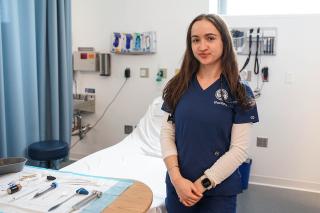
Healthcare in the USA continues to evolve, placing increasing demands on professionals who can blend clinical expertise with profound interpersonal skills. Recent news from Simmons University highlights this shift, showcasing how modern nursing education prioritizes holistic patient care. For individuals considering a career change or entering the healthcare field, understanding the role of connection in nursing provides a crucial framework for evaluating educational programs. This article examines the journey of a current nursing student to illustrate why interpersonal connection is a foundational element of modern healthcare, and how to choose a program that develops this critical skill.
Why Interpersonal Connection Drives Modern Nursing Practice
Many individuals enter the medical field driven by a fascination with science, but they often discover that the clinical aspects of medicine are only half the equation. For Jordan Monette, a graduate student in the Direct Entry Doctor of Nursing Practice program at Simmons University, the realization that nursing blends medical knowledge with a fundamental need for human connection became the catalyst for a career change. Initially pursuing a path as a physician assistant with an undergraduate biology degree, Monette experienced burnout and recognized that a strictly clinical approach lacked the fulfillment she sought.
The shift toward nursing is a common trend in USA healthcare news, particularly as the industry faces shortages of professionals who can provide holistic, patient-centered care. Nurses consistently rank as the most trusted healthcare professionals, largely because they spend the most time at the bedside. A nursing student quickly learns that patients often feel most vulnerable during hospital visits, and the ability of a nurse to provide reassurance and establish rapport significantly impacts patient outcomes. When a nurse can calmly explain a procedure or simply listen to a patient’s concerns on their worst day, it transforms a sterile medical environment into a supportive healing space.
Schedule a free consultation to learn more about how nursing programs balance clinical rigor with interpersonal skill development.
Navigating Direct Entry Nursing Programs in the USA
For career changers who hold a bachelor’s degree in a non-nursing field, returning to school can seem daunting. Direct Entry Master of Science in Nursing (MSN) and Doctor of Nursing Practice (DNP) programs provide a structured, accelerated pathway into the profession. These programs are specifically designed for individuals who have proven their academic capabilities in another field but wish to transition into nursing without repeating undergraduate coursework.
Simmons University’s School of Nursing offers a distinct version of this pathway. Students in the direct-entry program begin their graduate studies immediately, working toward their advanced degrees while completing the requirements to sit for the Registered Nurse (RN) licensure exam. This structure allows a nursing student to compress their education timeline significantly, often completing an MSN and DNP in roughly three years. When evaluating these intensive programs, prospective students must assess their readiness for a rigorous workload and ensure the curriculum provides adequate support for students transitioning from entirely different career backgrounds.
Submit your application today if you are ready to transition into a nursing career through an accelerated program.
The Advantage of Studying in a Major Medical Hub
Location plays a critical role in the education of a nursing student. The quality and variety of clinical placements directly influence a graduate’s competency and confidence. Choosing to study in a city with a high concentration of renowned medical centers, such as Boston, provides distinct advantages. Boston’s healthcare ecosystem includes world-class institutions specializing in pediatrics, oncology, psychiatric care, and general medicine.
By training in these facilities, a nursing student gains exposure to diverse patient populations and complex medical cases that might not be available in smaller markets. Furthermore, working in these environments allows students to observe different nursing models, specialized technologies, and multidisciplinary care teams in action. Even if a student plans to practice in a different state after graduation, the baseline experience gained in a dense medical market establishes a high standard for clinical practice.
Specializing in Psychiatric Mental Health Nursing
As the USA faces a well-documented mental health crisis, the demand for specialized psychiatric care has never been higher. Specializing as a Psychiatric Mental Health Nurse Practitioner (PMHNP) positions a nursing student at the forefront of this critical area of healthcare. PMHNPs are trained to assess, diagnose, and treat individuals and families with psychiatric disorders or substance use problems, often serving as the primary mental health provider in underserved areas.
Choosing a psychiatric specialization also allows for a deeper exploration of the connection between physical and mental health. Many patients experiencing homelessness, chronic illness, or acute medical emergencies also contend with underlying psychiatric conditions. A nurse equipped with psychiatric training can approach these patients without stigma, providing holistic care that addresses the root causes of their distress. Additionally, the Nurse Practitioner role offers a higher degree of autonomy compared to many other advanced practice roles, enabling practitioners to run their own clinics, prescribe medications, and develop long-term treatment plans.
Bridging Theory and Practice: Simulation Labs and Clinical Placements
The transition from classroom theory to clinical practice is one of the most challenging aspects of nursing education. High-fidelity nursing simulation centers play a vital role in bridging this gap. Modern simulation labs at leading universities replicate hospital environments, complete with realistic patient manikins, standard medical equipment, and debriefing rooms. For a nursing student, practicing in a simulation lab provides a safe space to make mistakes, develop critical thinking skills, and build muscle memory for emergency procedures.
Equally important are the faculty members who run these simulations. Instructors who bring clinical experience and a passion for teaching can elevate a simulation from a simple task-checklist to a dynamic learning scenario. When students receive immediate, constructive feedback in a simulated environment, they transfer that confidence into real-world clinical settings.
Gaining Real-World Clinical Experience
While simulation builds foundational confidence, actual clinical rotations provide the unpredictable, real-world experience necessary for professional growth. A well-structured nursing program rotates students through various specialties and institutions. For example, completing a rotation at a pediatric hospital teaches the nuances of family-centered care and communicating with children, while a placement at a major medical center focusing on maternity care provides hands-on experience with labor, delivery, and postpartum recovery.
Some of the most impactful clinical experiences occur in non-traditional settings. Completing a placement at a medical respite facility for individuals experiencing homelessness, such as the Barbara McInnis House operated by Boston Healthcare for the Homeless, exposes a nursing student to the social determinants of health. These rotations teach future nurses how to build trust with marginalized populations, manage complex chronic conditions in resource-limited settings, and advocate for patients who often fall through the cracks of the traditional healthcare system.
Explore our related articles for further reading on choosing the right clinical placements during nursing school.
Actionable Advice for Aspiring Nursing Students
Evaluating nursing programs requires looking beyond rankings and acceptance rates. Prospective students should actively investigate the specific elements that will shape their daily educational experience and long-term career trajectory.
Identify Your Core Motivation: Before applying to a program, assess why you want to become a nurse. If your primary drive involves building long-term relationships and advocating for patients holistically, ensure the programs you consider emphasize these values in their curriculum and mission statements.
Research Clinical Placement Partnerships: Investigate the affiliations a nursing school has with local hospitals and clinics. The breadth of these partnerships dictates the variety of specialties you will experience. Contact the admissions office to ask for a list of recent clinical sites to ensure they align with your areas of interest.
Evaluate Simulation Facilities: If possible, tour the campus to view the simulation labs. Ask about the student-to-simulation-ratio and whether the labs are utilized for general assessments or high-stakes emergency scenarios. State-of-the-art equipment is only as effective as the faculty operating it, so inquire about the credentials of the simulation instructors.
Prepare for Accelerated Pacing: Direct-entry and accelerated programs demand a significant time commitment. Develop strong time-management and study strategies before beginning the program. Connecting with current students or alumni through ambassador programs can provide realistic insights into the daily workload and strategies for managing stress.
Building a Fulfilling Career in Healthcare
The path to becoming a Nurse Practitioner requires dedication, resilience, and a genuine commitment to the well-being of others. As highlighted by recent news from Simmons University, finding fulfillment in this field often comes down to the ability to connect with patients during their most vulnerable moments. By choosing a program that offers robust clinical experiences, advanced simulation technology, and a focus on holistic care, a nursing student can develop the clinical competence and emotional intelligence required to succeed in the modern USA healthcare landscape.
Have questions about becoming a nursing student in the USA? Write to us!
Share your experiences with nursing programs in the comments below.