Evaluate Sports Branding and Professional Development: University of the Pacific Students Learn from the 49ers
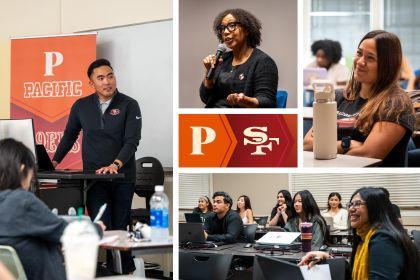
Recent USA news highlights an innovative educational approach at the University of the Pacific, where classroom theory meets NFL reality. Through a strategic partnership with the San Francisco 49ers, Pacific students are gaining direct exposure to the internal mechanics of a major professional sports franchise. This collaboration goes far beyond typical guest lectures, offering actionable insights into sports branding, corporate culture, and career advancement. For aspiring marketers, business analysts, and communications professionals, examining how these students interact with 49ers executives provides a practical blueprint for professional development.
Bridge Academic Theory and Industry Practice with Professional Partnerships
Traditional business education often relies on historical case studies. However, the University of the Pacific has shifted this paradigm by integrating active professionals from the 49ers organization directly into the curriculum. This partnership demonstrates the value of experiential learning, allowing students to see firsthand how textbook concepts function in high-stakes environments. By bringing in experts from various departments—ranging from design to people operations—the university illustrates the diverse career pathways available within the sports industry.
Schedule a free consultation to learn more about Pacific’s academic programs.
Apply Sensory Marketing to Sports Branding Strategies
One of the most striking examples from this initiative occurred in Professor Bidisha Burman’s Marketing Research class. Noah Hammerman, the 49ers’ manager of design, challenged students to think beyond visual logos. He asked the class, “If the San Francisco 49ers were a car, what kind of car would they be?” and followed up with, “When you think of the 49ers, what do you smell?”
Move Beyond Visuals with Sensory Branding
These unconventional questions highlight a sophisticated approach to sports branding. Hammerman explained that capturing the scent of fresh-cut grass or the smoke from tailgates helps uncover how fans emotionally connect with the brand. The 49ers gathered these sensory responses through extensive fan surveys, compiling 27 pages of data. This data then served as the foundation for a comprehensive design sprint to reshape the organization’s visual identity.
Aspiring marketers can apply this methodology to their own projects. Conducting sensory brand audits—asking what a brand sounds, feels, smells, and tastes like—provides a deeper understanding of consumer loyalty than standard demographic data. When students learn to translate qualitative, emotional data into actionable design strategies, they build a highly competitive skill set that appeals to top-tier organizations like the 49ers.
Treat Networking as a Learnable Skill for Career Advancement
Professional development is not solely about technical knowledge; it requires the ability to navigate complex organizational structures and build meaningful relationships. In Professor Price Burlington’s Career Development Seminar, Emily Bird, the 49ers’ senior director of people operations, dismantled the common misconception that networking is an innate personality trait reserved for extroverts.
Implement a Structured Follow-Up Strategy
Bird emphasized that networking is a learnable skill that improves with practice, comparing it to athletic training. For students and early-career professionals, her advice provides a clear, actionable framework:
- Target specific organizations: Proactively reach out to companies you want to join, rather than waiting for job postings.
- Reframe small talk: View informal conversations as opportunities to gather intelligence about an industry or company culture.
- Execute the 15-minute call: Always follow up after a networking interaction by scheduling a brief, low-pressure call to solidify the connection.
Jesus Gonzalez-Sandoval, a Pacific student double majoring in finance and business analytics, noted that the advice to schedule a 10- or 15-minute follow-up call was one of the most impactful takeaways. Implementing this specific tactic demonstrates initiative and respect for a professional’s time, significantly increasing the likelihood of building a lasting mentorship or uncovering hidden job opportunities.
Submit your application today to start building your professional network.
Build Strategic Partnerships Through Intercultural Communication
Modern sports franchises operate as global brands, requiring executives to navigate diverse markets and cultural nuances. Nate Racela, the 49ers’ manager of partnership sales, visited Professor Qingwen Dong’s Intercultural Communications class to explain how strategic partnerships amplify an organization’s message.
Racela’s presentation underscored that selling partnerships is not merely a transactional process; it requires building lasting relationships with external brands and local communities. Professor Dong noted that the session reinforced a critical lesson: approaching people and career opportunities with curiosity and an open mind is essential. Intercultural communication is not just an academic subject—it is a practical tool for resolving conflicts, negotiating contracts, and fostering inclusive environments in any corporate setting.
Professionals looking to advance in sports business must develop cultural competence. Understanding the values and communication styles of different stakeholders allows you to tailor your partnership proposals, ensuring mutual benefit and long-term collaboration.
Integrate Corporate Responsibility into Your Career Goals
Today’s consumers and employees increasingly demand that organizations demonstrate a commitment to social good. Christina Jefferson, the 49ers’ senior director of inclusion and culture, participated in a panel discussion for Pacific’s College Corps program alongside First Lady Jean Callahan and Dr. Mohamed Jalloh, director of health equity at Partnership HealthPlan of California.
Align Personal Values with Organizational Impact
Jefferson articulated the 49ers’ philosophy clearly: “We are the community, so we need to support the community.” She highlighted that corporate responsibility at the 49ers is not limited to player-led charitable events; it permeates the entire organization, with employees actively serving the community behind the scenes.
For Pacific students, such as pre-pharmacy major Alyssa Pham, this panel illustrated that a successful career involves more than financial gain. When evaluating potential employers, early-career professionals should assess a company’s community impact programs. Aligning your personal values with an organization’s corporate social responsibility (CSR) initiatives leads to greater job satisfaction and a stronger sense of purpose.
Explore our related articles for further reading on corporate social responsibility.
Identify Non-Athletic Career Pathways in Professional Sports
A common misconception among students is that working in professional sports requires a background in athletics or coaching. The 49ers partnership with the University of the Pacific systematically dismantles this myth. The executives who visited the campus represented fields including graphic design, human resources, sales, and community health equity.
This exposure is vital for professional development. It encourages students to map their existing majors—whether business analytics, pharmacy, or communications—onto the operational needs of a sports franchise. By understanding the vast infrastructure required to run an NFL team on and off the field, students can better position their resumes and tailor their academic electives to meet industry demands.
Translate Classroom Lessons into Long-Term Professional Success
The collaboration between the University of the Pacific and the San Francisco 49ers serves as a prime example of how higher education can adapt to prepare students for the realities of the modern workforce. By engaging with experts in sports branding, learning structured networking techniques, understanding intercultural communication, and witnessing authentic corporate responsibility, Pacific students are receiving a comprehensive, real-world education.
For anyone reading about these developments in USA news, the underlying lesson is clear: professional growth requires seeking out mentors, asking unconventional questions, and recognizing that every organization is a complex ecosystem of diverse careers. Whether you are analyzing fan data, negotiating a partnership, or organizing a community health initiative, the skills developed through these types of experiential learning opportunities are directly transferable to any industry.
Have questions about breaking into the sports industry? Write to us below!