CSUSM Software Engineering Graduate Marks Commencement with Mount Whitney Summit
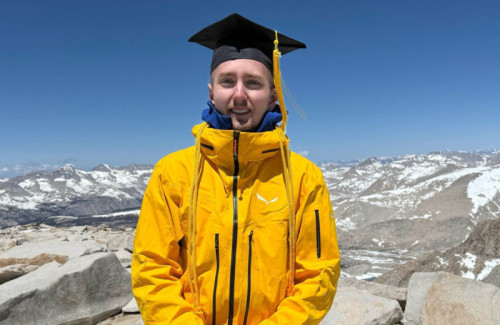
When most college students think about graduation weekend, they picture walking across a stage, shaking hands with university officials, and posing for photos with family. For one Cal State San Marcos graduate, however, the celebration looked significantly different. Jaedon Spurlock traded the traditional commencement ceremony for an 18-hour outdoor adventure, summiting Mount Whitney—the highest peak in the contiguous United States—alongside his father.
This remarkable story of graduation, determination, and outdoor adventure has captured attention across USA news outlets, offering a fresh perspective on how graduates choose to mark their academic achievements.
Choosing Mountains Over Stages: A Different Kind of Graduation
The decision to skip commencement wasn’t made lightly. Spurlock weighed his options carefully before deciding that an outdoor adventure would create a more meaningful memory than a traditional ceremony. With friends also opting out of the formal event, the choice became clearer.
“I just figured, since my friends aren’t going to the ceremony, maybe it’d be all right if I did this instead,” Spurlock explained. “I think it’d be cooler, and I think it’d be more memorable for me.”
This sentiment reflects a growing trend among recent graduates who seek personalized ways to celebrate their accomplishments. While commencement ceremonies hold deep institutional significance, many students are finding alternative methods to mark these pivotal life transitions that align more closely with their personal values and interests.
Submit your application today to explore programs that support students in pursuing their unique paths to success.
Mount Whitney: The Ultimate Outdoor Adventure Challenge
Mount Whitney stands at an impressive 14,505 feet in California’s Sierra Nevada range, making it the highest point in the lower 48 states. Each year, thousands of hikers attempt to reach its summit, though success is never guaranteed. The U.S. National Park Service reports that weather conditions, altitude sickness, and physical exhaustion prevent many from completing the journey.
Understanding the Physical Demands
The 18-hour trek that Spurlock completed with his father, Jared, represents a significant physical achievement. At such high elevations, oxygen levels drop substantially, making every step more demanding than it would be at sea level. Hikers must contend with steep inclines, rocky terrain, and rapidly changing weather conditions that can turn a manageable climb into a dangerous situation within minutes.
Permit Requirements and Timing
Access to Mount Whitney is carefully regulated. Permits are limited due to the sheer volume of requests and the need to protect both visitors and the fragile alpine environment. For the Spurlocks, commencement weekend provided a rare window of opportunity that aligned with their permit availability—a fortunate coincidence that made the alternative graduation possible.
Schedule a free consultation to learn more about how academic programs can accommodate your personal milestones and goals.
A Summit Ceremony: Bringing Graduation to New Heights
What made this outdoor adventure truly special was how Spurlock incorporated elements of traditional graduation into the mountaintop experience. Despite the constraints of backpack space, he managed to bring a small graduation cap purchased online and his honors cord from CSUSM.
At 14,505 feet above sea level, father and son held their own private commencement ceremony. The juxtaposition of academic achievement symbols against a backdrop of rugged Sierra Nevada wilderness created a powerful visual metaphor for the intersection of intellectual and physical accomplishment.
This creative approach to celebration demonstrates how graduates can honor their achievements in ways that feel authentic to their identities. For Spurlock, the mountain summit wasn’t replacing graduation—it was reimagining it on his own terms.
Navigating Challenges: Hearing Loss and the Climb
The Mount Whitney ascent took on additional significance given Spurlock’s personal history. Born with congenital profound bilateral sensorineural hearing loss, he has navigated the world with cochlear implants—small devices that sit behind the ears and process sound to stimulate auditory nerves.
Living with Partial Hearing
Currently, Spurlock’s right-side implant is not functioning, leaving him with what he describes as “50% hearing.” This reality shapes his daily interactions and requires specific strategies for communication.
“A lot of times I won’t get what someone says on the first time, so I always be like, ‘Oh, could you repeat that?’ And they’ll say the same thing again. Usually, I get it the second or third time,” he explained.
This matter-of-fact approach to his disability reveals years of adaptation and self-advocacy—skills that prove equally valuable on mountain trails and in professional environments.
Maintaining Perspective on Ability
Spurlock’s attitude toward his hearing loss offers valuable insights for anyone facing perceived limitations. Rather than viewing his disability as a barrier, he frames it as simply one aspect of his overall capability.
“I think it’s just years of growing up with this disability and then being able to accomplish things that other people can,” he said. “It’s knowing that I’m just as capable as a person as anyone else.”
This mindset proved essential during the Mount Whitney climb, where communication between hiking partners is crucial for safety and coordination. The outdoor adventure required the same determination and adaptive thinking that characterized his academic journey.
Have questions? Write to us! We’re happy to discuss how our programs support students with diverse needs and backgrounds.
Academic Excellence: Software Engineering Success at CSUSM
Spurlock’s mountain achievement parallels his academic performance. He graduated magna cum laude with a degree in software engineering—a demanding field that requires precision, problem-solving, and persistent effort.
Faculty Recognition
Professor Yongjie Zheng from the computer science and engineering department remembers Spurlock as a standout student, though he was unaware of the hearing challenges Spurlock navigated throughout his studies.
“He never mentioned to me the challenge that he faced,” Zheng noted. “Instead, Jaedon worked as hard as many other students and had lots of industrial experience. He kindly shared with us his technical knowledge and internship experience in some of our classes.”
This observation speaks volumes about Spurlock’s character. Rather than seeking accommodation or special consideration, he focused on contributing meaningfully to his academic community. His willingness to share internship experiences and technical knowledge benefited fellow students and enriched classroom discussions.
Preparing for Professional Success
The skills Spurlock developed at CSUSM have already translated into tangible career opportunities. This summer, he will relocate to Orlando, Florida, to begin a position as a software engineer at Lockheed Martin—one of the world’s largest aerospace, defense, and technology corporations.
This placement represents the culmination of years of dedicated study and practical experience. For a software engineering graduate, securing a position at such a prestigious company validates both the quality of CSUSM’s program and Spurlock’s individual capabilities.
Family Bonds and Outdoor Adventure
Beyond the individual achievement, the Mount Whitney climb strengthened the relationship between Spurlock and his father. The 18-hour journey provided uninterrupted time for conversation, shared struggle, and mutual support—experiences that can transform parent-child dynamics.
“We’ve always enjoyed doing outdoor stuff, and we wanted to do things together,” Spurlock said. “So, we’ve just started hiking together.”
This statement hints at a broader strategy for maintaining family connection during the transition from college to adulthood. As graduates scatter to new cities and careers, intentional shared experiences become increasingly valuable for preserving close family ties.
For families considering their own graduation celebrations, the Spurlocks’ experience suggests that investing in shared challenges—rather than passive observation of ceremonies—can create deeper bonds and more lasting memories.
Advice for Aspiring Graduates and Adventurers
Spurlock’s perspective on expectations offers guidance that extends well beyond graduation or mountaineering. His advice carries particular weight for students who may feel pressure to conform to traditional paths or benchmarks.
“Don’t put yourself in a situation where you put yourself to the same expectations as others,” he counseled. “Set your own expectations, set your own level of confidence and just find what you can do.”
Applying This Mindset to Academic and Career Goals
This philosophy has clear applications for students navigating their educational journeys. Rather than measuring success solely against conventional metrics—GPA rankings, prestigious internships, or job offers at specific companies—Spurlock encourages individuals to define achievement on their own terms.
For some, this might mean pursuing unconventional research topics. For others, it could involve balancing academic responsibilities with significant personal commitments. The key is authentic self-assessment rather than external comparison.
Translating Determination to Professional Environments
The same qualities that enabled Spurlock to summit Mount Whitney with partial hearing—preparation, adaptability, and persistence—will serve him well at Lockheed Martin. Software engineering projects often present unexpected obstacles that require creative problem-solving and the ability to function effectively despite limitations or constraints.
Employers increasingly value these soft skills alongside technical proficiency. A graduate who has demonstrated the ability to prepare thoroughly, adapt to changing conditions, and maintain composure under physical and mental stress brings valuable qualities to any team.
Share your experiences in the comments below—we’d love to hear how you’ve chosen to celebrate your own milestones.
The Growing Appeal of Alternative Graduation Celebrations
Spurlock’s choice reflects broader shifts in how Americans mark major life transitions. While traditional ceremonies remain popular, growing numbers of graduates are seeking celebrations that feel more personal and meaningful.
Factors Driving the Trend
Several factors contribute to this evolution in graduation culture. Social media has created pressure for unique, shareable moments. Economic considerations make expensive travel for family ceremonies less feasible for some. And a generational emphasis on authenticity over formality encourages graduates to prioritize experiences that genuinely resonate with their values.
Outdoor adventure celebrations like the Mount Whitney summit combine physical achievement with natural beauty, creating compelling narratives that stand out from typical graduation photos. For graduates who have developed hiking, climbing, or other outdoor skills during college, incorporating these passions into graduation celebrations feels natural and appropriate.
Considerations for Alternative Celebrations
While alternative graduation celebrations offer many benefits, they require careful planning. Families should consider factors such as physical fitness requirements, weather contingencies, permit availability, and communication needs—especially for participants with disabilities or health conditions.
The Spurlocks’ success resulted from thorough preparation, realistic assessment of their capabilities, and willingness to adapt their plans to available opportunities. These same principles apply to any alternative celebration, whether it involves mountaineering, travel, volunteer work, or other non-traditional activities.
Looking Forward: From Sierra Nevada Summits to Florida Careers
As Spurlock prepares for his move to Orlando and the start of his career at Lockheed Martin, the Mount Whitney experience serves as both a capstone to his academic journey and a foundation for future challenges.
The software engineering field demands continuous learning and adaptation. Technologies evolve rapidly, project requirements shift unexpectedly, and success often depends on the ability to solve novel problems with incomplete information. These demands mirror the uncertainties of high-altitude mountaineering, where weather, trail conditions, and personal stamina can change without warning.
Spurlock has demonstrated that he possesses the mental and physical resilience to navigate such challenges. His academic record proves his intellectual capability. His approach to disability reveals emotional maturity and self-awareness. And his choice of graduation celebration shows creativity and independence of thought.
For other graduates contemplating their own paths—whether in software engineering or other fields—Spurlock’s story offers a reminder that success comes in many forms. Sometimes the most meaningful achievements happen far from traditional stages, on mountain peaks where the only audience is the wind and the only validation comes from within.
Explore our related articles for further reading on student achievements, outdoor programs, and career preparation strategies.
Conclusion: Redefining Graduation Success
The story of a CSUSM software engineering graduate summiting Mount Whitney during commencement weekend resonates because it challenges assumptions about what graduation should look like. It demonstrates that academic achievement and outdoor adventure can complement rather than compete with each other. And it shows that perceived limitations—whether related to hearing, physical fitness, or social expectations—need not define what is possible.
As USA news coverage of this story spreads, it offers inspiration not just for current students but for anyone facing significant transitions or challenges. The message is clear: define your own path, prepare thoroughly, bring along people who matter, and don’t be afraid to choose the mountain over the stage when it feels right.
Jaedon Spurlock may have skipped the traditional ceremony, but in choosing Mount Whitney, he created a graduation memory that will endure long after the echoes of “Pomp and Circumstance” have faded—a testament to the power of aligning celebration with personal meaning.