
CSUSM Expands Community Partnerships and Educational Access in Southwest Riverside County
How Regional Education Hubs Reduce Barriers to Degree Completion
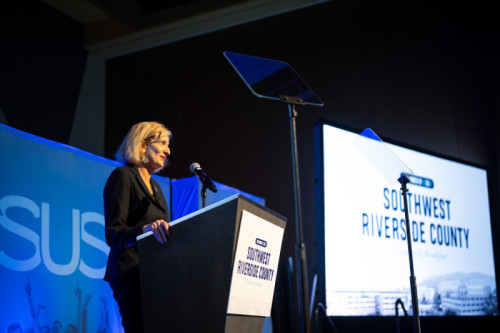
For many students, the biggest obstacle to finishing a degree is not academic difficulty, but logistical friction. Long commutes, work schedules, and family obligations often force students to delay or abandon their educational goals. Recent CSUSM news highlights how the university is addressing this issue directly by bringing the campus to the students. During the recent “The Power of Us” Southwest Riverside County Community Breakfast, university leadership outlined a clear strategy to make higher education more accessible for local residents.
Consider the experience of students who relocate mid-degree. Moving from one city to another often means transferring to a completely different institution, losing credits, or facing a grueling daily commute. By establishing physical locations in Southwest Riverside County, Cal State San Marcos allows students to maintain their academic momentum without uprooting their lives. This approach is a practical solution to a common problem in USA education, where geographic barriers disproportionately affect non-traditional students, working adults, and parents.
For prospective students evaluating their options, choosing a university that offers satellite campuses or flexible location options can mean the difference between graduating and dropping out. Review your local higher education infrastructure carefully. Attending a regional education hub allows you to network with local employers, complete internships in your immediate community, and transition directly into the local workforce upon graduation.
Schedule a free consultation to learn more about CSUSM programs and flexible learning options.
The Impact of Commuting on Student Success
Research consistently shows that excessive commute times correlate with lower graduation rates. When a student spends two to three hours a day in traffic, that is time taken away from studying, resting, or working. The expansion of CSUSM’s Temecula campus, which initially opened in 2008 and has since grown to include multiple locations, directly mitigates this issue. Students can now take courses in nursing, software engineering, teacher credentialing, and business administration without traveling to the main campus in San Marcos.
Leveraging Satellite Campuses for Career Advancement
Satellite campuses do more than offer convenience; they serve as economic engines for their immediate communities. Graduates often stay in the area where they earn their degrees. When a student completes a business administration degree at a local satellite campus, as highlighted in recent Southwest Riverside County news, they are highly likely to launch their business or seek employment locally. This creates a self-sustaining cycle of economic development fueled by community partnerships between municipalities, educational institutions, and local businesses.
Aligning Academic Programs with Southwest Riverside County Workforce Demands
Effective community partnerships require more than just opening a building; they demand that academic institutions actively listen to regional employers and tailor their curricula accordingly. CSUSM has adopted this responsive approach by developing programs specifically designed to fill critical workforce gaps in Southwest Riverside County. This targeted strategy ensures that education news in the region focuses on tangible economic outcomes rather than just enrollment numbers.
Aligning degree programs with local industry needs benefits everyone involved. Employers gain access to a pipeline of qualified candidates, students graduate with highly marketable skills, and the regional economy strengthens. When evaluating degree programs, students should look for indicators that their prospective university maintains active advisory boards with local industry leaders and regularly updates its curriculum based on labor market data.
Accelerated Pathways in Software Engineering
One of the most notable examples of workforce alignment is the accelerated software engineering pathway. Developed in collaboration with Mt. San Jacinto College (MSJC), Temecula Valley Unified School District, and Murrieta Valley Unified School District, this program allows students to begin earning college credit while still in high school. Students can seamlessly transition from high school to community college coursework and ultimately complete a CSUSM bachelor’s degree on an accelerated timeline. With the recent inclusion of the Lake Elsinore Unified School District, this model is scaling up to serve even more students.
This accelerated model represents a significant shift in how USA education approaches the transition from secondary to post-secondary education. By removing the traditional silos between high schools, community colleges, and four-year universities, the pathway reduces the time and cost required to earn a degree. High school students interested in STEM fields should actively seek out these dual-enrollment and accelerated pathways, as they provide a substantial head start in a competitive industry.
Addressing Healthcare Shortages Through Concurrent Nursing Degrees
Healthcare remains one of the most critical sectors facing staffing shortages, and Riverside County is no exception. CSUSM currently produces more nurses than any other campus in the California State University system, having graduated nearly 4,000 nurses over the past decade. To further streamline the process of entering the nursing profession, the university is developing a concurrent nursing agreement with MSJC.
This concurrent enrollment model would allow students to work toward their Registered Nurse (RN) and Bachelor of Science in Nursing (BSN) degrees simultaneously. Traditionally, students might complete an RN program at a community college and then return to a university later to complete their BSN—a process that often takes extra years and creates barriers to career advancement. By combining these steps, CSUSM and MSJC are removing friction from the pipeline, ensuring that local healthcare facilities have access to highly qualified nursing staff sooner.
Additionally, the university is developing programs in clinical laboratory science, a high-demand healthcare profession that regional employers have identified as one of their most difficult positions to fill. Aspiring healthcare professionals should monitor the development of these programs, as specialized degrees in allied health often lead to immediate employment and strong starting salaries.
Strengthening K-12 and Community College Collaborations
The strength of a regional higher education system depends heavily on the partnerships forged between universities, community colleges, and K-12 school districts. Isolated educational institutions cannot solve systemic workforce or accessibility issues alone. Recognizing this, CSUSM has prioritized building formal alliances with more than two dozen school districts and tribal nations in the region.
A key component of this collaboration is Riverside County’s Direct Admission initiative. This program represents the first countywide partnership of its kind with the California State University system. Direct admission simplifies the transition from high school to college by removing the traditional, often stressful, application hurdles for eligible students. The message to students is clear and direct: college is a viable and expected next step.
For parents and high school counselors, understanding these direct admission pathways is essential. They provide a guaranteed route to higher education for students who meet basic academic thresholds, reducing the anxiety and uncertainty that often accompany the college application process. Engaging with university outreach programs early in a student’s high school career can help families take full advantage of these community partnerships.
The Economic and Social Impact of Investing in Local Higher Education
Expanding educational access requires significant financial investment. In 2024, Riverside County demonstrated its commitment to this goal by allocating $5.5 million in American Rescue Plan Act (ARPA) funding to enhance technology, equipment, and academic programs at CSUSM’s Southwest Riverside County locations. Public investments like this highlight the recognized link between educational infrastructure and regional economic resilience.
These funds ensure that students learning at satellite campuses have access to the same high-quality technology and laboratory equipment as students on the main campus. In fields like nursing and software engineering, hands-on experience with current technology is a non-negotiable requirement for professional readiness. The ARPA investment directly translates to better-prepared graduates entering the local workforce.
Furthermore, this investment supports CSUSM’s broader mission of advancing social mobility. The university has been recognized by CollegeNET as the nation’s top university for social mobility. However, as university leadership emphasizes, social mobility is not just a ranking; it is a measurable outcome. It is a first-generation student becoming an engineer, a working parent completing a nursing degree, or a local resident starting a small business. These individual successes compound to create a stronger, more economically stable region.
Future Directions for CSUSM in Southwest Riverside County
Looking ahead, the infrastructure for higher education in Southwest Riverside County will continue to evolve. CSUSM plans to further expand its footprint into the MSJC University Center, providing even more space and resources for students pursuing four-year degrees close to home. This expansion reflects a long-term commitment to the region rather than a temporary initiative.
In addition to physical expansion, the university is actively developing new academic programs tailored to regional needs. Upcoming offerings include integrated studies, early childhood education, and the previously mentioned clinical laboratory science program. Each of these programs is designed around a fundamental question: What does this region need, and how can the university help meet that need?
For prospective students, this continuous growth means that the opportunities available locally will only expand in the coming years. Staying informed about new program developments and campus expansions can help you time your educational journey to take advantage of the latest resources and facilities.
Take the Next Step in Your Educational Journey
Effective community partnerships are reshaping the landscape of USA education, proving that when universities, local governments, and school districts work together, students reap the benefits. The deepening ties between CSUSM and Southwest Riverside County serve as a clear example of how localized strategies can solve broad challenges related to access, workforce readiness, and social mobility.
Whether you are a high school student exploring accelerated pathways, a working adult looking to finish a degree without a long commute, or a professional seeking a career change into nursing or technology, regional educational hubs offer practical, grounded solutions. Take the time to research the programs available in your immediate area and reach out to admissions advisors to understand how local partnerships can support your specific goals.
Have questions about transferring to CSUSM or enrolling in a satellite campus program? Write to us!
Share your experiences with community colleges and university partnerships in the comments below.