
CSUSM Blueprint for the Future Campaign Advances Engineering Expansion and Social Mobility Leadership
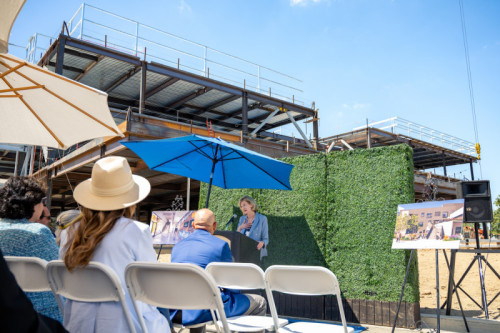
Tracking the Progress of CSUSM’s $200 Million Fundraising Initiative
>Cal State San Marcos has reached 84% of its ambitious $200 million fundraising goal through the Blueprint for the Future campaign, marking significant milestones in engineering education, social mobility research, and institutional endowment growth over the past year.
The campaign, which publicly launched last fall, represents one of the most comprehensive philanthropic efforts in the university’s history. According to CSUSM President Ellen Neufeldt, the initiative reflects a growing culture of giving that directly impacts student outcomes and regional economic development. The university recorded its second-highest fundraising year in campus history during this period, demonstrating sustained momentum across all donor categories.
Submit your application today to join a university where philanthropy and student success go hand in hand.
Hunter Hall of Science and Engineering: A $10 Million Investment in STEM Education
The centerpiece of recent Blueprint for the Future news involves a transformational $10 million gift from Hunter Industries, ranking among the largest philanthropic contributions in CSUSM history. This investment builds upon a decades-long partnership between the Hunter family and the university, culminating in the construction of the Hunter Hall of Science and Engineering.
Facility Specifications and Academic Impact
Slated to open in spring 2028, the 70,000-square-foot, three-story facility will feature advanced laboratories, a dedicated robotics suite, and collaborative learning spaces specifically designed to prepare students for careers in engineering and advanced technology. For those following engineering news USA, this development represents a significant expansion of educational capacity at a time when demand for STEM professionals continues to outpace supply.
The new facility will enable CSUSM to expand its engineering enrollment from approximately 500 students to nearly 2,000 students. This fourfold increase addresses a critical need in the regional workforce pipeline. Additionally, Hunter Hall will support the launch of a new industrial and systems engineering program, diversifying the university’s academic offerings and providing students with specialized skills aligned with industry demands.
Schedule a free consultation to learn more about engineering programs and facilities at CSUSM.
Establishing the CSU National Center for Social Mobility
Backed by $3 million in philanthropic support, CSUSM will become home to the CSU National Center for Social Mobility—a hub dedicated to research, innovation, and collaboration focused on expanding educational access and economic opportunity. This center will serve all 22 California State University campuses and share evidence-based practices with institutions nationwide.
Why Social Mobility Matters in Higher Education
Social mobility USA remains a critical metric for evaluating the true value of higher education. Unlike prestige-focused rankings, social mobility indices measure how effectively institutions help students from lower-income backgrounds achieve economic stability and professional success. CSUSM’s commitment to this mission is not merely rhetorical—the university was ranked No. 1 in the nation for social mobility by the CollegeNET Social Mobility Index earlier this year, the second time it has achieved this distinction in four years.
The new national center will formalize and expand CSUSM’s existing efforts, creating a structured framework for identifying, testing, and disseminating practices that improve outcomes for first-generation students, students from underrepresented backgrounds, and those facing financial barriers to degree completion. This initiative positions CSUSM as a thought leader in an area of increasing national importance.
Endowment Growth and Fiscal Stewardship
Effective philanthropy requires responsible stewardship, and CSUSM has demonstrated strong performance in this area. The university earned systemwide recognition for investment performance during the current campaign period, achieving the highest five-year rate of return among all CSU campuses. CSUSM also tied for the top one-year return and ranked second in 10-year performance across the California State University system.
These investment results matter for prospective students and donors alike. Strong endowment performance translates directly into sustained funding for scholarships, faculty positions, and program development over the long term. Unlike one-time gifts, endowment distributions provide reliable, recurring support that institutions can count on regardless of annual fundraising fluctuations.
Research Advancements Fueled by Campaign Funding
The Blueprint for the Future campaign extends beyond capital projects and centers of excellence to support faculty research across multiple disciplines. Physics professor Justin Perron is leading a three-year, federally funded initiative providing undergraduates with hands-on training in quantum information science and technology—an emerging field with significant implications for computing, cryptography, and materials science.
Additional research funding supported by the campaign spans mathematics, biology, mental health, and public health. This broad investment reflects CSUSM’s commitment to creating research opportunities for undergraduate students, a distinguishing feature of the CSU system compared to research-heavy universities where graduate students typically dominate laboratory work.
For students considering their academic options, access to undergraduate research represents a tangible advantage. Graduate school admissions committees and employers increasingly value applicants with demonstrated research experience, and CSUSM’s investment in faculty-student research partnerships provides a pathway to developing these credentials.
Have questions? Write to us! We’re happy to discuss research opportunities available to students.
Record-Breaking Giving Day Demonstrates Broad Community Support
While headline-grabbing seven-figure gifts attract attention, the Blueprint for the Future campaign is powered by thousands of individual contributors. The university’s most recent Giving Day exemplified this collective impact: in just 24 hours, supporters contributed $828,397 through 2,444 gifts, setting a new university record.
This level of participation matters for several reasons. First, high donor participation rates signal institutional health and community engagement—factors that influence foundation giving and institutional rankings. Second, broad-based support creates a sustainable fundraising ecosystem less dependent on any single donor or gift category. Third, when alumni give back, they create a virtuous cycle that benefits current students who may become future donors themselves.
Alumni now represent 32% of all Blueprint for the Future donors, a figure that has grown steadily since the campaign’s public launch. This increasing alumni engagement reflects improved outreach, stronger affinity-building programs, and a growing recognition among graduates that their contributions directly benefit current students.
What This Means for Prospective Students and Families
For those evaluating CSUSM as a potential college choice, the Blueprint for the Future campaign provides concrete evidence of institutional momentum. Universities in growth phases typically offer expanded facilities, new academic programs, and enhanced student services—all of which directly benefit enrolled students.
The engineering expansion alone will create significant new opportunities for students entering STEM fields. The transition from approximately 500 to 2,000 engineering students suggests not just more seats, but likely more faculty, more course sections, more laboratory access, and more specialized program options. Students who enroll during this expansion period may find themselves with advantages in terms of facility access and faculty attention that later cohorts will not experience.
Similarly, the social mobility center’s establishment reinforces CSUSM’s existing strengths in serving diverse student populations. Students who are first-generation college attendees, from lower-income backgrounds, or returning to education after time away can expect institutional support systems informed by research and best practices specifically developed for their success.
The Broader Context of USA Philanthropy in Higher Education
CSUSM’s campaign success occurs against a backdrop of evolving USA philanthropy patterns in higher education. While attention often focuses on billion-dollar campaigns at elite private institutions, public universities like CSUSM play a distinct role in the philanthropic ecosystem. Their campaigns typically emphasize access, workforce development, and community impact rather than endowment accumulation for its own sake.
The $200 million target for Blueprint for the Future represents serious ambition for a mid-size public university, but the campaign’s structure—emphasizing both philanthropy and research funding—reflects a modern understanding of how public institutions must diversify revenue sources in an era of uncertain state funding. Successful campaigns of this type create infrastructure and programs that benefit students for decades, essentially front-loading investments that pay educational dividends long after the fundraising concludes.
Looking Ahead: Reaching the $200 Million Goal
At 84% completion, the Blueprint for the Future campaign has cleared the most difficult early hurdles and built demonstrable momentum. The remaining $32 million will likely come from a combination of continued major gifts, foundation grants, corporate partnerships, and growing annual giving from alumni and friends of the university.
The campaign’s visible successes—Hunter Hall construction, the social mobility center launch, record Giving Day results—provide compelling narrative elements for fundraising conversations. Donors, whether contributing $25 or $25 million, want to see their gifts making a difference, and CSUSM can now point to tangible outcomes as evidence of impact.
For the broader CSUSM community, the campaign represents a statement of institutional aspiration. The university is not merely maintaining existing operations but actively building capacity for the future. In a competitive higher education landscape, this forward momentum matters for student recruitment, faculty hiring, and community partnerships alike.
Share your experiences in the comments below—how has philanthropy impacted your educational journey or connection to CSUSM?
Stay Informed on CSUSM News and Developments
The Blueprint for the Future campaign continues to evolve, with new announcements expected as Hunter Hall construction progresses and the social mobility center establishes its programming. Those interested in following CSUSM news can expect regular updates on campaign milestones, facility construction timelines, and the specific ways philanthropic investments are translating into student opportunities.
Whether you are a prospective student evaluating your options, an alumnus considering your philanthropic priorities, or a community member interested in regional economic development, the trajectory of CSUSM’s campaign offers meaningful insights into the university’s direction and values. The combination of engineering expansion, social mobility leadership, research investment, and fiscal stewardship paints a picture of an institution building comprehensively for long-term impact.
Explore our related articles for further reading on CSUSM programs, student success stories, and regional impact initiatives.