Apply Business Coursework to Real Eco-Tourism Companies Through UNE’s Arctic Tourism Program
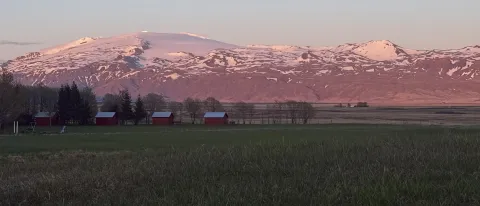
The landscape of higher education in the USA continues to evolve, with an increasing emphasis on applied learning and practical skill development. Recent news highlights how the University of New England (UNE) is redefining the traditional student experience by taking business coursework out of the classroom and into the field—specifically, the rugged, geologically active terrain of Iceland. For students interested in the intersection of environmental stewardship and commerce, UNE’s Arctic Tourism course offers a highly effective model of practical application. By partnering directly with Icelandic eco-tourism companies, students are not merely studying business concepts; they are actively consulting for international businesses and delivering measurable results.
Integrating Business Coursework with Real-World Eco-Tourism Challenges
Traditional business programs often rely on historical case studies and hypothetical scenarios to teach core concepts. While these methods build a necessary foundational knowledge, they can sometimes leave a gap when students transition into the workforce. UNE’s College of Business addresses this gap by designing curriculum around active, client-based engagement. In the Arctic Tourism course, business coursework becomes a practical exercise in problem-solving and strategic planning. Students are tasked with analyzing the specific operational, marketing, and strategic challenges faced by small eco-tourism businesses in Iceland.
Eco-tourism, as a specialized industry, requires a careful balance between promoting travel and preserving the natural environment. For students, this means their business coursework must account for sustainability metrics, environmental impact, and community integration. The UNE model ensures that students understand these complexities firsthand, preparing them for leadership roles in a rapidly growing global sector. Rather than reading about the challenges of sustainable tourism, students are forced to reconcile these tensions in real time for actual clients who depend on their recommendations.
Explore our related articles for further reading.
Developing Practical Solutions for Icelandic Eco-Tourism Businesses
The core of the Arctic Tourism course revolves around project-based learning. Over a semester, UNE students collaborate with real clients, such as Hotel Hafnir and the Grindavik Guest House. The process begins virtually, with student teams conducting Zoom interviews to assess the clients’ needs, current market positioning, and operational constraints. From there, the students transition their business coursework into actionable, client-ready deliverables.
For Hotel Hafnir, a student team—including Connor Pepin, a biological science major—focused on digital transformation. They developed a comprehensive website strategy and mapped out a plan to establish a robust social media presence. In an era where digital footprints heavily dictate business success, these are critical interventions for small eco-tourism operators looking to attract international visitors. Pepin noted that learning how to approach business strategy gave him a strong new set of professional skills, teaching him how professionals can collaborate to achieve a common goal.
For the Grindavik Guest House, the student team took a culturally focused approach. Recognizing that food is a primary driver for cultural exploration among tourists, the students proposed integrating an Icelandic cooking class into the guest house’s existing cafe operations. This type of innovative thinking demonstrates how business coursework can directly translate into new revenue streams and enhanced customer experiences for eco-tourism companies. The clients were receptive to these ideas, with many of the proposals slated for actual implementation.
The Power of Interdisciplinary Teams in the Student Experience
One of the most notable aspects of this UNE initiative is its interdisciplinary nature. The Arctic Tourism course was not limited to students majoring in business. It actively recruited participants from environmental science and biological science programs. This cross-pollination of academic disciplines mirrors the reality of the modern eco-tourism industry, where business acumen must align seamlessly with environmental expertise.
Why Environmental Science Majors Benefit from Business Coursework
When environmental science students like Shelby Budzko and Arden Caley participate in business coursework, they gain a vital competitive edge in the job market. Understanding how to market an eco-friendly initiative, how to communicate sustainability efforts to consumers, and how to ensure a green business is financially viable are essential skills that are rarely covered in a standard science curriculum. By working on the Grindavik Guest House project, Budzko and Caley applied their understanding of environmental systems to a business context, ensuring that their proposed cooking class would highlight local, sustainable food practices rather than relying on imported goods.
Enhancing Business Strategy with Scientific Perspectives
Conversely, business students benefit immensely from the scientific literacy of their environmental science peers. When developing a marketing plan for an eco-tourism company, it is crucial to avoid greenwashing or making promotional claims that could inadvertently encourage harmful behaviors in fragile ecosystems. Having team members who understand the local ecology—such as Iceland’s fragile moss-covered lava fields and distinct lack of forests—ensures that the business strategies developed are both profitable and ecologically responsible.
Navigating Cross-Cultural Communication and Presentation Skills
A defining feature of this student experience is the culminating trip to Iceland. After a semester of virtual collaboration and refining their business coursework, the students traveled to Iceland to present their solutions in person. This phase of the course elevates the learning experience from a standard academic exercise to a high-stakes professional engagement. The students had the opportunity to see the Icelandic landscape firsthand, which Budzko described as an eye-opening experience featuring miles of lava rock covered by pillows of squishy moss, vastly different from the forests of Maine.
Presenting to a business owner in their own country requires a high degree of cultural competence. Students must navigate different communication styles, manage expectations, and adapt their presentation strategies to suit a cross-cultural audience. Aimee Vlachos, Ed.D., a teaching professor and the director of UNE’s Outdoor Business and Innovation (OBI) program, noted that the soft skills developed during this process are profound. The students had to build trust over video calls, transition that relationship to a face-to-face meeting, and deliver their proposals respectfully and effectively within a foreign cultural context. Caley noted that their final presentation felt more like an open conversation and a collaborative effort rather than simply talking at the client.
Translating Academic Projects into Career Readiness
The ultimate goal of applied business coursework is to enhance career readiness. The students who participated in the UNE Arctic Tourism course emerged with a portfolio of tangible work and a refined set of professional skills. As Pepin highlighted, the ability to help companies build a stronger foundation for their business models is a highly transferable skill, regardless of whether one pursues entrepreneurship or enters the corporate sector.
In the competitive job market in the USA, employers consistently look for candidates who can demonstrate practical experience. Being able to discuss a time you designed a digital marketing strategy for an international eco-tourism company, or how you navigated a cross-cultural business presentation, provides a significant advantage in interviews. This type of student experience successfully bridges the gap between academic theory and workplace demands, producing graduates who can contribute from day one.
Share your experiences in the comments below.
The Growing Importance of Eco-Tourism Education
As global awareness of environmental issues increases, the eco-tourism sector is expanding rapidly. Travelers are actively seeking authentic, sustainable experiences that minimize their carbon footprint and support local economies. This shift creates a strong demand for professionals who understand both the operational realities of the tourism industry and the core principles of environmental conservation.
Programs like UNE’s Outdoor Business and Innovation (OBI) major—the only undergraduate program of its kind in the nation—are positioned at the forefront of this educational shift. By integrating international travel, rigorous business coursework, and environmental science, these programs are training the next generation of leaders who will shape the future of sustainable travel. The Arctic Tourism course serves as a prime example of how universities can adapt their curricula to meet the evolving needs of both students and the global economy.
Conclusion
The recent news surrounding UNE’s Arctic Tourism course highlights the practical value of experiential learning. By stepping outside the traditional classroom and applying their business coursework to real Icelandic eco-tourism companies, students gained invaluable insights into international business, cross-cultural communication, and sustainable practices. They learned how to collaborate, strategize, and execute professional-level deliverables. Whether you are a prospective student interested in environmental science, business, or outdoor innovation, seeking out programs that prioritize hands-on, real-world application is a strategic move for your future career.