
Advancing RF Technology and Radar Communications Through 3D Printing at Whittier College
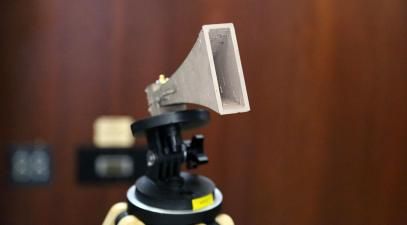
In a laboratory in Southern California, a team of undergraduate researchers is reshaping how the United States approaches radar communications and radio-frequency (RF) engineering. At Whittier College, Jordan Hanson, chair of the Department of Physics and Astronomy, has spent recent years designing and 3D-printing RF systems with practical applications in phased-array radar, drone detection, and wireless sensing. His work, supported in part by Faculty Research Fellowships through the Office of Naval Research, demonstrates how a small liberal arts college can contribute meaningfully to national research priorities while giving students rare hands-on experience in computational electromagnetics.
For prospective students, engineering enthusiasts, and anyone tracking USA news in defense and communications technology, this project offers a clear example of how accessible manufacturing tools are changing a specialized field. Below, we break down how the research began, how 3D printing applies to RF technology, what it means for radar and drone communications, and why it matters for undergraduates considering a physics or engineering pathway.
How a Navy Fellowship Sparked a 3D Printing Research Program
Every meaningful research initiative has an origin story, and this one began well outside the classroom. After earning Faculty Research Fellowships through the Office of Naval Research, Hanson was hosted by the Naval Surface Warfare Center (NSWC) Corona Division. There, he worked on computational electromagnetics (CEM) models for RF systems, including the phased-array radar technology used in modern defense and communications platforms.
The turning point came from a practical suggestion. An RF engineer named Gary Yeakley proposed designing and 3D-printing the systems rather than modeling them exclusively on paper or in software. That idea led to peer-reviewed recognition: the initial research was published in Electronics, an international peer-reviewed journal, in 2021 under Hanson’s name.
This trajectory underscores something important for students and early-career researchers. Breakthrough ideas often emerge when academic theory meets operational experience. Government laboratories face real engineering constraints, and university researchers bring fresh modeling approaches. When the two collaborate, as they did between Whittier College and NSWC Corona, the results can move from concept to publication in a relatively short timeframe.
Interested in research-driven science education? Explore the Department of Physics and Astronomy at Whittier College to see how faculty-led projects connect coursework to real-world applications.
Why 3D Printing Is Changing RF Antenna Design
Traditional RF hardware is typically manufactured through machining, etching, or specialized fabrication processes that are expensive, slow, and restrictive. Antenna geometries that would perform well for a specific application, such as detecting lightweight drones or operating across a wide frequency band, may be difficult or cost-prohibitive to produce with conventional methods.
Conductive Filament Opens New Possibilities
The core concept behind Hanson’s work is straightforward but powerful: print RF systems using 3D printer filament that conducts electricity. Because the printing material itself is electrically conductive, an entire antenna or RF component can be fabricated in a single additive manufacturing process. No molds, no machining tolerances, no waiting on external vendors.
This approach allows researchers to design and fabricate a much wider variety of RF antenna shapes for systems such as RF sensors, radar platforms, and drone communications equipment. Geometries that were previously impractical, including complex curved surfaces, multi-layer structures, and rapid design iterations, become achievable on a desktop printer.
Practical Advantages for Research Teams
The benefits extend well beyond design freedom:
- Speed of iteration: A design can be modeled computationally, printed, tested, revised, and reprinted within days rather than weeks.
- Cost efficiency: Conductive filament is dramatically cheaper than machined metal RF assemblies, making experimentation feasible on academic budgets.
- Educational access: Undergraduates can participate in every stage of the process, from electromagnetic simulation to physical fabrication and measurement.
- Rapid prototyping for defense applications: When a sensing requirement changes, a new antenna geometry can be produced on demand.
These advantages explain why 3D printing continues to appear in USA news coverage of aerospace, defense, and communications manufacturing. Additive methods compress the distance between an idea and a functioning prototype, and RF technology is one of the fields where that compression delivers the most value.
Curious how computational modeling and hands-on fabrication come together in an undergraduate curriculum? Request information about Whittier College’s physics and engineering course sequence.
From Computational Electromagnetics to Radar Communications
The research program at Whittier College is grounded in computational electromagnetics, the branch of applied physics that uses numerical methods to predict how electromagnetic waves interact with materials and structures. CEM models are essential for designing phased-array radar systems, where dozens or hundreds of antenna elements must work in precise coordination to steer beams electronically.
Building Toward a Broadband Phased Array
The long-term goal of the project is ambitious: integrate the team’s printed designs into a broadband phased array. A broadband array can operate across a wide range of frequencies, which makes it valuable in two distinct areas.
First, the array could serve as a sensor for RF band physics research, giving scientists a flexible instrument for studying the radio-frequency spectrum. Second, and more immediately relevant to current defense priorities, it could function as a search and detection system for lightweight drones. Small unmanned aircraft are difficult to track with conventional radar because their size and materials produce weak radar returns. A purpose-built, low-cost detection array addresses one of the fastest-growing challenges in aviation security.
Relevance Beyond the Laboratory
Drone detection is no longer a niche concern. Airports, stadiums, correctional facilities, and critical infrastructure operators all face pressure to identify unauthorized unmanned aircraft. Research that lowers the cost and increases the adaptability of RF detection systems has clear pathways to commercialization and public-sector adoption. For students working on the project, this means their coursework contributes to technology with tangible societal impact.
Research Experience for Undergraduates at Whittier College
One of the most notable aspects of this initiative is who is doing the work. Using a NEEC (National Engineering Education Consortium) grant, Hanson has hired former and current Whittier College students to form a research team that designs and builds these RF systems alongside him. The students are not observing research; they are producing it.
Classroom Foundations That Feed Directly Into Research
The CEM calculations and antenna designs developed in the lab flow directly into Hanson’s teaching. Students encounter this material in several courses:
- Electromagnetic Theory: The mathematical and physical foundation for understanding how RF fields behave.
- Digital Signal Processing: Techniques for extracting useful information from received RF signals.
- Computer Logic and Digital Circuit Design: The hardware knowledge needed to build supporting electronics.
- Physics Research: A course in which students contribute to active, publishable projects.
This integration matters. At many large research universities, undergraduates must compete for limited spots in faculty labs, and meaningful contributions often wait until graduate school. At Whittier College, the culture of faculty mentorship and the institutional freedom to explore allow students to publish, present posters through programs like URSCA (Undergraduate Research, Scholarship, and Creative Activities), and even deliver lectures at institutions such as MIT.
Want to see undergraduate research in action? Schedule a campus visit and ask to meet current students working in the physics labs.
What This Means for Students Considering Physics and Engineering
For aspiring scientists and engineers evaluating colleges, this project illustrates several qualities worth looking for in any program:
- Faculty who publish and collaborate externally. Active researchers bring current problems and professional networks into the classroom.
- Institutional support for exploration. Whittier College gives faculty the freedom to pursue novel directions, which translates into opportunities for students.
- Access to funded research roles. Grants such as the NEEC award create paid positions, so students can build professional experience while earning.
- A liberal arts foundation with technical depth. Understanding the broader context of technology, from policy to communication, strengthens careers in defense, telecommunications, and aerospace.
The intersection of RF technology and 3D printing is also a career signal. Industries from telecommunications to autonomous systems increasingly value engineers who can move fluidly between simulation, fabrication, and testing. Students who learn these skills on real funded projects graduate with portfolios, not just transcripts.
Have questions about research opportunities for undergraduates? Write to the admission office or the Department of Physics and Astronomy, and a faculty member or current student can share their experience directly.
The Future of Printed RF Systems
Where does this research go next? The immediate milestones are clear: completing the broadband phased array, validating it as an RF band sensor, and demonstrating its effectiveness as a drone detection system. Beyond that, the methods developed at Whittier College point toward broader trends in additive manufacturing for electronics. As conductive materials improve and multi-material printers become more capable, printed RF components could appear in satellite communications, automotive radar, biomedical sensing, and 5G and 6G infrastructure.
For readers following USA news in technology and higher education, the takeaway is that meaningful innovation is not confined to large corporations or flagship research institutions. A dedicated faculty member, a small team of undergraduates, a desktop 3D printer, and institutional support can produce work that earns peer-reviewed publication and attracts national attention.
Take the Next Step
Whether you are a prospective student, a parent, or a professional tracking developments in radar communications, the Whittier College project offers a model of what focused, well-supported research can accomplish. If the intersection of physics, engineering, and hands-on fabrication appeals to you, consider these steps:
- Submit your application to Whittier College to join a community where undergraduates contribute to publishable research from day one.
- Explore our related articles on faculty research and STEM programs to learn more about ongoing projects across departments.
- Share your experiences or questions about RF technology and 3D printing in the comments below; we welcome perspectives from students, educators, and industry professionals.
The future of RF technology is being printed one layer at a time, and at Whittier College, students are holding the printer controls. If you are ready to build, test, and publish real engineering work as an undergraduate, now is the time to learn more about the programs that make it possible.