
Advance Bilingual Programs USA: University of the Pacific Benerd College Secures Grant for Dual-Language Education
The Critical Gap in High School Bilingual Programs USA
For decades, dual-language education has proven highly effective at the elementary and middle school levels, helping students achieve academic fluency in two languages while developing strong cross-cultural competencies. However, a significant gap exists as students transition to high school. Across the country, and particularly in Northern California, dual-language programs largely disappear after eighth grade. This structural drop-off forces students to abandon their bilingual academic trajectories precisely when they are poised to master advanced literacy and subject-matter vocabulary in two languages.
Addressing this specific pipeline issue is now the focal point of a major research initiative. Recognizing that K-8 education alone is insufficient to produce fully biliterate graduates, educational leaders are turning their attention to the high school level. The lack of high school dual-language education limits the long-term benefits of early bilingualism, affecting both native English speakers and students who speak another language at home. Creating a seamless K-12 pathway is essential for maximizing the cognitive, academic, and professional advantages of multilingualism.
Schedule a free consultation to learn more about implementing dual-language tracks in your district.
Understanding Community-Centered Programming in Modern Schools
Effective language education cannot exist in a vacuum. The most successful models rely heavily on community-centered programming, an approach that integrates the cultural, linguistic, and social assets of the local population directly into the school curriculum. Rather than treating diverse linguistic backgrounds as a deficit to be corrected, community-centered programming views them as valuable resources that enrich the learning environment for all students.
In practice, this means designing curricula that reflect the specific demographic realities of the school district. It involves partnering with local organizations, engaging parents as co-educators, and ensuring that the languages chosen for dual-language programs match the home languages spoken in the community. When schools align their educational offerings with the lived experiences of their students, they see higher engagement rates, better attendance, and improved academic outcomes. This framework is especially critical when designing secondary language programs, as high school students are highly attuned to the relevance and authenticity of their coursework.
Breakdown of the $3.5M USA Education Initiatives Grant
To systematically address the high school dual-language gap, the Spencer Foundation has awarded a $3.5 million, five-year research grant to a collaborative team of researchers. This represents one of the most significant USA education initiatives focused specifically on secondary bilingual education. The project, titled “Extending Dual Language Programs to Overcome Inequities: Developing a Roadmap for California High Schools,” brings together expertise from the University of the Pacific, California State University, Sacramento, the University of Oregon, and California State University, Monterey Bay.
Approximately $400,000 of this grant funding is directed specifically to the University of the Pacific to support its localized research and implementation efforts. The research strategy is twofold. First, the team will conduct an in-depth study of the Anaheim Union High School District, which is widely recognized as a pioneer in multilingual education. Anaheim currently offers robust dual-language programs in Spanish, Vietnamese, and Korean across eight high schools. Second, the researchers will use the data gathered from Anaheim to actively partner with school districts in Monterey and Woodland to design, launch, and study new high school dual-language programs.
Studying the Anaheim Union High School District Model
Anaheim Union High School District serves as the primary case study because of its demonstrated success in maintaining K-12 continuity. By offering pathways in Spanish, Vietnamese, and Korean, the district has responded directly to the linguistic demographics of its community. Researchers will analyze how Anaheim navigates common high school obstacles, such as scheduling conflicts with Advanced Placement courses, recruiting highly qualified bilingual educators for specialized subjects, and maintaining student enrollment through senior year.
Submit your application today if you are an educator looking to lead innovative bilingual programs.
Aligning with California Education News and Global California 2030
This research project does not exist in isolation; it is a direct response to state-level policy goals that frequently dominate California education news. The state’s Global California 2030 initiative sets an ambitious target: by 2030, half of all California K-12 students should be on a path to proficiency in two or more languages. Achieving this goal is impossible if students only have access to dual-language education during their elementary years.
By focusing on high school expansion, the grant project provides the practical, data-driven roadmap needed to make Global California 2030 a reality. High school programs are critical for cementing the academic language skills required for college and career readiness. Furthermore, as California’s economy becomes increasingly globalized, businesses are actively seeking biliterate and bicultural employees. Expanding dual-language education at the secondary level is not just an educational imperative; it is an economic strategy that prepares the future workforce.
How University of the Pacific is Shaping the Future of Dual-Language Education
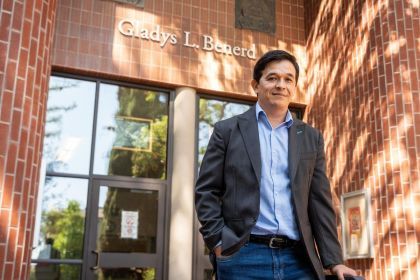
Sergio Sanchez, an assistant professor of practice at the University of the Pacific’s Benerd College, is playing a central role in this five-year study. His involvement ensures that the University of the Pacific remains at the forefront of transformative educational initiatives that have tangible impacts on local communities. Sanchez notes that outside of Anaheim, there are virtually no high school dual-language offerings widely available across California, particularly in Northern California.
The implications of this research extend far beyond the partner districts of Monterey and Woodland. As the study tracks the implementation of new high school programs over the next five years, it will generate the first long-term dataset examining the impact of high school dual-language programs on student outcomes. For the University of the Pacific, located in Stockton, this work has immediate local relevance. The findings will help identify best practices for recruiting and supporting bilingual teacher candidates, directly addressing the teacher shortages that often prevent districts from launching or expanding bilingual programs USA.
By sharing the successful models developed through this grant, the Pacific team hopes to provide a scalable blueprint for districts throughout the state, ultimately creating stronger, more equitable pathways for students seeking bilingual education through high school graduation.
Explore our related articles for further reading on USA education initiatives and policy.
Next Steps for Educators and School Administrators
While this five-year study unfolds, school districts do not need to wait to begin preparing for dual-language expansion. Administrators can take proactive steps to lay the groundwork for successful high school programs.
- Conduct a Demographic Analysis: Evaluate the home languages spoken within your district to determine which dual-language pathways would best serve your community, adhering to the principles of community-centered programming.
- Audit Current K-8 Programs: Assess the number of students exiting eighth grade with biliteracy skills. Survey these students and their families to gauge interest in continuing dual-language studies in high school.
- Review High School Scheduling: Work with guidance counselors to identify how dual-language courses can be integrated into existing graduation requirements and college preparatory tracks without penalizing students academically.
- Partner with Higher Education: Establish relationships with local universities and teacher preparation programs to build a pipeline of certified bilingual educators. The work being done at Benerd College serves as an excellent model for how university-district partnerships can secure funding and drive innovation.
The expansion of dual-language education into high schools represents a necessary evolution in how we approach multilingualism in the United States. By studying what works, applying community-centered strategies, and aligning with broad state initiatives, educators can build programs that serve all students equitably.