
Adelphi University Class of 2026 Celebrates 941 Graduate Degrees Across Diverse Fields
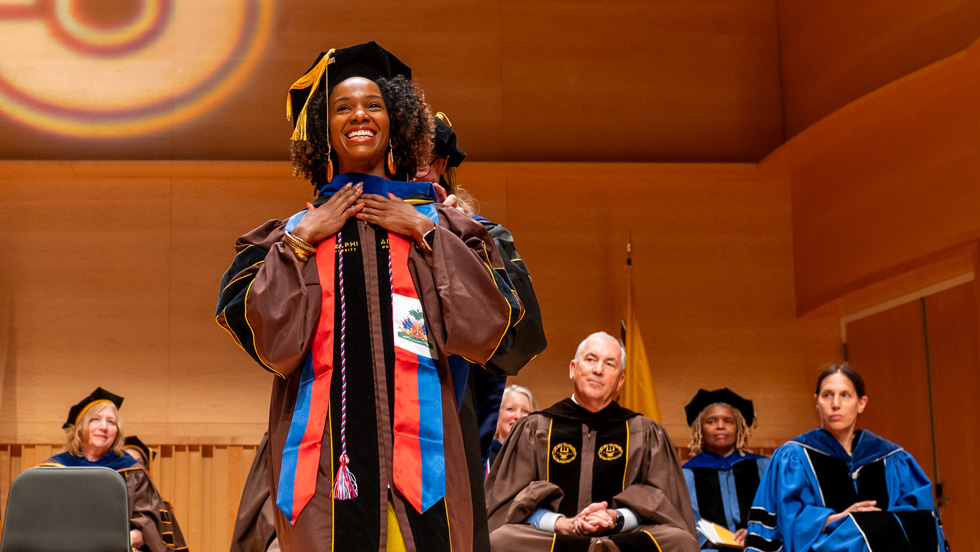
Adelphi University recently concluded its 130th Commencement ceremonies, marking a significant milestone for the 941 students who earned graduate degrees this year. The Class of 2026 represents a diverse cohort of scholars hailing from 20 states across the USA and 34 countries worldwide, ranging in age from 20 to 71 years old. These graduates completed master’s and doctoral programs across 63 distinct disciplines, preparing them to enter professional fields where advanced education is increasingly essential.
Breaking Down the Graduate Class of 2026 Demographics
The composition of this year’s graduating class reflects broader trends in higher education across the USA. Graduate programs continue to attract individuals at various life stages, and Adelphi’s Class of 2026 exemplifies this diversity. The presence of students spanning five decades of age demonstrates that pursuing graduate degrees is no longer confined to traditional post-undergraduate timelines.
International representation remains a hallmark of Adelphi’s graduate programs. Among the 191 international graduates, students from India formed the largest contingent with 117 graduates. Vietnam contributed 11 students, while China sent 10 graduates. The class also included scholars from nations as diverse as Guyana, Cameroon, Egypt, Turkey, Georgia, Nepal, the Philippines, and Taiwan. This international flavor enriches classroom discussions and prepares all students for working in globalized professional environments.
Domestically, the majority of graduates came from New York and neighboring states including New Jersey, Pennsylvania, and Connecticut. However, students traveled from 20 states total, indicating Adelphi’s drawing power extends well beyond the immediate Mid-Atlantic region.
Most Popular Graduate Programs at Adelphi University
Understanding which programs attract the most students provides valuable insight into current workforce demands and student career priorities. The graduate Class of 2026 clustered heavily in several key areas.
Social Work Leads Graduate Enrollment
The Master of Social Work program, offered through Adelphi’s School of Social Work, graduated the largest single group with 183 students receiving their diplomas. This number underscores the sustained demand for trained social workers across healthcare, education, and community service sectors. Social work remains one of the fastest-growing fields in the USA, with the Bureau of Labor Statistics projecting continued above-average job growth through the end of the decade.
Education Programs Attract Future Teachers
The 4+1 Scholar Teacher Education Program (STEP) produced 67 graduates, making it the second-largest program. This innovative five-year combined bachelor’s and master’s degree pathway allows students to save both time and tuition while completing their credentials. STEP offers specializations in childhood education, adolescent education, and Teaching English to Speakers of Other Languages (TESOL), addressing critical teacher shortages across multiple subject areas and age groups.
Business Programs Prepare Corporate Leaders
The Robert B. Willumstad School of Business contributed two of the top four graduating groups. Sixty-two students completed their MBA degrees, while 50 earned Master of Science degrees in Business Analytics. The strong showing in Business Analytics reflects the growing importance of data-driven decision-making across industries. Organizations in virtually every sector now seek professionals who can interpret complex datasets and translate findings into actionable business strategies.
Psychology Doctoral Programs Maintain Excellence
The Gordon F. Derner School of Psychology, recognized as the first university-based professional school of psychology in the USA, graduated 23 doctoral students—the largest doctoral cohort at Adelphi. This included 16 PhD recipients in clinical psychology and seven PsyD recipients in school psychology. These rigorous programs typically require five to seven years of study and prepare graduates for licensed practice, research positions, and academic careers.
Schedule a free consultation to learn more about which graduate program aligns with your career goals and professional aspirations.
U.S. News Rankings Validate Program Quality
Prospective graduate students increasingly rely on third-party assessments when evaluating programs, and Adelphi’s strong showing in U.S. News & World Report rankings provides objective validation of program quality. Seven Adelphi graduate programs earned recognition in the latest rankings:
- Best Nursing School: Master’s
- Best Nursing School: Doctor of Nursing Practice
- Best Public Health School
- Best Psychology School
- Best Clinical Psychology Doctorate Programs
- Best School for Social Work
- Best Speech-Language Pathology Program
- Best Part-Time MBA Program
Susan Dinan, PhD, Adelphi’s interim provost, noted that the rankings reflect the caliber of faculty, student dedication, and the impact alumni make in healthcare and clinical settings. Particularly notable is the dramatic rise in health program rankings, which are driven by peer assessments from other academic institutions. This peer recognition indicates that professionals across the USA acknowledge Adelphi’s commitment to clinical excellence and academic innovation.
Adelphi Expands Graduate Offerings with Manhattan Center
Looking beyond the Class of 2026, Adelphi University is significantly expanding its graduate education footprint. The new Manhattan Center, located at the corner of Fifth Avenue and 44th Street in Midtown, represents a strategic investment in serving working professionals who need flexible scheduling options.
The three-floor facility will initially offer eight graduate programs designed for in-demand career areas:
- Artificial Intelligence and Machine Learning (MS)
- Education (various master’s tracks)
- General Psychology with Human Resource concentration (MA)
- Business Administration – Flex MBA
- Social Work (MSW)
- Creative Writing (MFA)
- Learning Sciences (EdD)
- Global Higher Education Leadership (EdD)
Additionally, students can pursue graduate certificates in Business Analytics and Human Resource Management, with credits transferable toward master’s degree programs. All Manhattan Center programs feature evening classes and flexible scheduling to accommodate professionals who maintain full-time employment while advancing their education.
To support the inaugural cohort, Adelphi introduced the $10,000 Manhattan Advantage Award, providing substantial financial assistance to help ensure that cost does not prevent qualified students from accessing these programs. This type of institutional financial support can make a meaningful difference in whether working adults decide to pursue graduate degrees.
Submit your application today to join upcoming cohorts at Adelphi’s Garden City campus or the new Manhattan Center.
What Graduate Degrees Mean for Career Advancement in the USA
The decision to pursue graduate education represents a significant investment of time, effort, and financial resources. Understanding the return on that investment helps prospective students make informed choices about their educational paths.
Earning Potential and Graduate Degrees
Data consistently shows that workers with graduate degrees earn more over their careers than those with only bachelor’s degrees. The premium varies by field, but in high-demand areas like business analytics, clinical psychology, and nursing practice, the differential can be substantial. Beyond starting salary, graduate degrees often accelerate advancement into leadership positions that carry significantly higher compensation.
Career Flexibility and Specialization
Graduate education allows professionals to develop specialized expertise that distinguishes them in competitive job markets. The Class of 2026’s diverse program choices reflect strategic career positioning—whether that means becoming a licensed clinical psychologist, a data-savvy business analyst, or a specialized social worker trained to address specific population needs.
Professional Networking Opportunities
Graduate programs create structured environments for building professional networks that last throughout careers. The 941 members of Adelphi’s Class of 2026 now join an alumni network that spans industries and geographies. These connections often prove as valuable as the formal credentials when seeking job opportunities, professional collaborations, or mentorship relationships.
Choosing the Right Graduate Program: Key Considerations
For prospective students considering following in the footsteps of the Class of 2026, several factors warrant careful evaluation.
Program Reputation and Rankings
While rankings should not be the sole deciding factor, programs recognized by publications like U.S. News & World Report have typically demonstrated consistent quality in faculty, curriculum, and outcomes. Adelphi’s seven ranked programs provide assurance that these offerings meet national standards of excellence.
Format and Scheduling Flexibility
The Manhattan Center’s evening class format acknowledges that most graduate students balance academic responsibilities with professional and personal obligations. When evaluating programs, prospective students should honestly assess their availability and choose formats that support sustainable success rather than setting themselves up for burnout.
Financial Planning and Support
Initiatives like the Manhattan Advantage Award demonstrate that institutions recognize the financial barriers graduate education can present. Prospective students should research all available funding sources, including institutional scholarships, assistantships, employer tuition benefits, and federal loan programs, before making enrollment decisions.
Faculty Expertise and Research Opportunities
Graduate education differs fundamentally from undergraduate study in its emphasis on close faculty mentorship and original research or applied projects. Investigating faculty backgrounds, research interests, and clinical expertise helps ensure alignment between student goals and program strengths.
Have questions? Write to us! Our admissions team can provide detailed information about program requirements, application deadlines, and financial aid options.
The Future of Graduate Education at Adelphi University
The accomplishments of the Class of 2026, combined with the expansion into Manhattan and the introduction of programs in emerging fields like artificial intelligence, signal Adelphi’s strategic commitment to graduate education. The university continues to develop new offerings that respond to evolving workforce needs while maintaining the quality that has earned national recognition across multiple disciplines.
With 90 graduate degree and certificate programs currently available and more in development, Adelphi positions itself as a comprehensive option for students seeking advanced education in the USA. The combination of established programs with strong reputations and innovative new offerings creates a portfolio that serves diverse student populations—from recent undergraduates accelerating into careers to experienced professionals seeking to pivot or advance.
The 941 graduates who crossed the commencement stage in 2026 carry with them not just credentials but the skills, knowledge, and professional networks needed to make meaningful contributions in their chosen fields. Their success reflects both their individual efforts and the institutional support systems that helped them reach this milestone.
Explore our related articles for further reading on graduate program options, career outcomes, and application strategies.