University of the Pacific’s First-Year Study Abroad Program in Chile: A Model for Global Learning
Global learning is no longer a luxury for college students; it is a critical component of a modern education. Universities are increasingly recognizing that early exposure to international experiences can shape a student’s academic trajectory and personal development. The University of the Pacific has taken a significant step in this direction with its innovative program that sends first-year students to Chile for an immersive experience. This initiative goes beyond traditional study abroad, offering a structured, accessible pathway for students to engage with global cultures and disciplines from the very start of their college careers.
Breaking Down Barriers to International Experience
One of the most significant hurdles for students considering study abroad is the perceived complexity and cost. Many programs are reserved for upperclassmen with specific GPA requirements, leaving first-year students with limited options. The University of the Pacific’s program directly addresses this by making the experience accessible to all first-year students, regardless of their major or academic standing. By covering the entire cost of the 12-day trip through donor support, the university removes the financial barrier that often prevents students from participating.
This approach is strategic. Engaging students early in their academic journey fosters a mindset of global curiosity. As Witold Wolny, Director of Global Education at Pacific, noted, “Participation in study abroad programs increase retention. Students feel more connected to the institution, and during trips, they hang out with other students and faculty. Personal and emotional ties are created, which has a high impact on students’ experience at Pacific.” By investing in first-year students, the university builds a stronger, more connected community from the outset.
An Interdisciplinary Itinerary: Culture, History, and Science in Chile
The program’s design is intentionally interdisciplinary, ensuring that students from all academic backgrounds can find value in the experience. The itinerary was carefully crafted to blend academic rigor with cultural immersion. Students spent the first five days at the Universidad de los Andes, engaging in lectures on Chilean history, astronomy, and even traditional cuisine. This academic foundation provided context for the cultural sites they would visit later.
The trip included visits to museums and cultural landmarks in Santiago, as well as tours of the homes of Nobel Prize-winning poet Pablo Neruda in Santiago and Valparaíso. A highlight was the three-day excursion to the Atacama Desert, where students went stargazing with local guides. This combination of humanities and natural sciences demonstrates how global learning can transcend disciplinary boundaries.
For students like Erick Ramirez Jimenez, a civil engineering major, the experience was transformative. “I’ve never traveled abroad with a school like this, before. I really wanted to take this opportunity to step out of my comfort zone and try something new,” he shared. “This trip has inspired me to study abroad more and go out to another country. If it wasn’t for this trip, I don’t know if I would be making that decision, it’s just really opened my eyes to see a new culture.”
The Value of Faculty-Led, Expert-Guided Learning
The program was led by Dean of the College of the Pacific, Lee Skinner, and Professor of Civil Engineering Hector Estrada, an expert on earthquakes. Chile’s position as a global leader in earthquake research provided a unique academic opportunity. Professor Estrada’s lectures on seismology connected directly to the country’s geology, offering students a real-world application of scientific principles.
This faculty-led model ensures that the learning is structured and academically grounded. Students receive expert instruction in both classroom and field settings. As Ramirez Jimenez explained, “Dr. Skinner gave us rich knowledge in both English and Spanish. We had the earthquake lecture from Dr. Estrada. We had Chilean economy lectures from professors at the university there. Gaining different pieces of knowledge from each professor was amazing.”
Building Confidence and Lifelong Connections
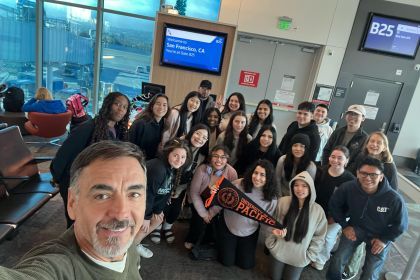
Beyond academic knowledge, the program focuses on personal growth. For many first-year students, this may be their first international trip. Navigating airports, managing travel logistics, and adapting to a new culture are formative experiences that build independence and resilience.
Wolny highlighted this aspect: “For many of these students, even navigating an airport was new, and those small lessons—how to get to the plane, how to travel independently—were often more powerful than we realized, because they helped students see that they could do this.” The program is designed to be a confidence-building exercise, proving to students that they are capable of navigating the wider world.
Equally important are the social connections formed during the trip. Erik Ventura, another first-year student, emphasized the lasting friendships. “The experience gave me the opportunity to meet other students. I found some friends along the way that I definitely see myself having a lifelong friendship with,” he said. These bonds, forged in a unique shared experience, strengthen the student community at Pacific.
A Model for the Future of Global Education
The University of the Pacific’s Chile program represents a forward-thinking model for global education. By prioritizing accessibility, interdisciplinary learning, and personal development, the university is setting a new standard for how institutions can integrate international experiences into the undergraduate curriculum.
This program aligns with a broader mission to cultivate globally-minded graduates. As Dean Skinner stated, “It was wonderful to travel with students to a part of the world they had never experienced. The students were immersed in Chilean culture, lived with Chilean families and went on trips and excursions that broadened their perspectives. We talked about cultural similarities and differences in everything from food to public transportation to economics. The trip sparked their interest in further study and travel abroad, which is exactly what we hope to see—part of our mission at Pacific is to help our students acquire a truly global understanding.”
For prospective students and families evaluating universities, programs like this are a tangible indicator of an institution’s commitment to holistic education. They demonstrate that the university is invested in students’ growth beyond the classroom.
How to Prepare for a Global Learning Experience
Students interested in similar opportunities should consider the following steps:
- Start Early: Engage with your university’s global education office from your first semester. Inquire about programs designed for first-year students.
- Embrace Interdisciplinarity: Even if your major is STEM, seek out programs that include humanities and cultural components. A well-rounded experience is more enriching.
- Focus on Personal Growth: View study abroad as a chance to build independence, adaptability, and cross-cultural communication skills.
- Build a Network: Connect with peers and faculty on these trips. These relationships can be invaluable throughout your academic career and beyond.
The University of the Pacific’s initiative in Chile is a powerful example of how universities can make global learning an integral part of the student journey from day one. It proves that with the right support and structure, even first-year students can gain profound global perspectives that will shape their future.
Discover how the University of the Pacific integrates global experiences into its curriculum and learn more about its study abroad opportunities for all students.
Explore Pacific’s Global Education Programs
For more information on how to apply and what to expect from a first-year global learning experience, request information from the admissions team.
Ready to take the next step in your academic journey? Apply to the University of the Pacific today.