UNE andMaine Masons Team Up to Distribute 50,000 Meal Kits Across Maine to Combat Hunger
The Impact of the Meals for Maine Initiative
Since its launch in 2023, the University of New England’s Meals for Maine program has packaged over 350,000 meal kits, providing nutritious rice‑and‑beans meals to families and individuals across all 16 counties. The latest event, held in partnership with the Maine Masonic Charitable Foundation, added 50,000 kits to that total, demonstrating how collaborative efforts can scale hunger relief quickly.
Learn more about UNE’s Service‑Learning programs and how they connect classroom learning with real‑world impact.
How the Partnership Works
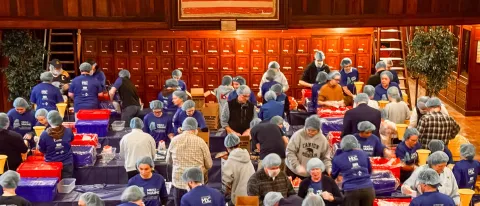
The Maine Masonic Charitable Foundation funded the 50,000 meal kits, while UNE’s Service‑Learning team coordinated volunteers, logistics, and the on‑site packaging event at the historic Masonic temple in Portland. This model leverages the foundation’s financial resources and the university’s experiential‑learning infrastructure to reach rural communities through the Masons’ network of 170 lodges.
Visit the Maine Masonic Charitable Foundation’s website to see how donations translate into meal kits and statewide distribution.
Volunteer Experience and Community Engagement
More than 150 volunteers—including UNE students from nine health‑professions programs, local community members, and Masonic lodge members—worked side by side for three hours. Participants reported not only a sense of accomplishment but also valuable interprofessional interaction and a deeper understanding of Maine’s food‑insecurity challenges.
Read the full press coverage from the Portland Press Herald and WGME CBS 13 to see photos and participant testimonials.
Addressing Food Insecurity in Maine: Statistics and Challenges
Trisha Mason, UNE Service Learning Director, highlighted that one in seven Mainers (≈13.8%) struggles to afford enough food, and one in five Maine children faces uncertainty about their next meal. These figures underscore why initiatives like Meals for Maine are essential, especially in rural areas where access to grocery stores and food pantries can be limited.
How You Can Get Involved or Support Similar Efforts
Whether you are a student, a professional, or a community member, there are several ways to contribute to hunger relief in Maine:
- Sign up for upcoming Meals for Maine volunteer events through UNE’s Service‑Learning portal.
- Make a donation to the Maine Masonic Charitable Foundation to fund additional meal kits.
- Subscribe to UNE’s community‑engagement newsletter for updates on service‑learning projects and partnership opportunities.
- Contact UNE’s Office of Communications to discuss hosting a meal‑packing event with your organization or lodge.
- Share this article on social media to raise awareness about hunger in Maine and inspire others to act.
Conclusion
The collaboration between the University of New England and the Maine Masons illustrates how academic institutions and fraternal organizations can combine resources, expertise, and volunteer power to make a measurable difference in the fight against hunger. By continuing to scale such partnerships, Maine can move closer to ensuring that every resident has reliable access to nutritious food.