How UNE’s Forum Student Manager Program Drives Community Impact
Student-led initiatives are a powerful engine for community change. At the University of New England (UNE), a specific program demonstrates how student leadership can translate into measurable, positive outcomes for the wider region. The Forum Student Manager Program has been formally recognized by Make-A-Wish Maine for its sustained contributions, highlighting a model of engagement that other institutions and aspiring students can learn from.
This recognition is not just an award; it is a testament to years of dedicated service, strategic planning, and a deep understanding of community needs. For prospective students, community organizers, and university administrators, the program’s success offers a clear blueprint for effective, student-driven philanthropy.
Understanding the Brendon Batson Youth Award Recognition
Make-A-Wish Maine presented the Brendon Batson Youth Award to the Forum Student Manager Program, an honor that acknowledges exceptional youth-led community service. The award specifically recognizes the group’s leadership, volunteerism, and fundraising efforts that directly support children and families across the state.
The award is named in honor of Brendon Batson, a figure whose legacy is tied to community and youth development. Receiving this award places the UNE student program among a select group of youth initiatives making a significant difference. It validates the program’s approach, which integrates operational responsibilities with community-facing service.
The Role of the Forum Student Building Managers
At its core, the Forum Student Building Manager Program operates within UNE Campus Services. These students are not just event organizers; they are responsible for the daily operations and management of the Harold Alfond Forum, a major hub of campus activity on the Biddeford Campus. Their duties include facility oversight, event coordination, and ensuring a safe and welcoming environment for all campus community members.
This operational foundation is crucial. It provides students with real-world experience in management, logistics, and problem-solving. This professional development aspect is then channeled into their community work. The skills learned in managing a complex facility directly translate to organizing large-scale, successful philanthropic events.
A Case Study in Community Engagement: The Teddy Bear Toss
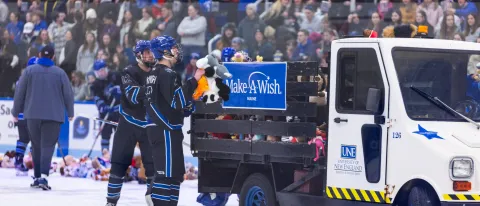
The most prominent example of the program’s impact is the annual Teddy Bear Toss. This event has become a signature tradition at UNE, masterfully blending athletics, student leadership, and philanthropy. The concept is simple yet effective: fans are invited to bring new stuffed animals to a Nor’easters hockey game. When the UNE team scores its first goal, a cascade of stuffed animals is thrown onto the ice by the crowd.
The student managers are the architects behind this spectacle. They coordinate with the athletics department, liaise with Make-A-Wish Maine, manage the collection and sorting of thousands of toys, and ensure the event runs smoothly from start to finish.
The results speak for themselves. Since its inception in 2017, the Teddy Bear Toss has:
- Generated over 12,500 stuffed animal donations.
- Raised more than $30,000 for Make-A-Wish Maine.
These figures demonstrate the power of a well-executed, student-led event. It leverages the energy of a university sporting event to create a massive influx of support for a vital cause.
Beyond the Toss: A Year-Round Commitment
While the Teddy Bear Toss is the most visible initiative, the program’s commitment extends throughout the year. Make-A-Wish Maine cited other projects that contribute to the program’s overall impact:
- The Annual Giving Tree: This initiative supports local families and community partners during the holiday season, providing gifts and essential items.
- Stockings of Hope: A project that benefits Biddeford-based Seeds of Hope, a nonprofit community center that provides services for unhoused and income-restricted individuals.
This year-round approach is a key lesson for any organization aiming for sustained community impact. It moves beyond a single, high-profile event to create a consistent presence and support system for community partners.
Key Takeaways for Aspiring Student Leaders
The success of the Forum Student Manager Program offers actionable insights for students looking to make a difference on their own campuses. The model demonstrates that effective community engagement is built on a few core principles:
1. Integrate Service with Your Role
The program doesn’t treat community service as a separate, optional activity. It is woven into the fabric of the students’ responsibilities as building managers. This integration ensures that service is a priority and that students have the institutional support and skills to execute their vision.
2. Build Strong Partnerships
The Teddy Bear Toss would not be possible without collaboration between the student managers, UNE Athletics, and Make-A-Wish Maine. Successful student initiatives often depend on building and maintaining strong relationships with university departments and external community organizations.
3. Create Repeatable, Scalable Models
The program has established a series of annual events (Teddy Bear Toss, Giving Tree) that the community can anticipate and support. This creates momentum and allows the program to grow its impact year after year. Aspiring leaders should think about how their initiatives can become sustainable traditions.
The Broader Culture of Service at UNE
The recognition of the Forum Student Manager Program is also a reflection of the wider culture at the University of New England. The program’s work aligns with the philanthropic legacy of Harold Alfond, whose contributions have shaped the university and the region. UNE’s mission emphasizes hands-on learning and empowering students to have a positive impact, and this program is a clear embodiment of that mission.
From meal-packing events for community health organizations to toy drives for Biddeford schoolchildren, student-led service is a vibrant part of the UNE experience. This environment fosters a sense of responsibility and provides students with the platform to turn their ideas into action.
The formal presentation of the Brendon Batson Youth Award during the Teddy Bear Toss weekend in January serves as a powerful moment of recognition, celebrating the students’ efforts in front of the very community they serve. It underscores the idea that university education is not just about what happens in the classroom, but about the real-world skills and values students develop through active engagement.