AI Robotics Club Launches Hands‑On Innovation at University of the Pacific
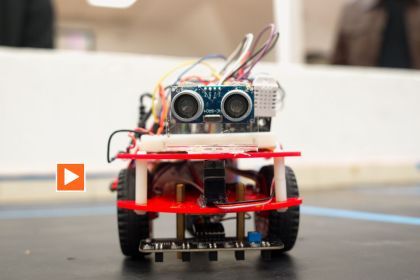
Building a Community Around AI and Robotics
The University of the Pacific’s new Artificial Intelligence‑powered Robotics Club is more than a student organization; it is a hub where theory meets practice. By bringing together students from engineering, computer science, and related disciplines, the club creates a collaborative environment that accelerates learning and sparks creativity.
Why Hands‑On Projects Matter
Hands‑on experience is the most effective way to internalize complex concepts in AI and robotics. When students build a robot that can navigate a maze or a drone that follows a line, they confront real‑world constraints—sensor noise, power limits, and algorithmic latency—that are rarely covered in lecture halls. These challenges teach problem‑solving skills that employers value highly.
Getting Started with the Club
New members join the club through a simple online sign‑up form. Once registered, they receive an orientation packet that includes:
- Overview of the club’s mission and goals.
- Schedule of weekly meetings held in the Chamber Technology Center.
- List of available hardware and software resources.
- Contact information for the club president, Abdullah Tariq Choudhry ’25, and the executive board.
Meetings are structured to balance instruction, collaboration, and experimentation. A typical agenda might look like this:
- 15 minutes of a short lecture on a recent AI breakthrough.
- 30 minutes of group work on a current project.
- 15 minutes of troubleshooting and peer feedback.
- 10 minutes of planning for the next session.
Key Resources and Tools
Hardware Platforms
The club’s lab is equipped with a range of robotics kits and components:
- Arduino and Raspberry Pi boards for low‑cost prototyping.
- Robotic arms and mobile platforms for manipulation and navigation projects.
- LiDAR and ultrasonic sensors for obstacle detection.
- 3D printers and laser cutters for custom parts.
Students can borrow equipment for up to two weeks, allowing them to iterate quickly without the need for personal purchases.
Software and AI Frameworks
To complement the hardware, the club provides access to a suite of software tools:
- Python libraries such as TensorFlow, PyTorch, and OpenCV for machine learning and computer vision.
- ROS (Robot Operating System) for modular robot software development.
- MATLAB and Simulink for simulation and control design.
- GitHub repositories for version control and collaboration.
Workshops are scheduled quarterly to introduce new tools and keep members up to date with industry trends.
Pathways to Competitions and Recognition
Local and International Events
One of the club’s primary objectives is to prepare teams for robotics competitions. Current initiatives include:
- Participation in the annual California Robotics Challenge, where teams design autonomous robots to complete obstacle courses.
- Preparation for the IEEE International Conference on Robotics and Automation (ICRA), where students can present papers and prototypes.
- Collaboration with the university’s engineering department to enter the National Robotics Competition hosted by the American Society of Mechanical Engineers.
Showcasing Your Work
Beyond competitions, the club encourages members to share their projects through multiple channels:
- Monthly showcase events held in the Chamber Technology Center, open to the campus community.
- Online portfolio pages hosted on the university’s student portal.
- Social media updates via the club’s Instagram account, @airatuop, which highlights project milestones and team achievements.
Career Opportunities in AI and Robotics
Industry Partnerships
The club maintains relationships with several tech firms in the Bay Area, including:
- Google’s AI research labs, which offer mentorship and internship opportunities.
- Boston Dynamics, known for advanced robotic systems.
- Local startups focused on autonomous delivery and agricultural robotics.
These partnerships provide students with real‑world exposure and potential career pathways.
Internships and Co‑ops
Students who actively participate in the club often secure internships that align with their interests. The club’s career services liaison coordinates with recruiters to match members’ skill sets with industry needs. Typical roles include:
- AI Engineer – developing machine learning models for robotics applications.
- Robotics Software Developer – implementing ROS nodes and control algorithms.
- Hardware Integration Specialist – managing sensor fusion and real‑time systems.
Next Steps for Interested Students
If you are eager to dive into AI and robotics, the club offers a clear pathway to get involved:
- Visit the Chamber Technology Center on campus to meet current members.
- Sign up through the club’s online portal and attend the next orientation session.
- Follow @airatuop for real‑time updates and event announcements.
Take the next step in your robotics journey today.
Submit your application today to join a community that turns ideas into tangible innovations.
Have questions? Write to us! Our executive board is ready to answer any inquiries about membership, projects, or career advice.
Share your experiences in the comments below or on our social media channels to inspire fellow students.
Explore our related articles for further reading on AI breakthroughs, robotics competitions, and career development.