
Adelphi University’s Mindfulness Center: A Campuswide Model for Student Wellbeing
Creating a Sanctuary for Student Wellbeing
When students arrive at college, they often carry more than just textbooks and laptops. They bring academic pressures, work responsibilities, family obligations, and the weight of expectations about their future. In this high-pressure environment, Adelphi University has created something truly special: a dedicated Mindfulness Center that goes far beyond the typical quiet room found on most campuses.
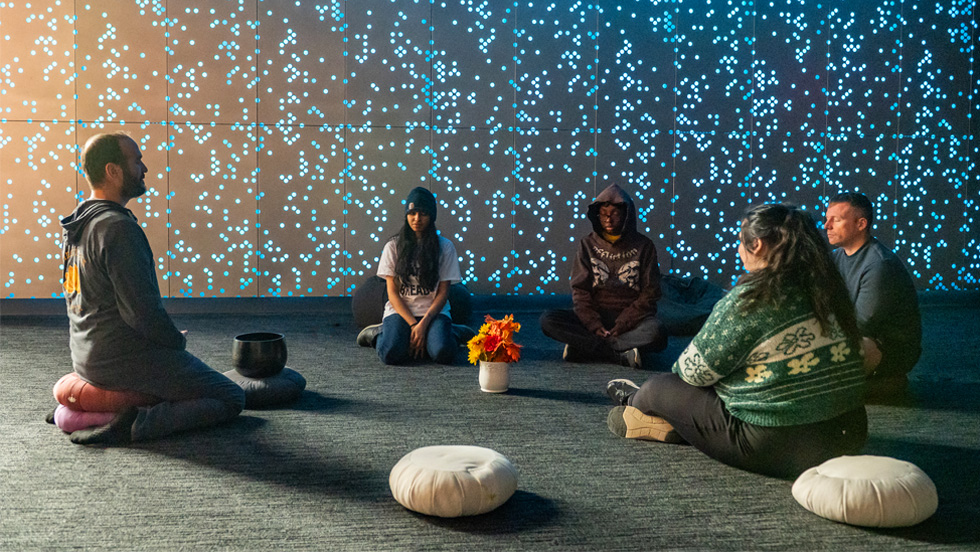
Located in the beautifully renovated University Center, Adelphi’s Mindfulness Center opened in 2022 as a thoughtfully designed sanctuary featuring soaring ceilings, soft twinkling lights, and the calming scent of essential oils. Unlike repurposed classrooms that serve as quiet spaces at many institutions, this center represents a significant investment in student mental health and wellbeing.
The center’s founding coordinator, Michael Hoffner, brings a unique perspective to the role. As a licensed social worker ordained in the Thich Nhat Hanh Plum Village Buddhist tradition, Hoffner was the natural choice to shape this innovative space. His vision extends beyond simply providing a quiet room—he’s creating a campuswide culture of mindfulness that transforms how students experience college life.
The Power of Shared Practice
Each week, students gather in the center’s serene space for drop-in mindfulness sessions. On Tuesdays and Thursdays, they enter a room where phones go dark, eyes close, and for half an hour, the only task is to simply be present. The room’s canopy, lit by a wall of twinkling lights that change color to set the mood, creates an atmosphere that feels worlds away from the constant doing that defines campus life.
For many students, this experience is entirely new. Paloma Jose-Day, a senior psychology major, discovered this when she first tried mindfulness on her own. Like many people, she found sitting alone with her thoughts frustrating and even overwhelming. But practicing in a room with others, supported by Hoffner’s quiet guidance, finally helped her understand what mindfulness could offer.
Jose-Day’s experience illustrates a crucial insight: mindfulness isn’t just about individual practice—it’s about community. The presence of other students made mindfulness feel less like a private test she was failing and more like a shared practice she could grow into over time. This shift has quietly reshaped her daily habits, from how she starts her mornings to how she approaches meals.
Mindfulness as Career Preparation
The benefits of mindfulness extend far beyond stress relief. Ryan Mijumbi, a doctoral student in clinical psychology, recognizes that the techniques he’s learning at the center will be essential tools in his future career as a therapist. The same mindfulness skills he practices—being aware of himself, the space, and the other person—are exactly what he’ll need in the therapy room with clients.
For Mijumbi, the Mindfulness Center has been a lifeline during the intense pressures of graduate school. “Mindfulness didn’t help me pass any tests, but it kept me going when grad school stress and burnout were at their worst,” he explains. This perspective highlights how mindfulness isn’t about escaping challenges but developing the resilience to face them with greater clarity and steadiness.
Deepening the Practice Through Retreats
Adelphi’s commitment to mindfulness extends beyond weekly sessions. The center now offers weekend mindfulness retreats that have drawn about 125 participants over the past two years. These retreats provide students with opportunities to practice sustained silence, meditation, and mindful activities in a supportive community setting.
For those seeking an even deeper experience, the center offers an alternative spring break retreat. Hoffner and his team take small groups of students to Buddhist monasteries in the Plum Village tradition. Past trips have included retreats in upstate New York, Mississippi, and this year, a monastery in California. During these week-long experiences, students join the daily rhythm of monastic life, discovering that practices that feel strange or uncomfortable on the first day often become cherished by the end of the week.
These retreats represent a significant investment in student development. When it’s time to leave, many students ask the same question: How do I bring this back with me? This question has inspired the next phase of the center’s evolution.
Building a Mindful Community
Hoffner is now helping launch a mindfulness residential community at Adelphi, bringing together students to live together on campus with mindfulness as a shared value. Next year, this program will expand into a full-fledged community where mindfulness isn’t an escape hatch but a way of meeting the world with steadiness, courage, and care.
This residential community represents the culmination of the center’s mission: creating a new normal where mindfulness is integrated into daily campus life. As Hoffner explains, “Our mindfulness practice is not intended for us to escape the world. It’s actually here to help us encounter the world more deeply so that we’re not running away from the world, we’re actually leaning in and showing up more fully.”
A Model for Universities Nationwide
Adelphi’s Mindfulness Center stands as a model for universities nationwide, demonstrating how institutions can move beyond basic wellness initiatives to create truly transformative spaces. The center’s success lies in its comprehensive approach: beautiful physical space, skilled guidance, community building, and opportunities for deepening practice through retreats and residential living.
The impact extends campuswide. When more people show up calmer and more grounded, the energy of the entire campus shifts. Students report better sleep, reduced anxiety, improved focus, and stronger relationships. They develop tools for managing stress that serve them well beyond college, in their careers and personal lives.
As colleges across the country grapple with rising rates of student anxiety and depression, Adelphi’s approach offers a compelling alternative to traditional mental health services. While counseling centers remain essential, the Mindfulness Center provides a proactive, community-based approach to wellbeing that helps students build resilience before crises occur.
Taking the Next Step
For students interested in exploring mindfulness, Adelphi’s center offers an accessible entry point. The weekly drop-in sessions require no prior experience, and the welcoming atmosphere makes it easy for newcomers to feel comfortable. Whether you’re dealing with academic stress, relationship challenges, or simply feeling overwhelmed by the pace of college life, mindfulness can provide valuable tools for navigating these experiences.
The center also offers resources for faculty and staff interested in incorporating mindfulness into their own lives or teaching practices. As awareness of mindfulness benefits continues to grow, more educators are discovering how these practices can enhance both personal wellbeing and professional effectiveness.
Adelphi University’s Mindfulness Center represents more than just a quiet room—it’s a testament to the institution’s commitment to student wellbeing and a model for how colleges can create environments where students can truly thrive. In a world that often feels chaotic and overwhelming, this center offers something precious: a space to pause, breathe, and remember that despite everything, it’s going to be okay.
Ready to explore mindfulness for yourself? Visit Adelphi’s Mindfulness Center to learn more about their programs and how you can get involved in this growing campus community.